15-Second Voice Cloning Revolution with Fish Audio | Cliptics
I remember the first time I heard a cloned voice that stopped me cold. It wasn't the technology that got me. It was the implications.
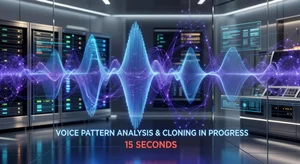
Fifteen seconds. That's all it takes now. Fifteen seconds of someone speaking, and Fish Audio's technology can replicate their voice with uncanny accuracy. Not approximation. Not "close enough for government work." Actually convincing synthetic speech that sounds like the real person.
This isn't science fiction anymore. It's happening right now, and it's changing everything about how we think about voices, identity, and what it means to sound like yourself.
The wild part? Most people have no idea this technology exists yet. But in content creation circles, accessibility communities, and entertainment studios, it's already reshaping workflows and sparking heated debates about where we draw the line.
How This Actually Works (Without the Technical Jargon)
Here's what blows my mind about Fish Audio's approach. Traditional voice cloning used to require hours of recorded audio. You'd need someone reading scripts in a sound booth for entire sessions. Professional voice actors built entire businesses around this limitation.
Fish Audio flipped that model completely. Their system analyzes vocal characteristics so efficiently that 15 seconds provides enough data to build a working voice model. Pitch patterns. Breathing rhythms. The subtle ways consonants hit. All captured and reconstructed from a tiny audio sample.
The technology uses something called few shot learning. Instead of needing massive datasets, the AI extracts core vocal signatures from minimal input. Think of it like a musician who can hear three notes and understand the entire scale.
What makes this particularly powerful is multilingual capability. The same voice model can generate speech in languages the original speaker never learned. Your voice speaking fluent Japanese when you only know English. That opens doors we're still trying to understand.
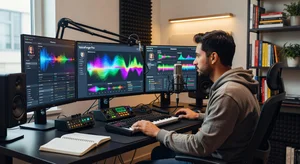
For content creators, this changes production economics fundamentally. A YouTube creator can maintain consistent narration across hundreds of videos without recording each one. A podcaster traveling without equipment can still publish episodes. An audiobook narrator can fix mistakes without re-recording entire chapters.
But here's where it gets complicated. Because the same technology that empowers creators also enables impersonation. Scams. Deepfakes. All the nightmare scenarios people worry about when synthetic media enters the conversation.
The Content Creation Revolution Nobody Saw Coming
I've watched this play out in real time with creators I know. The shift is profound.
Take educational content. Someone building online courses used to face a brutal choice between quality and speed. Want perfect audio? Budget days for recording and re-recording. Need content fast? Accept inconsistent quality as mistakes creep in.
Voice cloning eliminates that tradeoff. Record your base voice model once. Then generate narration from text whenever you need it. Update course materials without studio time. Translate content into other languages while maintaining your vocal presence.
The text to speech space has evolved so rapidly that what seemed impossible two years ago is now baseline functionality. Services that once produced robotic monotone now generate speech with emotional nuance and natural pacing.
Accessibility applications hit even harder. People with degenerative conditions can preserve their voice before losing it. ALS patients can communicate in their actual voice rather than generic text to speech. Children with speech disorders can have voices that match their age and personality.
These aren't hypothetical use cases. They're happening now. Real people maintaining connection to their vocal identity through synthetic recreation.
The Ethics Conversation We Need to Have
Here's what keeps me up at night. The same characteristics that make this technology transformative also make it dangerous.
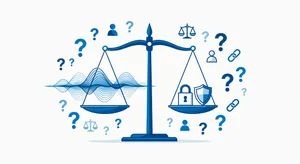
Consent becomes the central question. Who owns a voice? If I record 15 seconds of you speaking at a coffee shop, do I have the right to clone your voice? What if I'm creating satire? Commentary? Education? Where exactly do we draw those lines?
Current legal frameworks aren't built for this. Voice rights exist in narrow contexts like celebrity impersonation or trademarked phrases. But comprehensive voice ownership? That's mostly uncharted territory.
The fraud potential is obvious and terrifying. Scammers already use voice cloning to impersonate family members in emergency schemes. "Grandma, I'm in trouble and need money" hits different when it actually sounds like your grandson. Financial institutions are scrambling to update security protocols as voice authentication becomes unreliable.
But complete prohibition isn't the answer either. That would eliminate legitimate uses that genuinely help people. The assistive technology applications alone justify continued development.
What we need is framework. Industry standards. Technical safeguards like watermarking synthetic audio. Legal clarity around consent requirements. Cultural literacy so people understand when they might be hearing cloned voices.
Fish Audio has set up some protections. Voice model creation requires affirmative consent from the voice owner. Generated audio includes metadata marking it as synthetic. These are good starts, but they're voluntary standards, not enforceable requirements.
Where the Multi Voice Text to Speech World Goes Next
The trajectory here fascinates me. We're moving toward conversational AI that can maintain multiple distinct voices in a single interaction. Imagine audiobooks where every character has a unique voice, all generated from text but sounding like different people.
Fiction podcasts already experiment with this. One narrator records voice samples for multiple characters, then generates full dialogue through synthesis. Production costs plummet while creative possibilities expand.
The entertainment industry is watching closely. Voice actors worry about job displacement, and those concerns aren't baseless. If studios can clone a voice once and generate unlimited performances, what happens to the voice acting profession?
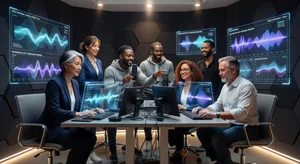
Some see hybrid models emerging. Human actors providing emotional direction and base performances, with AI handling variation, language adaptation, and volume production. Others predict bifurcation into premium human performed content and synthetic generated mass media.
I suspect the reality will be messier and more interesting than either vision. New creative roles will emerge around directing synthetic performances. Voice model curation might become its own profession. The question isn't whether technology replaces humans, it's how human creativity adapts to new tools.
What I'm Actually Taking Away From All This
The best way to think about 15-second voice cloning isn't as a single technology. It's as a fundamental shift in how voice works as a medium.
For most of human history, your voice was physically tied to your body. If you wanted to speak, you had to be present. Recording technology separated voice from immediate presence, but maintained connection to the original person. You could hear me without me being there, but it was still definitely me speaking.
Voice cloning breaks that final link. Now voices can exist independent of the people they came from. They can say things those people never said, in languages they never learned, with emotions they never expressed.
That's simultaneously liberating and deeply unsettling. Liberation comes through accessibility, creativity, and efficiency gains. Unsettling arrives through identity questions, consent violations, and fraud potential.
The technology isn't going away. You can't uninvent this. Even if Fish Audio disappeared tomorrow, the fundamental techniques are published research now. Someone else would set them up.
So we're left with harder questions. How do we build systems that enable positive applications while limiting harmful ones? What social norms need to develop around synthetic voices? How do we maintain trust in audio authenticity when anything can be faked?
I don't have complete answers. Nobody does yet. We're figuring this out in real time, collectively, as the technology spreads.
What I do know is that ignoring it isn't an option. Whether you're a content creator exploring new tools, an accessibility advocate seeing solutions for real problems, or someone worried about fraud and impersonation, this technology affects you.
The 15-second voice cloning revolution is here. What we do with it determines whether it becomes a tool for empowerment or a weapon for deception. Probably it becomes both, and our job is figuring out how to maximize the former while minimizing the latter.
That's not a technology problem. That's a human problem. And those are always harder to solve.