3D Modeling & AR/VR Trends: The Metaverse in 2026 | Cliptics
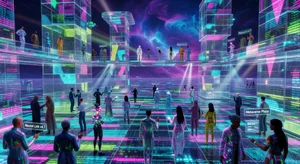
Remember a few years back when everyone said we'd be living in the metaverse by now? That our jobs, social lives, and shopping would all happen in virtual worlds? Yeah, that didn't quite pan out the way the hype predicted. But here's what's interesting: while the grand vision fizzled, something quieter and potentially more meaningful has been happening with 3D tech, AR, and VR.
I've been curious about where all this actually landed, so I spent time looking at what's working, what failed, and what's emerging that nobody's really talking about yet.
What Happened to the Metaverse Hype
The metaverse as this all-encompassing virtual universe where we'd spend most of our time? That's not happening. People tried it, got bored, went back to their regular apps and games. Turns out most of us don't actually want to strap on a headset for hours just to hang out or shop.
But pieces of it stuck. Virtual events work for certain things. 3D product visualization is genuinely useful for e-commerce. Virtual training environments for specific industries make total sense. So the metaverse didn't die, it just got realistic. Less Ready Player One, more practical tools that happen to use 3D environments.
What I find fascinating is how the failure of the grand vision cleared space for more focused, useful applications. When companies stopped trying to build the everything-platform and started solving specific problems, things got interesting.
3D Modeling Tools Are Getting Wild
The technology for creating 3D models has changed dramatically. AI tools can now generate 3D assets from text descriptions or convert 2D images into 3D models. Not perfectly, and not for everything, but well enough that creators who couldn't afford professional 3D artists can now prototype ideas or create decent assets themselves.
Tools like AI image to 3D converters and text to 3D generators are making 3D creation accessible to people who never touched Blender or Maya. That's a big shift. We're seeing indie game developers, small product designers, and content creators doing things that used to require teams.
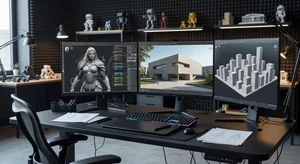
The traditional 3D modeling software hasn't gone away, it's just not the only path anymore. Professional 3D artists still use the heavy tools for final production work, but the pipeline has changed. You can AI-generate a base model, refine it manually, add custom details, and get to final faster than the old start-from-scratch approach.
AR Found Its Lane
Augmented reality is where things got practical fast. Not the dystopian vision of ads everywhere you look, more like useful information layered onto the real world when you want it.
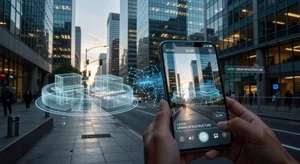
Furniture shopping with AR placement so you can see if that couch actually fits your living room before buying? That's genuinely helpful and people use it. Navigation that shows directions overlaid on the street in front of you? Makes sense for walking or driving. Training applications where workers can see step-by-step instructions overlaid on the actual equipment they're working on? Saves time and reduces errors.
The pattern is: AR works when it enhances something you're already doing, not when it tries to replace your entire visual experience. Smartphone AR is thriving because it's convenient. You pull out your phone, point it at something, get info or visualization, done. Headset AR is still niche because most people don't want to wear stuff on their face all day.
What I'm watching is how AR is creeping into professional workflows without much fanfare. Architects using it for site visualization, mechanics using it for complex repairs, surgeons using it for procedure guidance. Not flashy, but impactful.
VR Found Its Applications Too
VR had a similar reckoning. The social VR platforms mostly flopped. Nobody wants to have virtual meetings as cartoon avatars when video calls work fine. But VR for specific use cases is quietly growing.
Gaming is the obvious one, but it's still niche. The real growth is in training and simulation. Pilot training, medical training, hazardous job training, all make perfect sense in VR. You can practice dangerous or expensive scenarios safely and repeatedly.
Therapy and mental health applications are another area where VR is proving useful. Exposure therapy for phobias, meditation environments, cognitive behavioral therapy tools. There's something about the immersion that works for these applications in ways that flat screens don't match.
What's holding VR back is still the hardware. Headsets are better than they used to be, lighter and higher resolution, but they're still not comfortable enough for long sessions and they're still expensive enough that most people won't buy one for occasional use. That might change, or it might not. Either way, VR seems to have found sustainable niches even without mass adoption.
Where 3D Tech Is Actually Impacting Creators
For designers and content creators, 3D is becoming table stakes in ways it wasn't a few years ago. Social media platforms want 3D content. Games obviously. Marketing increasingly uses 3D for product visualization and interactive experiences.
The barrier used to be skill and software cost. That's dropping. You can learn basic 3D modeling from free tutorials, use free or cheap software, and supplement with AI tools to speed up the parts that would have taken weeks to learn.
What surprised me is how many traditional 2D designers are adding 3D to their toolkit, not switching completely but expanding. They'll design in 2D, create 3D versions for certain applications, go back to 2D for others. It's becoming another medium, not a replacement for existing ones.
The Practical Tech Stack in 2026
If you're curious about getting into 3D work or expanding your capabilities, here's what the landscape looks like now.
For traditional 3D modeling, Blender is free and increasingly powerful. It's become the default for people learning or working on smaller budgets. Maya and 3ds Max are still industry standard for big studios. Cinema 4D has a following among motion graphics people.
For AI-assisted 3D creation, there are multiple tools that convert images or text to 3D models. Quality varies, and you usually need manual cleanup, but they're useful for prototyping or creating base models to refine.
For AR development, Unity and Unreal Engine dominate. Apple's AR Kit and Google's AR Core make smartphone AR relatively accessible for developers.
For VR, same engines, different optimization priorities. Meta Quest is the most popular standalone headset platform. PC VR gives better quality but requires more setup and cost.
What's Coming That's Worth Watching
A few trends that might matter more than the obvious stuff everyone talks about.
Real-time 3D rendering is getting good enough that you can interact with photorealistic 3D environments without pre-rendering everything. That opens up possibilities for customization and personalization that weren't practical before.
Volumetric video, where you capture real people and environments as 3D data instead of flat video, is starting to work well enough for specific applications. Concert experiences, sports replays, historical preservation. Still expensive, but getting more accessible.
AI tools that can animate 3D models from text descriptions or video reference are emerging. Early stage, but if they mature, that's huge for content creators who want motion but don't want to learn complex animation software.
The thing about all these is they're not world-changing on their own, but combined they're enabling work that used to require studios and big budgets to happen at smaller scales and lower costs.
The Honest Assessment
Here's what I think is actually happening. The metaverse as pitched was a solution looking for a problem. People don't need a virtual world to replace reality. But 3D technology, AR, and VR are proving useful for specific applications where they add clear value.
If you're a creator, designer, or developer, you don't need to bet everything on this tech, but it's worth understanding because it's becoming another tool in the standard toolkit. Not the only tool, not even the most important tool for most work, but increasingly relevant for certain projects and applications.
The hype cycle burned a lot of people who invested early or bet big on the maximal vision. But for people who are exploring the technology pragmatically, figuring out where it fits their workflow, there's actually interesting potential.
What I'd Do If I Were Starting Now
If I was curious about 3D tech and wanted to explore it without massive investment, I'd start with Blender tutorials on YouTube. Free software, huge community, tons of learning resources. Spend a month getting comfortable with basic 3D concepts.
Then I'd experiment with AI 3D tools to see what they're good at and where they fall short. Use them for quick prototypes or base models, learn what you can and can't trust them for.
For AR, download some AR apps and see what works. If you're a developer, try building something simple with AR Kit or AR Core. If you're not a developer, think about how AR might enhance your work and partner with someone who can build it.
For VR, if you have access to a headset, try the different application types to understand what feels natural versus what feels forced. That intuition is valuable for designing VR experiences or understanding what might work for your use case.
The key is approaching this as exploration, not as chasing the next big thing. The big thing already happened and settled into something more modest but potentially more useful. Now it's about finding where the technology serves your specific needs rather than adopting it because you feel like you should.
That's where we are with 3D, AR, VR, and the various metaverse pieces in 2026. Less hype, more utility, and honestly, that's probably healthier for everyone involved.