AI Art for Non-Designers: Text to Image Guide | Cliptics
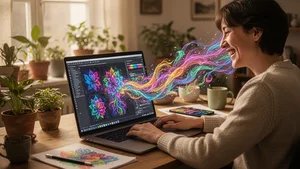
Let me tell you something that would've blown my mind three years ago. You don't need to know how to draw. You don't need Photoshop skills. You don't even need to understand color theory. Right now, today, you can type a sentence into a box and get back a genuinely beautiful image. That's not hype. That's just where we are.
I know this because I've watched people who've never opened a design tool in their lives create social media graphics, product mockups, and blog illustrations that look like they hired a professional. The secret? Text to image AI. And honestly, it's way easier than you probably think.
If you've been putting off creating visuals for your business, your blog, or your social feeds because you "aren't creative enough," this one's for you. Grab a coffee. Let's walk through this together.
Why Design Skills Don't Matter Anymore
Here's the thing most people don't realize. Traditional design was always about two things: technical skill (knowing the tools) and creative vision (knowing what looks good). AI has basically eliminated the first part entirely.
You don't need to learn layers, masks, blend modes, or any of that. The AI handles all the technical execution. What you bring to the table is the idea. And guess what? You already have ideas. You know what you want your Instagram post to look like. You can picture the vibe you want for your website header. You just couldn't make it happen before.
Now you can. You describe what you want in plain English, and the AI builds it. It understands concepts like "warm lighting" and "minimalist" and "vintage feel." It knows what a sunset over mountains looks like, what a cozy coffee shop interior feels like, what a professional headshot should look like.
The playing field has been completely leveled. A solopreneur working from their kitchen table can create visuals that compete with a brand that has a full design team. That's not an exaggeration. I've seen it happen over and over.
How Text to Image Actually Works (The Simple Version)
Okay, so you're probably wondering what's actually happening behind the scenes. I'll keep this simple because honestly, you don't need to understand the engineering to use these tools. But a little context helps.
Text to image AI models have been trained on millions of images paired with descriptions. They've learned the relationship between words and visual concepts. When you type "a golden retriever wearing sunglasses at the beach," the AI doesn't search a database for that exact image. It creates a brand new one from scratch, combining everything it's learned about golden retrievers, sunglasses, and beaches.
Think of it like this. You know how a skilled artist can paint something they've never seen just by combining things they have seen? Same principle, except the AI does it in about ten seconds.
The better your description (called a "prompt"), the better your result. But even a basic prompt usually gives you something pretty solid to work with. You can always refine from there.
Getting Started: Your First AI Image in Five Minutes
Let's get practical. Here's exactly how to create your first image, step by step.
Step 1: Pick a tool. There are tons of options, but for beginners, I'd recommend starting with something that has a clean interface and doesn't overwhelm you with settings. Magic Studio is a great entry point because it's built specifically for people who aren't designers. You can also explore the full range of AI illustration generators to find what clicks for you.
Step 2: Write your prompt. Start simple. Don't overthink it. Something like "a modern office desk with a laptop, coffee cup, and plant, clean white background" is perfect for a first try. You can get fancy later.
Step 3: Hit generate. Seriously, that's it. Click the button and wait a few seconds. The AI will give you one or more options to choose from.
Step 4: Download and use. Pick the one you like best. Download it. Drop it into your social media post, your blog, your presentation, whatever you need.
The whole process takes less time than finding a stock photo and checking the license. And the result is something completely unique that nobody else has.
Prompt Tips That Make a Huge Difference
Now, here's where it gets fun. Once you've made your first image, you'll want to make better ones. The difference between an okay image and a stunning one usually comes down to how you write your prompt.
Be specific about the vibe. Instead of "a landscape," try "a misty mountain landscape at sunrise with soft pink and orange light filtering through the clouds." See the difference? You're painting a picture with words. The more detail you give, the more the AI has to work with.
Mention the style you want. Words like "photorealistic," "watercolor," "flat illustration," "3D render," or "oil painting" tell the AI what kind of image to create. This single addition transforms your results.
Include lighting details. "Soft natural light," "dramatic shadows," "golden hour glow," "neon lighting." Lighting is what separates amateur photos from professional ones, and the same applies to AI art. This one tip alone will level up everything you create.
Describe the composition. "Close up," "wide angle," "bird's eye view," "centered subject with blurred background." These photography terms work perfectly in prompts, even if you've never held a camera.
Don't be afraid to iterate. Your first result might not be perfect. Tweak a word or two and generate again. Maybe swap "bright" for "moody" or add "with subtle bokeh effect." Each generation takes seconds, so experiment freely.
Here's a real example. Let's say you run a small bakery and need an image for an Instagram post. Instead of "cupcakes," try "artisan cupcakes with pastel frosting arranged on a rustic wooden board, soft morning light from a nearby window, shallow depth of field, food photography style." That prompt will give you something that looks like it came from a professional food photographer's portfolio.
Real Use Cases for Non-Designers
Let me share some practical scenarios where this stuff really shines.
Social media managers who need three to five posts per week can generate unique visuals for each one instead of recycling the same tired stock photos. Your feed will look more cohesive and original.
Small business owners can create product mockups, promotional graphics, and website hero images without hiring a designer for every little thing. Need a seasonal banner for your online store? Done in thirty seconds.
Bloggers and content creators can generate custom illustrations for every article instead of hunting through Unsplash for twenty minutes trying to find something that sort of fits. Each image actually matches what you're writing about.
Presentation builders can add custom visuals to slides that aren't the same clip art everyone else uses. Your next pitch deck can actually look impressive.
The common thread here? These are all people who need visuals regularly but don't have the budget or time for professional design work. AI fills that gap perfectly.
Finding the Right Tools for You
The AI art space is packed with options and it can feel overwhelming. Some tools are built for artists who want granular control. Others are designed for people who just want a good image fast. You want the second category.
There are AI powered design solutions that bundle text to image generation with templates, editing features, and brand management. These are perfect if you want an all in one workflow rather than jumping between different apps.
The Cliptics AI tools directory is honestly one of the best places to browse and compare your options. Everything's organized by what you're actually trying to do, so you're not wading through tools meant for machine learning engineers when all you want is a nice Instagram graphic.
My advice? Try two or three free options. See which interface feels most natural to you. The "best" tool is the one you'll actually use consistently.
You're Already More Creative Than You Think
Here's what I want you to take away from all of this. The barrier to creating beautiful visuals was never your lack of creativity. It was the technical gap between what you could imagine and what you could produce. AI has closed that gap.
You don't need a design degree. You don't need expensive software. You don't need years of practice. You need an idea and a few words to describe it. That's genuinely all it takes.
So the next time you're staring at a blank social media scheduler or an empty blog post that needs a header image, don't stress about it. Open up a text to image tool, describe what you see in your head, and let the AI do the heavy lifting. You might surprise yourself with what you create.
And honestly? That's the best part. Not just the images themselves, but the feeling of making something that didn't exist five seconds ago. That little rush? Designers have been hooked on it for years. Now it's your turn.