
"AI Deepfakes: How to Spot and Protect Yourself in 2026 | Cliptics"
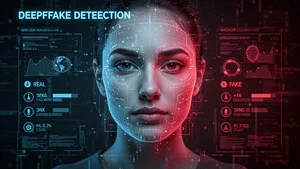
I watched a video last week of a CEO announcing a major acquisition. The lighting was perfect. The voice was natural. The lip sync was flawless. And the whole thing was completely fake. Not a single frame was real. Someone generated it in under ten minutes using tools that are freely available right now.
That shook me. Because if I hadn't been specifically looking for signs, I would have believed it. And I spend a lot of time studying this stuff.
We need to talk about where deepfakes are in 2026, because the gap between what's fake and what's real has gotten uncomfortably small. This isn't a future problem anymore. It's happening right now, to real people, and the consequences are serious.
How Deepfakes Actually Work Now
The technology behind deepfakes has evolved dramatically. Early deepfakes from 2019 and 2020 used basic face swapping. You'd train a model on someone's face using hundreds of photos, wait hours for processing, and get results that looked obviously wrong around the edges. Those days are gone.
Modern deepfake systems use diffusion models and transformer architectures that can generate photorealistic video from a single reference image. One clear photo of someone's face is enough. The AI handles everything else: expressions, head movement, lighting conditions, even the way someone's skin creases when they smile. Voice cloning has followed the same trajectory. Three seconds of audio is enough to clone someone's voice with enough accuracy to fool their own family members.
What makes 2026 particularly concerning is real time deepfakes. Live video calls where someone's face and voice are being replaced on the fly. The latency is low enough now that you can have a natural conversation with someone who isn't who they appear to be. That's not theoretical. It's been documented in corporate fraud cases, romance scams, and political disinformation campaigns.
The barrier to entry has collapsed too. In 2023, creating a convincing deepfake required technical knowledge and expensive hardware. Now there are browser based tools that handle everything. Upload a photo, type what you want the person to say, and get a finished video in minutes. Some of these tools have millions of users.
Real Cases That Should Worry You
In January 2026, a finance employee at a multinational company transferred $25 million after a video call with what appeared to be the company's CFO and several other executives. Every person on that call was a deepfake. The scammers had used publicly available footage from earnings calls and interviews to create real time avatars. By the time anyone realized what happened, the money was gone.
That's the high profile version. But deepfakes are devastating ordinary people too. Non consensual intimate imagery is the most common and most harmful application. Someone takes a few photos from a person's social media, feeds them to an AI, and generates explicit content. Victims include high school students, teachers, healthcare workers, and military personnel. The psychological damage is severe, and the content spreads faster than it can be removed.
Political deepfakes have gotten more sophisticated as well. During the 2025 election cycles in multiple countries, fabricated videos of candidates making inflammatory statements went viral before fact checkers could respond. Even when debunked, the damage was done. People remember the video, not the correction.
There's also a growing trend of deepfake audio being used in personal scams. A parent receives a phone call that sounds exactly like their child, claiming to be in trouble and needing money immediately. The voice is generated from clips pulled from social media videos or voicemails. These scams exploit the most primal instinct we have: protecting our families.
How to Actually Spot Deepfakes
Here's the good news. Despite how good deepfakes have gotten, they're not perfect. Not yet. And if you know what to look for, you can catch most of them.
Watch the eyes. This is still the most reliable tell. Deepfakes struggle with natural blinking patterns. Real people blink every 3 to 5 seconds on average, and the motion involves the entire eye area. Deepfakes either blink too regularly (like a metronome) or not enough. Look at the reflections in the eyes too. In real footage, both eyes reflect the same light sources. Deepfakes often have mismatched or missing reflections.
Check the edges. Look where the face meets the hair, ears, and neck. Deepfakes frequently show subtle blurring, color mismatches, or unnatural transitions at these boundaries. This is especially noticeable when the person turns their head. The profile view is where most deepfakes fall apart because training data is overwhelmingly front facing.
Listen for audio artifacts. Cloned voices often have a slightly metallic quality, especially on sibilant sounds like "s" and "sh." Breathing patterns are another giveaway. Real speakers pause and breathe naturally between phrases. AI generated speech tends to be unnaturally smooth and consistent in its pacing.
Look at the teeth and mouth interior. When someone opens their mouth wide or laughs, deepfakes struggle to render the inside of the mouth accurately. Teeth may merge together, the tongue may look flat or shapeless, and the back of the throat might look blurred or dark in a way that doesn't match natural anatomy.
Pay attention to hands and accessories. If the video shows hands near the face or the person is wearing jewelry, glasses, or earrings, look for inconsistencies. These elements often glitch, disappear between frames, or behave unnaturally.
Context matters most. Before you even analyze the visual details, ask yourself: does this make sense? Would this person actually say this? Is this coming from a verified source? The most effective defense against deepfakes isn't technical at all. It's critical thinking.
Tools That Can Help
Several detection tools have matured significantly and are worth knowing about.
Microsoft Video Authenticator analyzes photos and videos, providing a confidence score about whether the media has been artificially manipulated. It works by detecting the blending boundary where deepfake elements were inserted into real footage. It's integrated into several major platforms now.
Intel FakeCatcher takes a completely different approach. Instead of looking for signs of manipulation, it looks for signs of life. It analyzes subtle changes in skin color caused by blood flow (a process called photoplethysmography). Real faces show these micro color changes with every heartbeat. Deepfakes don't.
Sensity AI provides a detection API and monitoring platform that scans the web for deepfake content. It's primarily used by enterprises and media organizations, but it illustrates how detection is becoming industrialized.
Google's SynthID watermarks AI generated content at the pixel level in ways that are invisible to the human eye but detectable by automated systems. While this only works for content generated through Google's own tools, similar watermarking standards are being adopted across the industry.
Reality Defender offers real time detection for video calls, specifically designed to catch the live deepfake scenario that enabled that $25 million fraud case. It analyzes the video stream for artifacts and inconsistencies that indicate AI generation.
For everyday use, reverse image search remains surprisingly effective. If you see a suspicious photo, drag it into Google Images or TinEye. If it traces back to a real person in a different context, you've likely found a manipulated image.
If You Become a Target
First, document everything immediately. Take screenshots and screen recordings of any deepfake content you find. Note the URLs, timestamps, and any associated accounts. This evidence matters for both law enforcement and platform takedown requests.
Report the content to the platform where it appears. Most major platforms now have specific reporting mechanisms for AI generated or manipulated media. Use them. The response time has improved significantly as platforms face increasing regulatory pressure.
Contact law enforcement. As of 2026, over 40 US states have laws specifically addressing deepfakes, with particularly strong protections around non consensual intimate imagery. The EU AI Act includes provisions around synthetic media. Many other countries have enacted similar legislation. What was a legal gray area five years ago now has real enforcement mechanisms.
Reach out to organizations that specialize in this area. The Cyber Civil Rights Initiative provides resources for victims of non consensual intimate content. StopNCII.org (run by the UK Revenge Porn Helpline in partnership with Meta) can help hash and remove intimate imagery across multiple platforms simultaneously.
Consider proactive protection. Some services now allow you to register your likeness in a database that platforms check before allowing deepfake generation. This is imperfect, but it adds a layer of protection.
Building Personal Resilience
The uncomfortable truth is that technology alone won't solve this. Detection tools will always be playing catch up with generation tools. What actually protects you is a combination of technical awareness and social habits.
Be thoughtful about what you share publicly. Every clear photo of your face and every video clip of your voice is training data that someone could potentially use. This doesn't mean you should disappear from the internet. It means being intentional about what you post and where.
Establish verification protocols with people who matter to you. Agree on a code word or question that only you and your family members know, so that if you ever receive a suspicious call that sounds like someone you love, you can verify it's actually them.
Stay skeptical of emotional content. Deepfakes are designed to trigger strong reactions because emotional responses bypass critical thinking. If a video makes you angry, scared, or outraged, that's exactly when you should slow down and verify before sharing.
The deepfake problem isn't going away. The technology will keep improving. But so will our ability to detect it, regulate it, and protect ourselves from it. The most important tool you have isn't any piece of software. It's the willingness to pause and question what you're seeing. In 2026, that instinct is more valuable than ever.