
AI Model Pricing Calculator: Compare Costs Across Providers 2026 | Cliptics
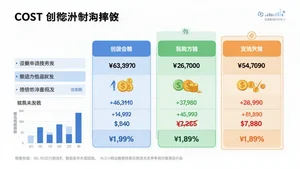
I thought our AI costs were reasonable until I actually calculated them. We were spending $2,300 monthly on OpenAI when an equivalent setup on Anthropic would've cost $680. Same capability, 70% less money.
That discovery led me to build a proper cost comparison model. Not marketing team promises, actual real-world usage scenarios with honest math. What I learned surprised me and will probably save you thousands.
Pricing changes every quarter in this space. This guide gives you the framework to compare providers as costs evolve, using real 2026 pricing data as examples.
Understanding How AI Models Price
Every provider uses roughly the same model: you pay per token processed. Input tokens (what you send) and output tokens (what the model generates) usually cost different amounts.
The confusion starts because token != word. Depending on the model's tokenizer, one word might be 0.75 tokens or 1.5 tokens. Most providers count based on their specific tokenization method, which varies by model family.
Example: the sentence "AI model pricing is confusing" counts as 6 tokens in GPT-4, 7 tokens in Claude, and 5 tokens in Gemini. Multiply those differences across millions of requests and costs diverge significantly.
Context window size affects pricing dramatically. Models with longer contexts cost more per token because they require more compute. But paying more per token might cost less overall if you can process everything in one request instead of chunking into multiple smaller requests.
Then there's the enterprise versus self-serve pricing gap. Published API prices are self-serve rates. Enterprise contracts with committed spend get 30-60% discounts. If you're spending $10K+ monthly, always negotiate. The listed price is not the real price.

Real Scenarios with Actual Math
Scenario 1: Customer Support Automation
Usage: 10,000 support tickets monthly, average 300 tokens input, 200 tokens output per ticket
OpenAI GPT-4o:
- Input: 10K × 300 × $2.50/1M = $7.50
- Output: 10K × 200 × $10/1M = $20
- Monthly total: $27.50
Anthropic Claude 3.5 Sonnet:
- Input: 10K × 300 × $3/1M = $9
- Output: 10K × 200 × $15/1M = $30
- Monthly total: $39
Google Gemini 1.5 Flash:
- Input: 10K × 300 × $0.075/1M = $0.23
- Output: 10K × 200 × $0.30/1M = $0.60
- Monthly total: $0.83
Winner for this use case: Gemini Flash at 97% cost savings. Quality is lower but sufficient for routine support.
Scenario 2: Long Document Analysis
Usage: 1,000 documents monthly, average 50,000 tokens input, 1,000 tokens output per document
OpenAI GPT-4 Turbo:
- Input: 1K × 50K × $10/1M = $500
- Output: 1K × 1K × $30/1M = $30
- Monthly total: $530
Anthropic Claude 3 Opus:
- Input: 1K × 50K × $15/1M = $750
- Output: 1K × 1K × $75/1M = $75
- Monthly total: $825
Google Gemini 1.5 Pro:
- Input: 1K × 50K × $1.25/1M = $62.50
- Output: 1K × 1K × $5/1M = $5
- Monthly total: $67.50
Winner: Gemini Pro at 87% savings versus OpenAI, 92% versus Anthropic. For long context use cases, Google's pricing is substantially better.
Scenario 3: Content Generation at Scale
Usage: 50,000 blog paragraphs monthly, average 100 tokens input (prompts), 400 tokens output per generation
OpenAI GPT-4o-mini:
- Input: 50K × 100 × $0.15/1M = $0.75
- Output: 50K × 400 × $0.60/1M = $12
- Monthly total: $12.75
Anthropic Claude 3.5 Haiku:
- Input: 50K × 100 × $0.25/1M = $1.25
- Output: 50K × 400 × $1.25/1M = $25
- Monthly total: $26.25
Google Gemini 1.5 Flash:
- Input: 50K × 100 × $0.075/1M = $0.38
- Output: 50K × 400 × $0.30/1M = $6
- Monthly total: $6.38
Winner: Gemini Flash again, half the cost of GPT-4o-mini and 75% cheaper than Claude Haiku.
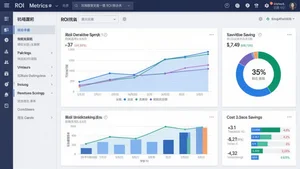
Hidden Costs Nobody Mentions
Raw per-token pricing is just the starting point. Several hidden factors dramatically affect real costs.
Retry costs from failures: APIs fail. Rate limits hit. When that happens mid-generation, you've paid for tokens you can't use. Budget 10-15% extra for retries and failures. This hits OpenAI hardest due to aggressive rate limiting.
Prompt engineering overhead: Cheaper models need more detailed prompts to get equivalent quality. A 50-token system prompt on GPT-4 might need 200 tokens on Gemini Flash. Factor prompt size into comparisons.
Quality-related rework: If cheaper models produce unusable output 30% of the time, effective cost is 43% higher than listed price. Track actual usable output, not just API calls made.
Caching benefits: Anthropic's prompt caching cuts repeat content costs by 90%. If you're sending the same instructions repeatedly, cached pricing is the real price. OpenAI added caching recently but implementation details matter.
Batch processing discounts: Most providers offer 50% off for batch API requests you can wait hours for. If 40% of your usage isn't time-sensitive, batch it and halve those costs.
Rate limit tier requirements: Free tier rate limits are unusable for production. First paid tier is often insufficient too. You might need tier 3 or 4 just for adequate rate limits, regardless of token usage costs.
Building Your Own Cost Model
Don't trust my scenarios, build your own. Here's the framework I use.
First, track actual usage for two weeks. Token counts, request patterns, peak usage times, error rates. You need real data, not estimates. I was off by 3x when I estimated our usage before tracking it.
Second, calculate costs across three providers using your actual usage patterns. Pick scenarios representing 80% of your use cases. Don't optimize for edge cases.
Third, factor in quality differences. Run the same 50 test cases through each model. Score output quality. If Model A costs 40% less but produces acceptable output only 60% of the time, it's not actually cheaper.
Fourth, model scaling costs. You're not staying at current usage. If you grow 10x, how do costs scale? Some providers offer volume discounts, others don't. Enterprise pricing kicks in at different thresholds.
Fifth, calculate total cost of ownership including dev time. Switching providers takes engineering time. If migration costs $10K in dev hours, you need to save that much in the first year to break even.

When Cheapest Isn't Best
I chose Anthropic for our main use case despite Google being 50% cheaper. Quality delta was significant enough to matter.
Cheaper models work great for uses where variation doesn't matter. Classification, extraction, summarization of straightforward content. For these, go with cheapest adequate quality.
Expensive models justify their cost for use cases where output quality directly affects revenue. Customer-facing content, complex analysis, creative work. Paying 3x more makes sense when quality drives outcomes.
The real optimization isn't picking the cheapest provider. It's routing different request types to appropriate models. Tier 1 for critical quality-dependent tasks, tier 2 for routine operations, tier 3 for background batch processing.
We run six different models now. Each handles specific use cases where it offers the best value-for-quality ratio. Total cost is 40% lower than using one premium model for everything.
Multi-model strategies add complexity. You maintain multiple integrations, track which model handles what, manage fallbacks when providers have issues. That complexity costs engineering time. Worth it at scale, probably overkill if you're spending under $500 monthly.
Tools for Ongoing Monitoring
Pricing changes quarterly in this space. You need systems to catch when better deals emerge.
I built a simple tracker: monthly usage logs, current provider costs, costs if we switched providers at current pricing. Takes fifteen minutes monthly to update. Catches opportunities like when Google dropped Gemini pricing 50% last quarter.
Tag every API request with use case metadata. When analyzing costs, you can see exactly what's expensive and why. "Customer support" versus "content generation" versus "analysis" all have different cost profiles and optimization opportunities.
Set up alerts when daily spend exceeds thresholds. Catches runaway costs from bugs or unexpected usage spikes. We caught a retry loop costing $200/day because of alerting.
Run quarterly comparisons. Take your actual last 90 days usage, calculate what it would've cost on competing providers. If switching saves 30%+, seriously evaluate migrating.
The market is getting more competitive. That's good for buyers. Just pay attention and be willing to switch when significantly better economics emerge.