
AI Photo Filters for Real Estate: How the 'Real Estate | Cliptics
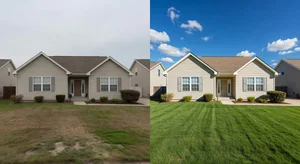
I listed a three-bedroom ranch house in March with the original seller photos. Decent natural light, reasonably tidy rooms. The listing sat for 19 days before I pulled it, swapped in AI-filtered photos, and republished. It went under contract four days later.
That's not a coincidence. That's what happens when you understand what buyers are actually responding to when they scroll through listings.
Real estate photography has always mattered. What's changed in 2026 is how accessible truly excellent photo editing has become, and the gap it creates between agents who use it and those who don't.
What the Real Estate Success Filter Actually Does
Most AI photo filters do one of two things: they boost saturation and blow out colors, or they try to do everything and end up doing nothing well. The Real Estate Success filter on Cliptics takes a different approach.
It's calibrated specifically for property photography. That means it understands what makes a room look livable rather than just bright. It balances the sky without making window views look like a painted backdrop. It lifts shadow detail in dark corners without creating that obvious HDR look that screams "over-edited."
The practical results: blue skies actually look blue instead of washed-out white. Hardwood floors get their grain back. Kitchens look clean without the antiseptic quality that makes a room feel cold.
What agents notice most is the sky replacement logic. Overcast exteriors are one of the most common reasons sellers push back on listing photos, especially when they can't reschedule a shoot. The filter handles it without the hard edges or unnatural light direction that most basic tools produce.
Case Study: The Condo That Wouldn't Move
A realtor in Phoenix had a 2-bed, 2-bath condo sitting at 42 days on market. The unit was priced right. The neighborhood was fine. But the listing photos had that flat, gray quality that makes every room look smaller than it is.
She ran all 14 listing photos through the Real Estate Success filter on a Thursday afternoon. Friday morning, the listing had three new showing requests. By Sunday, she had two offers.
The photos didn't change the square footage or the price. They changed what buyers felt when they looked at the unit. That emotional response is what drives scheduling decisions, and scheduling decisions are what drive offers.
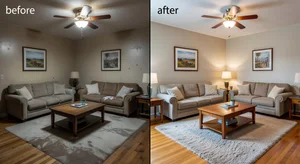
How to Use It in Your Listing Workflow
The practical workflow takes less than ten minutes per property once you're familiar with it.
Upload your photos to Cliptics AI Photo Filter and select the Real Estate Success preset. The filter processes each image and returns a preview before you commit. This is important because it lets you catch any images where the AI overcompensated, which can happen on rooms with unusual lighting or very dark accent walls.
For exterior shots, check the sky transition line carefully, especially around trees or rooflines. The AI handles most cases cleanly, but complex silhouettes occasionally need a minor manual touch afterward.
One technique worth knowing: shoot your interiors slightly underexposed. Most photographers instinctively try to nail exposure in-camera, but a touch darker gives the AI filter more shadow data to work with, and the results tend to be more natural than starting from an overexposed base.
For properties where first impressions are being made entirely online, like vacant investment properties or out-of-area relocation listings, the filter becomes essential rather than optional. Buyers who aren't going to drive by first are making their entire initial judgment from those photos.
Why This Matters More Than It Used to
The shift to digital-first listing searches happened gradually and then all at once. In 2026, the average buyer views 23 listings online for every one they visit in person. That ratio has implications that many agents still haven't fully absorbed.
If your photos don't generate a click-through to the address, nothing else matters. The staging, the price negotiation, the disclosure packet, all of it is irrelevant if the thumbnail doesn't earn a second look.
Cliptics AI Headshot Generator serves a similar function for agent profile photos, and the parallel is direct: professional presentation creates credibility before a word is spoken or read. The listing photo is doing the same work for the property.
Agents who've built AI photo enhancement into their standard service offering aren't just getting faster sales. They're winning more listings, because sellers can see the difference in the marketing presentation before they sign anything.

The Competitive Reality
Here's the uncomfortable truth most experienced agents already know: your competition is running these tools. The only question is whether you are.
The difference between a listing that sells in 8 days and one that lingers for 45 days is increasingly a photography decision made before the listing ever goes live. AI photo filters have compressed what used to require a professional retouching budget into something any agent can execute on their phone between appointments.
The Real Estate Success filter exists because real estate photography has specific requirements that general filters miss. Buyers respond to natural light that looks achievable when they live there, not cinematic lighting that makes the space feel aspirational but unreal. Getting that balance right is what moves listings.
The agents running these tools consistently aren't the most technically sophisticated. They're the ones who figured out that the goal isn't the best possible photo. The goal is the photo that gets the buyer through the door.