AI Shopping Agents That Buy for You in 2026 | Cliptics
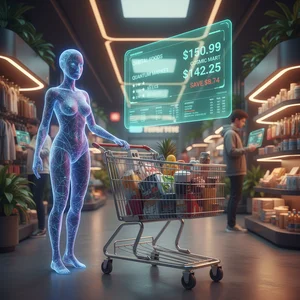
Something wild happened last week. I opened my phone, saw a notification from Amazon, and realized my AI assistant had already bought the running shoes I'd been eyeing. The price dropped to my target, it confirmed my size from past orders, and the package was already on its way.
I didn't browse. I didn't compare. I didn't even open the app. The AI just did it.
If that sounds like science fiction, it really isn't anymore. We've officially entered the era of agentic commerce, where AI doesn't just recommend products. It actually goes out and buys them for you.
What Are AI Shopping Agents, Exactly?
Let me back up for a second because this is genuinely new territory.
Traditional shopping assistants were basically fancy search bars. You'd type "best wireless earbuds" and get a list. Maybe some reviews. Maybe a comparison chart. But you still had to do all the actual work of deciding, adding to cart, entering payment details, and clicking buy.
AI shopping agents are fundamentally different. They perceive what you need based on your history, preferences, and even conversations. They learn your taste over time. And they act on your behalf, actually completing purchases when the right conditions are met.
Think of it like the difference between a GPS that shows you a map and a self driving car that takes you where you need to go. Same destination, completely different experience.
The Big Players Making This Real
Three companies are leading this shift right now, and each one is approaching it differently.
Amazon Rufus is probably the most mature. It launched its "Buy for Me" feature in late 2025 and already has over 250 million monthly active users. The numbers are staggering. Customers who use Rufus during their shopping journey are 60% more likely to actually buy something, and Amazon projects it will generate an extra $10 billion in sales. Rufus lets you set a target price for any product, and when it drops to that number, it automatically purchases using your saved Prime details. It also shows you 30 and 90 day price histories so you can see whether that "sale" is really a sale.
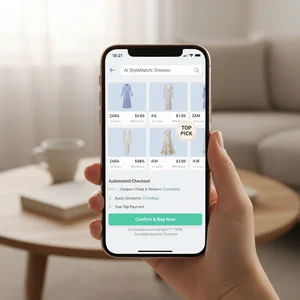
Google's Agentic Checkout takes a different approach. Instead of being tied to one store, it works across retailers through something called the Universal Commerce Protocol. When you search for products in Gemini or Google Search, the AI can surface options from Wayfair, Chewy, Shopify merchants, and others. If you want to buy, you check out right there through Google Pay. No redirects, no new accounts, no typing in your address for the hundredth time. Retailers like Gap and Target have already signed on, and the list keeps growing.
OpenAI with ChatGPT tried embedding checkout directly into conversations earlier this year. You could literally tell ChatGPT "find me a good blender under $80" and buy it without leaving the chat. That initial approach had some friction, though. OpenAI is now pivoting to work more closely with retailers, building dedicated shopping apps within ChatGPT that redirect to the retailer's site for final purchase. It gives stores more control over the experience while still letting AI handle the discovery and comparison.
Perplexity has also entered the game with its Pro Shopping Assistant, positioning itself as an impartial advisor. Since it isn't tied to any single retailer, it can genuinely compare across the entire market without bias. You set a budget, describe what you need, and it does the legwork.
How It Actually Works Behind the Scenes
Here is the part that fascinates me most. These agents aren't just matching keywords to products. They're running real time queries against massive product databases, evaluating price fluctuations, reading reviews at scale, and cross referencing your purchase history to predict what you'll actually like.
Google's system alone draws from a Shopping Graph that tracks billions of product listings. Amazon's Rufus was built on Bedrock, their enterprise AI platform, which means it has access to the entire Amazon catalog plus seller data, review sentiment, and pricing trends.
The payment side is equally interesting. Visa and Mastercard have developed frameworks specifically for AI agent transactions. These let agents initiate purchases within preset spending limits, with merchant whitelists and transaction caps built in. Your actual card number never gets shared with the AI. It operates through tokenized, rule based systems that you control.
The Trust Question Everyone Is Asking
Okay, let me be honest about the elephant in the room. Letting an AI spend your money sounds terrifying to a lot of people. And that's a completely reasonable reaction.
The good news is that every major platform has built in guardrails. Google's Agentic Checkout requires you to review the final price, address, and order details before completing any payment. You can revoke merchant permissions or adjust price thresholds anytime. Amazon's auto buy only triggers within parameters you explicitly set. No AI is going rogue and buying you a jet ski.
But trust isn't just about technical safeguards. It's about transparency. Can you see why the agent chose one product over another? Is it recommending something because it's genuinely best for you, or because the retailer paid for placement? These are questions the industry is still working through.
What This Means for Regular Shoppers
Here is where I think things get really interesting for everyday people.
According to McKinsey, AI agent driven transactions could reach $3 to $5 trillion globally by 2030. That's not a niche experiment. That's a fundamental shift in how commerce works. Already in 2025, about 26% of US adults used AI for product discovery, and AI driven ecommerce traffic grew by more than 500%.
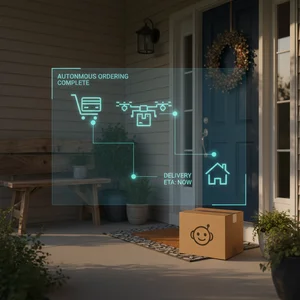
The practical benefits are real. Price tracking means you stop overpaying. Automated reordering for household essentials means you never run out of things like coffee or paper towels. Cross retailer comparison means you get better deals without spending your Saturday morning doing research.
But the most underrated benefit might be time. Shopping takes up way more mental energy than most of us realize. Decision fatigue is real. Having an AI handle the routine purchases frees up your attention for decisions that actually matter to you.
Where This Is All Heading
If 2025 was when companies laid the groundwork for agentic commerce, 2026 is the year everyone is fighting to become your default shopping agent. The stakes are enormous because whoever controls the AI interface between consumers and retailers controls a massive slice of global commerce.
What excites me most isn't the competition, though. It is what happens when these tools become genuinely good. Imagine telling your AI "I need a complete camping setup for a family of four, budget of $500, and we leave Friday." Right now, that would take you hours of research. Soon, it might take seconds.
We are not quite at "the AI handles everything" yet. But we are a lot closer than most people realize. And honestly? After that running shoes moment, I'm starting to understand why people keep saying this changes everything.
If you want to explore AI tools that are already transforming creative work, check out what Cliptics offers for image generation, video creation, and background removal. The same AI revolution reshaping shopping is making creative tools more accessible too.