AI Video Editing Revolution: How Automation is Changing | Cliptics
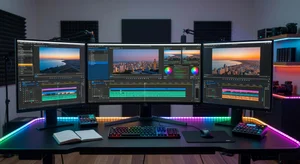
There is something quietly unsettling about watching a machine do in thirty seconds what used to take you three hours. Not unsettling in a bad way, necessarily. More like the feeling you get when a new road opens up and suddenly your old commute seems absurd in retrospect. You wonder how you ever managed before, and at the same time you feel a faint, irrational grief for the long way around.
That is the texture of what is happening in video editing right now. And if you spend any real time in this space, whether you're cutting YouTube videos in your bedroom or managing post-production for a media company, you've already felt it.
The Quiet Revolution Nobody Announced
Nobody made a grand announcement when video editing fundamentally changed. There was no single product launch, no viral moment, no industry-wide press release. It happened gradually, then suddenly, the way these things always do. AI tools crept into editing workflows as optional features, then became expected, then became load-bearing.
In 2026, most professional editing software includes AI capabilities that would have seemed genuinely futuristic just four years ago. Automatic silence removal. Scene detection that actually understands context, not just brightness changes. Color grading suggestions that account for skin tone, mood, and brand guidelines simultaneously. Dialogue isolation that can separate a speaker from background noise even in a crowded street interview.
The individual tools are impressive enough. But what strikes me more is what happens when they compound. An editor who used to spend forty percent of a project timeline on rough assembly can now spend that time on decisions that actually require human judgment. Questions of pacing, emotion, story arc. The parts that are genuinely hard.
That shift matters. Whether it's a good shift depends heavily on who you are and what you value about the work.
What Automation Actually Does Well
It helps to be specific about where AI video editing actually earns its keep, because the marketing language around these tools tends toward the hyperbolic.
Transcript-based editing has become genuinely transformative. The ability to treat video like a text document, to cut, rearrange, and restructure based on spoken words rather than visual timecodes, has collapsed certain categories of time. Interview-heavy content, documentary work, podcasts with video, educational material: these genres used to require exhaustive logging and manual scrubbing. Now the rough cut emerges from the transcript itself, and the editor arrives at a structurally coherent starting point without the preliminary drudgery.
Auto-reframing for different aspect ratios has similarly removed a tedious category of work. Content destined for YouTube, Instagram Stories, TikTok, and LinkedIn used to require manual re-edits for each format. AI subject tracking handles the spatial logic of what to keep in frame, leaving editors to approve or adjust rather than execute from scratch.
B-roll matching is another area where automation has matured faster than most people expected. Systems that can analyze narration, identify semantic concepts, and surface relevant footage from a media library were theoretically appealing years ago but practically unreliable. In 2026 the accuracy has improved enough that editors use these suggestions as starting points rather than ignoring them entirely.
What all these tools share is a focus on logistics. They handle the mechanical translation of intent into execution. They do not generate intent. That remains stubbornly human.
Where the Nuance Lives
Here is what I find myself thinking about when I watch these tools work.
The hardest parts of video editing have never been the parts that take the longest. Removing silences is tedious but not difficult. Syncing multicam footage is time-consuming but fundamentally mechanical. AI automation correctly identified these tasks as candidates for delegation.
But the decisions that define whether a video actually works, whether it moves someone, whether it lands its point with precision or buries it in clutter, those decisions were never primarily about time. They were about accumulated judgment. About understanding why a four-second pause before a punchline is better than a two-second pause. About knowing when to cut away and when to hold on a face. About feeling the rhythm of a sequence in a way that resists explicit codification.
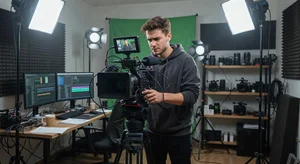
Automation has not touched these decisions in any meaningful way. What it has done is remove the noise that used to surround them. An editor who previously spent Tuesday assembling a rough cut can now spend Tuesday making actual editorial decisions. That is not a small thing. But it is also not the same as automating editorial judgment.
There is a version of this shift that worries me, and it involves the training pipeline. If junior editors skip the rough-assembly phase because automation handles it, they also skip the unconscious learning that happens during that phase. Scrubbing through hours of footage is boring, but it is also how you internalize an understanding of what good footage looks like versus mediocre footage, how you develop instincts about coverage and performance, how you learn to read a shoot from the inside out. Bypassing that phase might produce faster junior editors who are also shallower ones.
This is not a reason to reject the technology. It is a reason to be thoughtful about how it gets integrated into creative education and professional development.
The Platforms Shaping the Landscape
The consolidation happening in AI video tools is worth noting. A handful of platforms have moved from specialized features to comprehensive spaces. The workflow increasingly happens in fewer places, with deeper integration between transcription, editing, color, audio, and export.
For independent creators working alone or in small teams, this consolidation is largely positive. Fewer tool-switching steps mean less friction and less cognitive overhead. The question is what happens to the specialist knowledge that used to exist at the boundaries between these tools.
For larger production operations, the calculus is more complicated. AI features built into editing platforms have improved substantially, but they exist in tension with the established space of plugins, hardware workflows, and role-specific software that serious productions have built over years. The integration costs are real even when the feature quality is high.
What is genuinely new in 2026 is the accessibility of capability that used to require significant technical investment. A solo creator with a browser and an account can now access tools that would have required dedicated hardware and specialized software a few years ago. Platforms like Cliptics offer AI-powered tools directly in the browser without downloads or watermarks, and that accessibility shift has genuinely democratized the space.
What Editors Actually Feel About This
I have spoken with enough editors to know that the emotional responses to AI automation are more varied and more complicated than the discourse usually acknowledges. There is anxiety about job displacement, but that anxiety coexists with genuine enthusiasm for specific features. There is frustration at hype that overpromises, but also appreciation for tools that actually work. The picture is messy in the way that real experience usually is.
What I hear most consistently is relief about the parts that are working and skepticism about the parts that are not yet real. Editors appreciate automated silence removal. They are less convinced by AI color grading that doesn't understand their specific aesthetic. They value transcript-based editing. They remain unconvinced by systems that claim to generate an entire edit from raw footage.
The boundary between what automation does well and what it does poorly has shifted substantially in four years. That boundary will continue to shift. The question of where it eventually stabilizes, if it ever does, is genuinely open.
What This Means for the Craft
Video editing is a craft that has always adapted to its tools. The shift from film to tape to digital fundamentally changed what editors could do and how they thought about time, structure, and possibility. AI automation is another inflection point in that long history, not an ending.
The editors who will thrive in this environment are not necessarily the ones who resist automation or the ones who embrace it uncritically. They are the ones who understand what automation is actually doing, which decisions it is genuinely making and which it is only appearing to make, and who use that understanding to focus their attention on the places where human judgment is irreplaceable.
That is a different skill set than pure technical mastery. It requires a kind of metacognitive awareness about the creative process itself, an ability to distinguish between what you are choosing and what the algorithm is choosing on your behalf.
The tools are getting better faster than most people predicted. The creative and ethical questions they raise are also more persistent than most people expected. Both things are true, and holding them together without collapsing into either pure optimism or pure dread is, I think, the honest position.
We are not at the end of video editing as a human practice. We are at an interesting middle, where the shape of the practice is genuinely uncertain in ways that are worth paying careful attention to.