
AI Video Platforms Comparison: Sora vs Runway vs Pika for | Cliptics
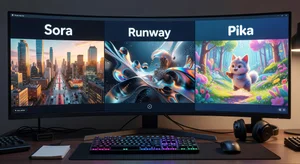
When Open AI announced Sora, my entire feed exploded with AI-generated video clips. Hyper-realistic scenes. Impossible camera movements. Content that would have required six-figure budgets produced from text prompts. I watched in fascination and immediately wondered: how does this compare to tools I'm already using?
I've been creating with Runway and Pika for months. Each has strengths. Each has frustrations. Sora's arrival made me question whether I needed to completely change my workflow or if the established platforms still held advantages.
So I spent weeks testing all three extensively. Same prompts. Similar use cases. Hands-on production work, not just demo reels. What I discovered surprised me. The "best" platform depends entirely on what you're trying to create.
Quality and Realism: Sora Takes the Lead
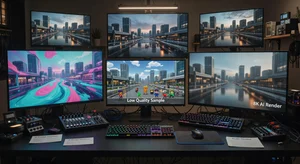
Let's start with the obvious: Sora produces the most photorealistic video. It's not even close. The physics are more accurate. The motion is smoother. The details are more convincing. When Sora renders water, fabric, or complex lighting, it consistently outperforms competitors.
I tested this with identical prompts across platforms. A scene of someone walking through a busy market. Sora captured realistic crowd movement, natural lighting changes, and believable perspective shifts. Runway produced good results but with occasional physics glitches. Pika delivered solid output but with more obviously AI-generated qualities.
For pure visual fidelity, Sora wins. But here's the catch: realistic isn't always better. Sometimes you want stylization. Sometimes perfect realism feels sterile. Sometimes "good enough" realism delivered faster serves your needs better than "amazing" realism that takes longer.
Speed and Iteration: Where Pika Shines
Pika's biggest advantage is speed. Generations complete in 2-3 minutes for standard clips. That rapid iteration matters enormously for creative work. When you're exploring concepts, waiting 20 minutes per generation kills momentum. Pika lets you test ten ideas in the time Sora completes one.
I found myself using Pika for initial exploration and concept development. Try different compositions. Experiment with camera angles. Test various stylistic approaches. Once I identified strong directions, I'd move to Sora for final high-quality output.

Runway falls between the two. Faster than Sora, slower than Pika. The generation time varies based on complexity and which Runway model you're using (they offer multiple). For straightforward scenes, it's reasonably quick. For complex generations, it approaches Sora's timelines.
Speed also affects cost. If you're paying per generation, faster iterations mean more affordable exploration. That economic factor matters for creators with limited budgets.
Creative Control: Runway's Detailed Parameters
Runway provides the most granular control over outputs. Camera movement parameters. Motion intensity settings. Style transfer options. Frame interpolation controls. If you want to precisely direct every aspect of generation, Runway offers the deepest toolset.
This control comes with complexity. Runway has the steepest learning curve. I spent hours learning which parameters produced which effects. But once mastered, that precision is powerful. I can dial in exactly the motion style, pacing, and visual treatment I want.
Sora uses simpler text-based control. You describe what you want, and it interprets your prompt. This is more accessible but less precise. Sometimes Sora nails exactly what I envisioned. Other times it takes multiple prompt revisions to steer toward my goal.
Pika splits the difference. More control than Sora through guided parameters, less complexity than Runway. For most use cases, Pika's level of control suffices without overwhelming you with options.
Consistency Across Generations: A Universal Challenge
All three platforms struggle with consistency when you need multiple related clips. If you're creating a series where the same character appears in different scenes, maintaining visual consistency is challenging across all platforms.
Sora occasionally changes character appearance between generations even with identical prompt elements. Runway has similar issues. Pika is actually slightly better here, though still imperfect.
For professional production work requiring multiple shots that cut together, this inconsistency is the biggest limitation across all platforms. You end up generating dozens of variations hoping to find outputs that match reasonably well.
This is where traditional filming still dominates. Once you film an actor, they look the same in every shot. AI video generation hasn't solved this fundamental challenge yet, though all platforms are improving.
Length Limitations and Extensions
Sora generates up to 60 seconds per clip (when fully released). Runway typically produces 4-5 second clips that can be extended. Pika generates 3-second clips with extension options.
For creators needing longer content, this creates different workflows. Sora allows more complete scenes in single generations. Runway and Pika require stitching multiple clips and hoping for smooth transitions.
I've found Runway's extension feature particularly useful. Generate a 4-second clip you like, then extend it forward or backward. This builds longer sequences while maintaining visual continuity better than generating completely separate clips.
Pika's shorter clips work well for social media content where brevity is expected. For YouTube content or commercial work needing sustained scenes, the length constraints are more limiting.
Pricing Models and Accessibility
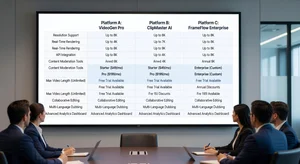
Pricing varies significantly. Sora, being newer, has limited access with pricing still evolving. Runway offers subscription tiers starting around $12/month for basic access, scaling to $76/month for unlimited generations. Pika has similar subscription structures with varying generation quotas.
For professional creators producing volume, unlimited plans are essential. For casual experimentation or occasional use, pay-per-generation or limited subscriptions work fine.
The actual cost-effectiveness depends on your generation success rate. If Sora nails your vision on the first try, it's economical. If you need 20 iterations to get usable results, costs accumulate quickly. Factor in your typical revision count when evaluating platforms.
Use Case Recommendations
After extensive testing, here's when each platform excels:
Use Sora for:
- High-end commercial work requiring maximum realism
- Demonstrations of product capabilities in realistic environments
- Content where visual quality is paramount
- Longer narrative scenes that benefit from extended generation length
Use Runway for:
- Projects requiring precise control over visual style and camera movement
- Workflows integrating with other creative tools (Runway has strong integration options)
- Motion graphics and stylized content where photorealism isn't the goal
- Creators comfortable with technical tools who want maximum customization
Use Pika for:
- Rapid prototyping and concept exploration
- Social media content where speed matters more than perfect realism
- Budget-conscious creators needing affordable generation volumes
- Creators wanting simplicity over detailed control
I don't use just one platform. My workflow involves all three depending on project requirements. Pika for exploration. Runway for specific stylistic control. Sora for final high-quality outputs when realism matters.
Integration With Traditional Video Workflows
None of these platforms replace traditional video production entirely. They augment it. I use AI-generated video for:
- Establishing shots that would be expensive to film
- Background elements and b-roll
- Concept visualization before committing to live shoots
- Impossible scenarios (physics-defying cameras, imaginary environments)
For human performances, dialogue, and narrative requiring emotional nuance, traditional filming still wins. AI video generation excels at visual spectacle and conceptual content, not nuanced acting or complex storytelling.
The most effective approach combines both. Film the core content traditionally. Use AI generation for enhancement, backgrounds, and elements too expensive or impossible to shoot conventionally.
Platform Evolution and Future-Proofing
AI video generation is evolving rapidly. Capabilities improving every few months. What's true today may be outdated in six months. All three platforms regularly release updates that shift competitive advantages.
I don't commit to single-platform workflows for this reason. I maintain proficiency across multiple tools so I can shift as capabilities evolve. The platform winning today's comparison might be third-place in next year's evaluation.
That said, learning any of these platforms builds transferable skills. The principles of effective prompt writing, understanding AI generation limitations, and integrating AI video into creative workflows apply across platforms.
The Reality Check
Here's what none of the marketing materials emphasize enough: AI video generation is still challenging. You won't type a prompt and instantly get exactly what you envisioned. You'll iterate. You'll revise prompts. You'll generate dozens of variations to find the few that work.
Success requires:
- Clear vision of what you're trying to create
- Patience with iteration and refinement
- Understanding of each platform's strengths and limitations
- Willingness to combine AI generation with traditional editing
The creators producing the most impressive AI video content aren't just using better prompts. They're shooting reference footage, editing aggressively, combining multiple generations, and applying traditional post-production techniques.
For creators exploring these platforms, tools like text-to-video generators provide entry points, while watermark removal tools for Runway and Pika help with post-processing workflows.
Where This Goes Next
AI video generation is moving toward longer clips, better consistency, enhanced control, and improved realism. The technical trajectory is clear. What's less clear is how creators will integrate these tools into sustainable creative practices.
The platforms that succeed long-term won't just be the ones with the best technology. They'll be the ones that understand creator workflows, provide useful controls, maintain reasonable pricing, and support actual production needs rather than demo reel impressiveness.
Right now, Sora leads in pure quality. Runway leads in control and integration. Pika leads in speed and accessibility. Where they'll be in a year is anyone's guess. But creators developing skills across platforms will be positioned to use whichever tool serves each project best.
That adaptability—more than mastery of any single platform—defines successful AI video creation.