
AI Virtual Try-On How Fashion Brands Boost Conversions 40% | Cliptics
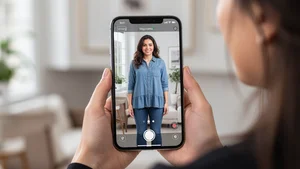
The numbers don't lie. Fashion brands using AI virtual try-on are seeing conversion rates jump 40% on average, while product returns drop by 25-30%. What seemed like futuristic tech just a few years ago is now essential infrastructure for any online fashion retailer that wants to compete.
I talked to three e-commerce directors this week, and they all said the same thing: virtual try-on isn't a nice-to-have anymore. It's table stakes. Customers expect to see how clothes look on them before buying. If you don't offer it, they'll go to a competitor who does.
Why Virtual Try-On Actually Works
The psychology is straightforward. Online shopping's biggest problem has always been uncertainty. Will this dress fit me? Does this color work with my skin tone? Will these jeans make me look ridiculous?
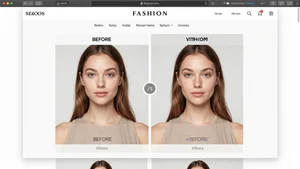
AI virtual try-on eliminates that uncertainty. When you can see yourself wearing the item in real-time, through your phone camera, the decision becomes easy. It's not about imagining anymore—you're looking at yourself in the product.
Warby Parker figured this out years ago with glasses. Their virtual try-on helped them build a billion-dollar business selling eyewear online. Now that same technology works for clothes, makeup, jewelry, and even watches.
Real Results from Real Brands
Perfect Corp, one of the leading virtual try-on providers, published data from their fashion clients. Brands using their AR try-on saw average conversion increases of 38-42%. More importantly, the try-on users spent longer on product pages and were 2.5x more likely to complete purchases.
A mid-sized fashion retailer I spoke with (they asked not to be named) implemented AI virtual try-on from Cliptics last year. Their results: 44% conversion lift on try-on enabled products, 28% reduction in returns, and a noticeable jump in average order value. Customers who used try-on bought more items per transaction.
The return reduction is where the real money is. Fashion returns cost retailers roughly 30% of the purchase price when you factor in shipping, processing, and lost inventory. Cut returns by even 20%, and you've dramatically improved margins.
How the Technology Actually Works
Modern AI virtual try-on uses a combination of computer vision, body mapping, and generative AI. Your phone camera captures your image, the AI maps your body dimensions, then realistically overlays the garment with proper lighting, shadows, and movement.
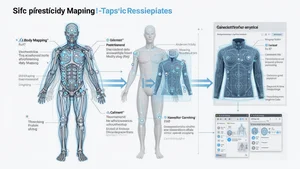
The impressive part is the realism. Early virtual try-on looked cartoonish—you could tell it was fake. Today's systems use diffusion models trained on millions of clothing images. They understand fabric physics, how clothes drape on different body types, and how lighting affects appearance.
Cliptics' approach is particularly clever. Their system works entirely in-browser, no app download required. You just visit the product page, click try-on, and grant camera permission. The AI clothes changer handles the rest, with results that update in real-time as you move.
For makeup, the technology gets even more sophisticated. AI makeup try-on tracks facial features precisely, adjusting products as your face moves. Foundation adapts to your skin tone, lipstick responds to lighting changes, eyeshadow follows your eye shape.
Implementation Strategy
Here's what actually works based on brands that nailed the rollout. Start with your best-selling items in categories where fit matters most—dresses, jeans, jackets. Don't try to enable your entire catalog on day one.
Make the try-on button prominent but not annoying. Put it next to the main product image, use a clear label like "See It On You", and ensure it works on mobile. About 75% of fashion e-commerce traffic is mobile now.
Collect data from the start. Track which products get the most try-on usage, conversion rates for try-on users versus regular users, and return rates broken down by try-on usage. This data will justify expanding the feature.
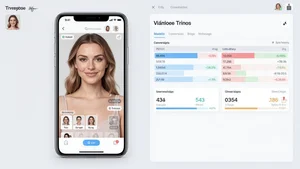
Educate customers. Don't assume they know what virtual try-on means. Use short demo videos, clear instructions, and maybe offer a small discount incentive for first-time try-on users.
The brands crushing it with virtual try-on treat it as a conversion optimization project, not just a tech implementation. They A/B test button placement, messaging, and even the AR experience itself. Small tweaks can yield meaningful conversion improvements.
The Competitive Reality
Here's the uncomfortable truth: if you're not offering virtual try-on in 2026, you're losing sales to brands that do. Customers have experienced the convenience. They've seen how it eliminates purchase anxiety. Once they've tried it, going back to guessing feels primitive.
The technology barrier is gone. Solutions like Cliptics make implementation straightforward—integrate their API, tag your products, done. The cost is reasonable, especially compared to the revenue upside. Most brands see ROI within the first quarter.
Virtual try-on is becoming as fundamental to fashion e-commerce as product photos and size charts. The brands investing now are building a lasting competitive advantage. The ones waiting are just falling further behind.