
AI Voice Cloning Scams: Protect Yourself | Cliptics
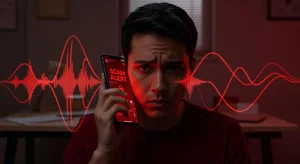
Your mom calls you. She sounds panicked. She says she's been in an accident, she needs money wired immediately, please don't tell anyone. You can hear the fear in her voice. The cadence is right. The little vocal tics are right. Everything sounds exactly like her.
Except it isn't her.
That scenario isn't hypothetical anymore. It's happening thousands of times a day across the world right now, and the technology making it possible has gotten so good that even cautious, skeptical people are falling for it. AI voice cloning scams have become one of the fastest-growing categories of fraud in 2026, and the numbers are genuinely alarming.
Three Seconds Is All They Need
Here's the part that keeps me up at night. Modern voice cloning tools can create a convincing replica of someone's voice from as little as three seconds of audio. Three seconds. That's shorter than a voicemail greeting. That's half of a TikTok clip. That's you saying "hey, leave a message and I'll call you back."
The FBI's Internet Crime Complaint Center reported that AI-assisted voice fraud losses exceeded $2.7 billion in 2025 alone, up from roughly $1.2 billion the year before. The FTC has called it the fastest-evolving scam category they've ever tracked. And those are just the cases people actually reported. The real number is almost certainly higher.
What changed? The barrier to entry collapsed. Voice cloning used to require minutes of clean audio and serious technical knowledge. Now there are open-source tools, consumer-grade apps, and underground services that can produce a usable clone from a single audio clip pulled off social media. The voice doesn't need to be perfect. It just needs to be good enough to fool someone who's already emotionally activated by an urgent request.
How the Scams Actually Work
The playbook has gotten sophisticated. Criminals aren't just cold-calling random people and hoping for the best. They're doing research first.
The most common approach is what security researchers call "family emergency fraud." Scammers scrape social media to identify relationships. They find audio samples from public posts, videos, podcasts, or even corporate webinars. They clone the voice and call a family member with an urgent story. Car accident. Arrest. Medical emergency. Kidnapping. The emotional pressure is designed to override your critical thinking.
But it's not just families being targeted. Businesses are getting hit hard too. The term "CEO fraud" or "business email compromise" has expanded into "business voice compromise." A finance department employee gets a call that sounds exactly like their CFO, instructing an urgent wire transfer. Pindrop, a voice security company, reported a 350% increase in synthetic voice attacks targeting corporate phone systems between 2024 and 2026.
Then there's the romantic exploitation angle. Scammers clone the voice of someone's partner, ex, or online dating match. They use it to extract money, personal information, or compromising content. These cases are particularly devastating because victims often feel too embarrassed to report them.
And here's what makes all of this worse: the scammers are using AI not just for the voice, but for the conversation. Large language models generate natural-sounding responses in real time, so the cloned voice can actually hold a back-and-forth dialogue. It's not a pre-recorded message anymore. It's an interactive deepfake conversation.
Why Your Brain Falls for It
Understanding why these scams work is important, because it's not about intelligence. Smart, educated, cautious people get fooled constantly.
The human brain is wired to recognize voices. It's one of the most fundamental social abilities we develop as infants. When you hear a familiar voice, your brain doesn't run an analysis. It just knows. That recognition triggers trust automatically, before your conscious mind even gets involved.
Scammers exploit this by combining voice familiarity with emotional urgency. When someone you love sounds scared or in danger, your stress response kicks in. Cortisol floods your system. Your prefrontal cortex, the part that does careful analytical thinking, gets suppressed. You shift into fight-or-flight mode, and in that state, you act fast and think later.
This is why the classic advice of "just be more careful" doesn't really work. The scam is specifically designed to bypass careful thinking. You need systems and habits that work even when you're panicking.
The Verification Protocol Every Family Needs
The single most effective defense is a family code word. Pick a word or phrase that only your immediate family knows. Something that wouldn't appear in any social media post or public conversation. If someone calls claiming to be a family member and asking for money or sensitive information, ask for the code word.
This sounds almost too simple, but security experts at McAfee and the FBI both recommend it as the first line of defense. The key is picking it in advance, when everyone is calm, and making sure every family member remembers it.
Beyond the code word, here's what actually works:
Hang up and call back. If you get a suspicious call, even if it sounds completely legitimate, hang up and call the person directly using a number you already have saved. Don't use any number the caller gives you. Don't call back the number that just called you. Use your contacts list.
Establish a delay rule. Agree with family members that no one will ever send money based on a single phone call, no matter how urgent it sounds. Every financial request gets verified through a second channel. Text, video call, in-person. This removes the time pressure that scammers depend on.
Limit your voice footprint. This is harder in an age of social media, but be conscious of how much audio of yourself exists publicly. Voicemail greetings, video content, podcast appearances, even voice messages in group chats can all be harvested. Consider using a generic voicemail greeting instead of a personalized one.
Watch for emotional manipulation patterns. Scammers almost always create urgency. "Don't tell anyone." "This has to happen right now." "I'll explain later, just please help me." These pressure tactics are red flags, even if the voice is convincing.
What Organizations Are Doing About It
The defense side isn't standing still. Companies like Pindrop and Resemble AI are developing voice authentication systems that can detect synthetic speech in real time. These tools analyze micro-patterns in audio that humans can't perceive, things like spectral artifacts, breathing patterns, and the subtle inconsistencies that even the best cloning models still produce.
Banks are starting to set up voice biometric verification that goes beyond simple voice matching. Instead of just checking "does this sound like the customer," newer systems analyze whether the voice exhibits markers of synthetic generation. Some financial institutions now flag calls where AI-generated speech is detected and route them through additional verification steps.
On the regulatory side, the FTC issued updated guidelines in early 2026 specifically addressing AI voice fraud. Several states have passed laws making it a felony to use cloned voices for fraud, with enhanced penalties when targeting elderly victims. The EU's AI Act now requires synthetic voice disclosures in commercial contexts, though enforcement in criminal fraud cases remains challenging.
But technology and regulation can only do so much. The most important defense is still awareness.
The Uncomfortable Reality
Here's the thing nobody really wants to say out loud. This problem is going to get worse before it gets better. The technology is improving faster than the defenses. Voice clones are getting more convincing. Real-time conversation capabilities are getting more natural. The cost of running these scams is dropping toward zero.
That doesn't mean the situation is hopeless. It means the approach has to change. We can't rely on being able to tell real voices from fake ones by ear anymore. That ship has sailed. Instead, we need verification habits that don't depend on voice recognition at all.
Think of it like email phishing. Twenty years ago, people learned not to click suspicious links. It took time and a lot of people getting burned, but the awareness eventually spread. Voice cloning scams need the same cultural shift. We need to reach the point where everyone knows that a voice on the phone isn't proof of identity, full stop.
Talk to your parents about this. Talk to your kids. Talk to the people in your life who trust phone calls implicitly because that's how things worked for their entire lives. The conversation might feel awkward or alarmist, but it's a lot less painful than the alternative.
The criminals are counting on you not having that conversation. Don't give them what they want.