AI Writing Assistant: Blog Post Speed Writing | Cliptics

Writing takes too long. That's the reality most bloggers don't want to admit.
You sit down to write a post. Three hours later you've got maybe 600 words and you're exhausted. Meanwhile your content calendar is backing up and your posting consistency is shot.
AI writing assistants changed that for me. Not by writing for me, but by removing the friction that was slowing me down.
Let me show you what actually works.
What AI Writing Tools Actually Do
They don't write your blog posts. Not if you want quality content that sounds like you.
What they do is handle the parts that slow you down. Beating blank page paralysis. Restructuring messy first drafts. Expanding rough outlines into full sections. Suggesting better word choices when your brain's stuck.
Think of it like having a writing partner who never gets tired of helping you work through problems.
The tool doesn't replace your ideas or voice. It accelerates the mechanical parts so you can focus on the creative decisions.
Where It Saves Time
Outlining happens way faster. Dump your ideas, let the AI organize them into logical structure. What used to take 30 minutes now takes 5.
First drafts go quicker. You write the core idea in rough form. AI expands it into complete sentences and paragraphs. You edit and refine from there instead of facing a blank page.
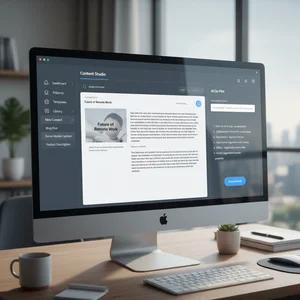
Transitions between sections flow better. The AI suggests connection points when you're stuck moving from one topic to the next.
Word choice improves without endless thesaurus hunting. Type a basic word, get suggestions for more precise alternatives immediately.
Rewriting weak sections happens faster. Highlight the paragraph that's not working, ask for variations, pick the best one or combine elements.
All those small friction points that used to break your flow and eat time? Mostly gone.
What It Doesn't Fix
Bad ideas. If your topic is weak or your angle is boring, AI can't save it. Garbage in, garbage out applies.
Your unique voice. AI-generated text sounds generic because it's averaged across millions of examples. Your personality has to come from you.
Strategic thinking. What to write about, which angle to take, how to position your content. Those decisions are still yours.
The tool makes execution faster. It doesn't make strategy for you.
The Right Workflow
Start with your outline. Brain dump all your points. Let AI organize them logically.
Write your introduction yourself. This sets the tone and voice. The AI will try to match that style in suggestions.
Section by section, write your core point in rough form. Use AI to expand that into full paragraphs.
Edit aggressively. AI suggestions need your judgment. Keep what works, rewrite what doesn't, delete what's unnecessary.
Final polish is still yours. Read through as a human. Does it sound like you? Does it flow? Make it yours.
The AI handles the mechanical expansion. You handle the voice and quality control.
Time Saved
A blog post that used to take me 3 hours now takes about 90 minutes. Same quality, half the time.
That's not cutting corners. It's removing friction from the writing process.
The hours saved add up fast. More posts per week without burning out. Consistent publishing without the exhaustion.
Quality Control
This is critical. AI-assisted doesn't mean AI-written.
Every suggestion gets evaluated. Does this sound like me? Is this accurate? Does this add value?
You're the editor of everything the AI generates. Accept, modify, or reject based on your standards.
Bad content created quickly is still bad content. The speed only matters if quality stays high.
When It Doesn't Work
Complex, nuanced topics need your full attention. AI can help structure, but deep thinking can't be outsourced.
Personal stories and experiences must be authentic. AI can help you articulate them better, but the substance has to come from you.
Original research or unique insights require your expertise. The AI doesn't have access to your specialized knowledge.
Use the tool for mechanical help, not as a replacement for actual thinking.
The Ethical Question
Is AI-assisted writing authentic? That's up to you.
If the ideas are yours, the perspective is yours, the voice is yours, and you're just using tech to write faster, that's completely valid.
If you're passing off AI-generated text as your own without meaningful contribution, that's problematic.
The tool is exactly that: a tool. Like spell check or grammar software, just more powerful.
How you use it determines whether the result is authentic or not.
Getting Started
AI blog title generators help when you're stuck on headlines. Content idea generators help with topic selection.
For actual writing, tools like ChatGPT or Claude work well. Cliptics AI writing assistant handles specific blog writing workflows.
Start small. Use AI for one part of your process. Get comfortable with it. Expand from there.
Don't try to automate everything at once. Learn what works for your specific writing style and needs.
The Real Value
It's not about writing faster. It's about writing consistently without burning out.
When writing feels less exhausting, you write more. When you write more, you improve faster. When you improve faster, your content gets better.
The tool removes enough friction that writing becomes sustainable long-term instead of an energy-draining grind.
That sustainability matters more than speed. Bloggers who burn out don't succeed. Bloggers who keep showing up do.
AI writing assistants make it easier to keep showing up. That's their real value.
Not replacing your creativity. Supporting it so you don't exhaust yourself before you succeed.