Algorithm Fatigue: Being a Creator in 2026 | Cliptics
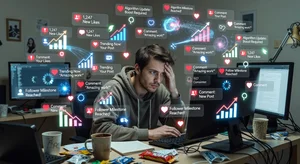
I used to wake up excited to create. Now I wake up checking which algorithm changed overnight.
If you're a content creator in 2026, you probably know exactly what I'm talking about. That low-grade anxiety that lives in your chest. The constant feeling that the ground is shifting underneath you. The exhaustion that has nothing to do with how many hours you worked and everything to do with how many invisible rules you're trying to follow.
It's called algorithm fatigue, and honestly, I think it's the defining experience of being a creator right now.
The Rules Keep Changing and Nobody Tells You
Remember when you could learn how a platform worked and then just... work within that system? Maybe that was naive. Maybe that was never fully true. But it felt true. You figured out what worked, you did more of it, and things generally made sense.
That's not how 2026 feels.
Instagram shifted its algorithm three times in the last four months. TikTok's recommendation engine seems to operate on vibes now. YouTube changed how Shorts get distributed, then changed it again, then quietly rolled back half of what they changed. Twitter, or whatever we're calling it this week, well. You know.
The problem isn't change itself. Creators are adaptable people. We pivot. We experiment. We figure things out. The problem is the pace and the opacity. Changes happen constantly, they're never fully explained, and by the time you've adjusted your strategy, the next shift has already started.
It feels like running on a treadmill that keeps speeding up while someone randomly tilts it in different directions. You can handle fast. You can handle unpredictable. But fast AND unpredictable AND constant? That's where the fatigue comes from.
The Metrics Trap Nobody Warns You About
Here's something I've been thinking about a lot. We've built our entire creative identity around numbers that we don't control.
Views. Reach. Impressions. Engagement rate. Follower growth. These aren't just metrics anymore. They've become how we measure our worth. And when the algorithm decides to show your content to fewer people, it doesn't feel like a technical adjustment. It feels personal. It feels like rejection.
I talked to a creator last month who had been posting consistently for three years. Good content. Genuinely helpful stuff. Her reach dropped 60% over six weeks. Nothing changed about her work. Nothing changed about her audience. The algorithm just... moved on.
She told me she spent two weeks convinced she'd lost her talent. That her content had gotten worse. That she'd somehow become irrelevant. Then she talked to other creators and realized everyone was experiencing the same thing.
That's the trap. When your emotional state is tied to metrics controlled by an algorithm you can't see, understand, or influence, you're not building a career. You're building a dependency.
Why 2026 Feels Different From Every Other Year
Creators have always dealt with platform changes. So what makes this year feel so uniquely exhausting?
I think it's the convergence of several things happening at once.
First, AI-generated content has flooded every platform. The volume of content competing for attention has increased dramatically, which means algorithms are making more aggressive decisions about what to surface. Your content isn't just competing with other creators anymore. It's competing with an endless stream of machine-generated posts, videos, and images. The bar for getting noticed keeps rising while the algorithm's patience keeps shrinking.
Second, every platform is chasing the same short-form video format. They're all trying to be TikTok while TikTok tries to be something else entirely. This means creators who built audiences on specific formats, like long-form video, written content, or photography, are being pushed toward content types that don't match their strengths. You're not just adapting to algorithm changes. You're being asked to become a different kind of creator entirely.
Third, and this is the one that really gets me, monetization is getting more unpredictable. Ad revenue fluctuates wildly. Brand deals are harder to land because companies are spreading their budgets across more creators and more platforms. The financial instability amplifies every other stress. When your income depends on algorithmic favor, every dip in reach feels like a threat to your livelihood.
The Emotional Weight Nobody Talks About
Can we be honest for a second? The mental health toll of all this is real and it's not being discussed enough.
Creator burnout isn't new. But algorithm fatigue is a specific kind of burnout. It's not about working too hard. It's about working in an environment where the relationship between effort and outcome has become almost random.
You can spend 30 hours on a video that gets 200 views. Then dash off something in 20 minutes that reaches 50,000 people. There's no reliable connection between quality and result. That randomness is psychologically corrosive. Human beings need some sense of cause and effect. We need to believe that effort leads to outcome. When that link breaks, motivation crumbles.
I've noticed something in myself and in every creator I know. We've developed this hypervigilance. Constantly scanning for signals. Did that post do well? Why? Can I replicate it? Wait, this one tanked. What went wrong? Was it the time I posted? The thumbnail? The first three seconds? The hashtags?
That constant analysis is exhausting. And the worst part is that half the time, the answer is just "the algorithm." There's no lesson to learn. No improvement to make. Just randomness dressed up as performance data.
Finding Your Way Through It
I'm not going to pretend I have all the answers here. But I've been thinking about what helps, and I want to share what I've landed on.
The first thing is accepting that you cannot optimize your way out of this. The algorithm will do what it does. You can follow best practices and stay informed, absolutely. But trying to perfectly game a system that changes constantly is a losing strategy. It will drain you faster than anything else.
The second thing is building off-platform. Email lists. Communities. Direct relationships with your audience. Anything that doesn't depend on an algorithm deciding whether your people get to see your work. This isn't new advice, but in 2026, it's more urgent than ever. The creators who are handling this moment best are the ones who diversified before they needed to.
The third thing, and this is the hardest one, is redefining what success means to you. If your definition of success is entirely based on reach and growth metrics, you will be miserable. Because those numbers are increasingly out of your control. But if success means making something you're proud of, connecting with people who care, and building something sustainable, then you can still feel good about your work even when the numbers don't cooperate.
What I Keep Coming Back To
The creators who will thrive through this era aren't the ones who crack the algorithm. Nobody cracks the algorithm permanently. They're the ones who build something real underneath all the platform chaos.
A genuine connection with their audience. A body of work they believe in. Skills that transfer across platforms. Revenue streams that don't depend on a single app's recommendation engine.
Algorithm fatigue is real. It's valid. You're not weak for feeling it. But it's also a signal. It's telling you that the current model, where creators are completely dependent on platform algorithms for their reach, income, and sense of professional identity, is broken. Not breaking. Broken.
The question isn't how to feel less fatigued. The question is how to build a creative life that doesn't require you to be at the mercy of systems you can't control.
I don't think anyone has fully figured that out yet. But I think the creators who are asking that question honestly are the ones who'll still be here, still creating, still connecting with people, long after the rest of us have burned out chasing an algorithm that was never designed to care about us in the first place.