
Audiobook Production: DIY Publishing Guide for Authors | Cliptics

After self-publishing my first novel, readers kept asking the same question: "When will the audiobook be available?" I'd researched audiobook production and the numbers were discouraging. Professional narration cost $3,000-$10,000 for a standard-length novel. Distribution required additional platforms with different technical requirements. For a self-published author who'd invested months writing, editing, and marketing, audiobook production felt financially impossible.
Then I discovered text-to-speech audiobook production. Modern TTS has reached quality where many listeners accept AI narration, especially for non-fiction and certain fiction genres. While it doesn't replace talented human narrators for every book, it makes audiobook publishing accessible to authors who couldn't otherwise afford it.
I produced my first TTS audiobook for under $200. Sales in the first year covered production costs five times over. More importantly, I reached readers who exclusively consume audiobooks. a market I'd completely missed with text-only versions. That accessibility transformed my publishing strategy entirely.
After producing a dozen audiobooks with TTS and consulting with dozens of self-published authors, I've developed systematic approaches for DIY audiobook production that work. The technology isn't perfect, but used thoughtfully, it enables authors to reach audiobook audiences without prohibitive costs. Here's what actually works.
Understanding the Audiobook Market Opportunity
Before diving into production, understanding why audiobooks matter helps motivate the effort:
Massive market growth: Audiobook sales have grown double-digits annually for years. The market continues expanding as smartphones make audiobooks more accessible and commutes/exercise create listening opportunities.
Exclusive audiobook audience: Some readers consume exclusively or primarily through audiobooks. Without an audiobook version, you're invisible to this audience segment. That's potentially 20-30% of your addressable market.
Price premium and revenue: Audiobooks typically sell for more than e-books. A $4.99 e-book might sell as a $14.95 audiobook. Higher prices with similar royalty rates mean more revenue per sale.
Marketing and discovery advantages: Major platforms like Audible offer promotional opportunities for audiobooks. Having audiobook versions expands marketing channels and visibility.
Accessibility: Audiobooks serve readers with visual impairments, learning differences like dyslexia, or situations where text reading isn't practical. Offering audiobook versions makes your content accessible to more people.
Competitive necessity: In many genres, readers expect audiobook availability. Not having one is competitive disadvantage. As more self-published authors produce audiobooks, it becomes expected rather than bonus.
For self-published authors, DIY audiobook production opens revenue streams and audience access previously limited to traditionally published authors with publisher support.
When TTS Narration Works (and When It Doesn't)
TTS isn't appropriate for every book. Understanding where it succeeds and fails prevents poor choices:
TTS works well for:
- Non-fiction: Business books, self-help, memoirs, how-to guides. Readers accept AI narration for informational content where voice character matters less than information delivery.
- Genre fiction with simpler prose: Some romance, mystery, sci-fi, fantasy readers accept TTS especially when priced lower than human-narrated versions.
- Academic and technical content: Textbooks, research, technical documentation where content matters more than narrative performance.
- Short-form content: Novellas, short story collections, essays. Shorter length makes any TTS limitations more tolerable.
TTS struggles with:
- Literary fiction: Complex prose, subtle emotional nuance, and character depth require human interpretive performance that TTS can't deliver.
- Multiple character voices: While multi-speaker TTS exists, novels requiring distinct character voices benefit enormously from skilled human narrators.
- Extreme emotional range: Horror, intense thriller, deeply emotional drama. TTS handles moderate emotion reasonably but struggles with extremes.
- Experimental or poetic prose: Books where language musicality and rhythm are essential. Human narrators bring interpretive artistry TTS lacks.
- Children's books: Young listeners especially notice artificial voices. Picture books requiring character voices definitely need human narration.
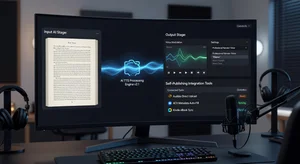
Be honest about whether your book suits TTS production. If your book lives or dies on narrative performance and character voice, invest in human narration or wait until you can afford it. If your book's strength is content, ideas, or plot rather than prose artistry, TTS becomes viable.
Many authors use TTS for some books (non-fiction, straightforward genre fiction) while investing in human narration for works where performance is critical.
Selecting TTS Voices for Narration
Voice selection is your most important creative decision. The wrong voice ruins otherwise good content. Here's my selection process:
Match voice to content: A business book benefits from authoritative, professional-sounding voices. A romance needs warmer, more expressive tones. A thriller works with voices having intensity and pacing flexibility. Think about your book's personality and choose voices reflecting it.
Consider target audience: Who's your ideal reader? Male, female, age range? While any voice can narrate any content, matching narrator demographics to audience often works well. Business books for executives might use mature, authoritative voices. YA fiction might use younger-sounding narrators.
Test extended passages: Don't choose voices based on short samples. Generate several pages from your actual manuscript with different voices. Listen to extended narration, not just sentences. Can you imagine listening to this voice for 8+ hours?
Evaluate emotional range: Generate scenes requiring different emotions. calm exposition, tense action, emotional moments. Does the voice handle range adequately? Some TTS voices excel at neutral narration but fail emotional content.
Check pronunciation and pacing: Test the voice on your manuscript's challenging elements. Character names, technical terms, foreign phrases. Does it handle your specific content well? Adjust spelling or settings to fix pronunciation issues.
Consider accent appropriateness: If your book has strong geographic setting, does narrator accent fit? A book set in London might benefit from British English narration. American settings usually work better with American voices.
For audiobook narration, platforms like text-to-speech services and AI narration tools offer voices suitable for long-form narration. Prioritize naturalness and consistency over dramatic character performance.
Pre-Production Preparation
Before generating audio, prepare your manuscript properly:
Manuscript editing for audio: Written prose doesn't always translate directly to audio. Read your manuscript aloud or have text-to-speech read it. Identify sentences that work on page but sound awkward spoken. Simplify extremely complex sentences. Break up long paragraphs.
Pronunciation guide creation: List character names, place names, technical terms, and foreign words. Determine correct pronunciation. Some TTS platforms let you create custom pronunciation dictionaries. Use phonetic spelling in the manuscript itself if needed: "EYE-leen" for "Eileen" if TTS mispronounces it.
Chapter structuring: Ensure chapters are clearly marked and consistently formatted. You'll generate audio chapter by chapter, so clean chapter organization prevents confusion during production.
Front and back matter: Write openings and closings specific to audiobook format: "This is [book title] written by [author name], narrated by [narrator name]." Create audiobook-specific disclaimers, copyright statements, and calls-to-action appropriate for audio format.
Pacing markers: If certain passages need specific pacing. dramatic pauses, faster narration, slower contemplative reading. mark these. TTS platforms often support tags or settings controlling pacing and emphasis.
Music and sound planning: Will you include music or sound effects? Chapter opening/closing sounds? Background ambience? Plan this before production, as it affects workflow and budget.
Thorough preparation prevents expensive mid-production revisions and ensures final product quality.
Production Workflow
Here's my systematic approach to generating TTS audiobooks:
Step 1: Generate chapter by chapter: Process manuscript in chunks (typically chapters). This makes file management easier and lets you pause production if issues arise. Save each chapter as separate audio file initially.
Step 2: Review every chapter: Don't batch-generate the entire book without review. Listen to each chapter, checking for mispronunciations, awkward pacing, or quality issues. Fix problems before moving to next chapter.
Step 3: Create pronunciation corrections: As you discover mispronunciations, document corrections. Update your pronunciation guide or manuscript text. Regenerate affected chapters with corrections applied.
Step 4: Normalize audio levels: Use audio editing software to normalize volume across all chapters. TTS sometimes varies in output level. Consistent volume across the full audiobook is essential for listener experience.
Step 5: Add silence and chapter markers: Insert 1-2 seconds of silence at chapter beginnings/endings. Add metadata markers at chapter boundaries. This helps with navigation and creates cleaner listening experience.
Step 6: Assemble full audiobook: Combine all chapter files into single audiobook file or properly structured multi-file package depending on distribution requirements. Maintain chapter markers so listeners can navigate.
Step 7: Add opening and closing: Record or generate opening (title, author, narrator) and closing (copyright, author notes, calls-to-action) sections. These frame the audiobook professionally.
Step 8: Final quality check: Listen to the complete audiobook start to finish. Yes, this takes hours for full-length books. But it's essential for catching issues. Use playback at 1.5-2x speed to accelerate the process while still catching problems.
Step 9: Export to distribution formats: Different platforms require different audio formats (MP3, M4B, etc.) and quality settings (64kbps minimum, 192kbps typical). Export versions meeting each platform's specifications.
This workflow is time-intensive but manageable. For a typical 80,000-word novel, expect 20-40 hours total production time including generation, review, and editing. That's substantial but far less than $5,000-$10,000 for professional narration.
Audio Editing and Enhancement
Raw TTS output benefits from editing and enhancement:
Noise reduction: Even quality TTS can have minor background noise or artifacts. Run noise reduction filters to clean up audio. Be subtle. over-processing creates artificial-sounding results.
EQ adjustments: Apply light equalization to improve voice clarity and warmth. Boosting low-mid frequencies slightly often makes TTS voices sound more natural and pleasant.
Compression: Audio compression (not file compression) makes volume more consistent within and across chapters. Listeners appreciate not constantly adjusting volume.
De-essing: TTS sometimes has harsh sibilance (S sounds). De-essing reduces this for more pleasant listening experience.
Chapter-to-chapter consistency: Match audio characteristics across chapters. If chapter 3 sounds different from chapter 4, listeners notice. Apply same processing to all chapters for consistency.
Music and sound design: If appropriate for your book, add opening music, chapter transition sounds, or subtle background ambience. This increases production value significantly. But keep it subtle. don't distract from narration.
Free tools like Audacity handle most editing needs. Professional tools like Adobe Audition offer more features but aren't essential for DIY production.
Distribution Platform Strategy
Where you distribute audiobooks significantly impacts reach and revenue:
Amazon ACX/Audible: Largest audiobook platform. Offers exclusive (only on Audible/Amazon/iTunes) or non-exclusive distribution. Exclusive provides higher royalty rates. Non-exclusive lets you distribute elsewhere but with lower Audible royalties. ACX requires human narration (not TTS) for their marketplace, so direct TTS audiobooks aren't eligible for standard ACX distribution.
Findaway Voices: Distributes to 30+ audiobook platforms including Audible, Apple Books, Google Play, and specialty platforms. Accepts TTS-narrated audiobooks. Takes distribution fee but provides wide reach.
PublishDrive: Aggregator that distributes audiobooks to multiple platforms. Similar to Findaway but with different platform relationships and pricing structure.
Apple Books: Direct distribution possible for Apple Books audiobooks. Requires Apple-specific formatting and processes but provides access to Apple's large space without aggregator fees.
Google Play Books: Accepts audiobook uploads directly. Smaller market share than Audible but growing, and includes Android users who might not use other platforms.
Spotify: Recently entered audiobook market. Requires specific partnership for distribution but represents new opportunity as platform grows audiobook presence.
Direct sales: Some authors sell audiobooks directly from their websites, keeping full revenue minus payment processing. This requires self-hosting or services like Payhip or Gumroad but maximizes profit per sale.
Most self-published authors use wide distribution (Findaway Voices or similar) to maximize reach, accepting lower per-sale revenue for higher overall sales volume. Others prefer exclusive Audible if they use human narration and want maximum Audible promotional support.
Pricing and Positioning
How you price and position TTS audiobooks matters:
Price below human narration: TTS audiobooks generally should be priced 20-40% below comparable human-narrated books in your genre. This acknowledges narration quality difference while remaining attractive to price-sensitive buyers.
Transparent about TTS use: Opinions vary on disclosure, but I recommend being upfront that narration is AI-generated. Mention in description: "narrated using professional text-to-speech technology." Undisclosed TTS that surprises listeners generates negative reviews.
Emphasize content value: Position audiobook around your book's strengths. information, story, ideas. rather than narration performance. For non-fiction, emphasize practical value. For fiction, focus on plot and world-building.
Bundle with other formats: Offer deals when customers buy multiple formats (e-book + audiobook bundle). This adds value while maximizing revenue per customer.
Use promotional pricing strategically: Temporary price drops or platform promotions can boost visibility and reviews. New audiobooks often benefit from launch promotional pricing to generate initial sales and reviews.
Consider tiered pricing by length: Very short audiobooks (under 3 hours) should be priced lower than standard novels (6-10 hours), which should be lower than epic-length books (15+ hours). Listeners expect pricing roughly proportional to listening time.
Marketing TTS Audiobooks
How do you market audiobooks effectively, especially TTS ones?
Use existing audience: Email your existing readers about audiobook availability. Many will buy audiobooks of books they've already read in text format.
Platform promotions: Take advantage of promotional opportunities platforms offer. daily deals, new release features, genre-specific promotions.
Social media audio samples: Create short audio samples (1-2 minutes) from compelling book sections. Share on social media to give potential buyers voice preview.
Reviewer outreach: Send review copies to audiobook bloggers and reviewers. While human narration gets more review attention, quality TTS audiobooks can still earn reviews.
Cross-promotion with text versions: Mention audiobook availability in e-book and print editions. Link between formats on all platforms.
Podcast appearances: As an author, appear on podcasts in your genre. Mention audiobook availability. Podcast listeners are audiobook consumers.
Audiobook-specific marketing: Join audiobook-specific promotional sites and groups. These communities specifically serve audiobook listeners.
Library partnerships: Platforms like Hoopla and OverDrive serve libraries. Getting audiobooks into library systems provides exposure and legitimacy.
Remember that audiobook marketing supports overall book marketing. Each format drives awareness that benefits other formats. TTS audiobooks might not be your highest-revenue format, but they reach audiences who otherwise wouldn't discover your work at all.
The Financial Reality
Let's discuss actual costs and returns:
TTS Production Costs: $50-$300 depending on length and platform. Some platforms charge per word, others per hour of generated audio. A typical novel costs $100-$200 to produce as TTS audiobook.
Editing software: Free (Audacity) to $240/year (Adobe Audition subscription). Most authors manage fine with free options.
Distribution costs: Varies by platform. Some take percentage of sales, others charge upfront fees. Budget $0-$100 for distribution setup.
Total DIY TTS production: $150-$500 for typical full-length book.
Revenue potential: A moderately successful audiobook selling 200 copies at $14.95 with 40% royalty rate generates $1,196 revenue. That's 2-8x production cost recovery. Books selling 500+ copies deliver meaningful returns.
Compared to human narration: Professional narration costs $3,000-$10,000. To break even, you need to sell 500-1,600 copies depending on pricing and narration cost. Many self-published books never sell enough to justify that investment.
TTS audiobook production has far lower break-even threshold. Even modest sales deliver positive ROI. This makes audiobook publishing feasible for authors who couldn't otherwise afford it.
Quality Standards and Listener Satisfaction
Despite being DIY, maintain professional standards:
Technical quality: No background noise, consistent volume, clean audio. Listeners forgive AI narration if production quality is professional.
Pronunciation accuracy: Fix obvious mispronunciations. Listeners tolerate TTS but not careless errors that could be corrected.
Appropriate pacing: Narration shouldn't feel rushed or dragging. TTS platforms let you adjust speaking rate. Find comfortable listening pace.
Proper formatting: Chapter markers, metadata, cover art. These technical elements make audiobooks function properly on platforms.
Honest positioning: Don't mislead about narration. Transparent TTS disclosure prevents disappointed listeners.
The authors succeeding with TTS audiobooks maintain standards while being realistic about limitations. They produce quality products at accessible price points rather than trying to compete with $30 human-narrated audiobooks.
The Long-Term Publishing Strategy
How do TTS audiobooks fit into sustainable author careers?
Start with TTS, graduate to human narration: Many authors use TTS for early books while building audience. As revenue grows, they invest human narration budget into bestselling titles while using TTS for backlist.
Format stratification: Use human narration for flagship books and TTS for secondary works, short fiction, or supplementary content. Different books justify different production investment levels.
Reinvestment cycle: Revenue from TTS audiobooks funds future human narration. Each format supports others in virtuous cycle of content creation and revenue.
Audience building: Every format is audience building. Audiobook listeners who discover you through TTS version might buy future books in any format. Access drives discovery.
Skills and assets: Learning audiobook production develops valuable publishing skills and assets. Production workflows, platform knowledge, and listener understanding serve your career long-term.
The most successful self-published authors think strategically about format diversity. TTS audiobooks are one tool in comprehensive publishing strategy serving different audience needs and revenue opportunities.
For authors serious about sustainable publishing careers, DIY audiobook production using TTS isn't about cutting corners. it's about accessing markets and readers previously beyond reach. Done thoughtfully with appropriate quality standards and positioning, TTS enables audiobook publishing that serves readers, generates revenue, and builds author careers.
That's worth the effort of learning production skills and investing modest budgets. one audiobook at a time.