Creator Burnout: 55% of Gen Z Creators Are Thinking About | Cliptics
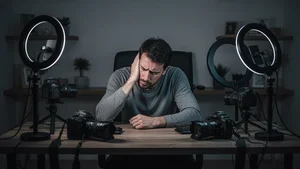
I have been wanting to write this for a while. Because I keep seeing the same thing happen over and over. Creators I follow, people who were posting every day for years, suddenly go quiet. No goodbye video. No announcement. They just vanish.
And the numbers back up what I was already feeling. A recent survey found that 55% of Gen Z creators are actively thinking about quitting in 2026. More than half. That is not a small group of people having a rough week. That is a crisis.
So I want to talk about what is actually happening. Why creators are burning out faster than ever. What the algorithm pressure really feels like from the inside. And what you can do about it if you are one of the people sitting at your desk right now wondering if this is still worth it.
The Numbers Tell a Story Nobody Wants to Hear
Let me lay out what is going on because the statistics are genuinely alarming.
Creator burnout has been rising steadily since 2023, but 2026 is shaping up to be the worst year yet. Beyond that 55% figure, surveys are showing that over 70% of full time creators report experiencing significant mental health challenges directly tied to their content work. Anxiety, depression, insomnia, and a persistent feeling of never doing enough.
The average creator now spends 12 to 16 hours per day on content related tasks. That includes filming, editing, managing comments, responding to brand emails, researching trends, and the constant low level anxiety of checking analytics. Most traditional jobs cap at 8 hours. Creators are routinely doubling that and calling it passion.
What makes this different from normal workplace burnout is the personal nature of it. When your job is being yourself on camera, you cannot clock out. Your personality is the product. Your life is the content. There is no separation between work and identity, and that distinction matters more than people realize.
Why the Algorithm Is Breaking People
Here is the part that does not get talked about enough. Platforms have designed systems that are psychologically punishing for creators.
Every major platform now prioritizes consistency above almost everything else. Miss a day of posting and your reach drops. Miss a week and you might as well be starting over. The algorithm does not care that you were sick, or grieving, or just needed a break. It only knows you stopped feeding it.
This creates a treadmill effect. You cannot slow down without losing what you built. Every vacation comes with guilt. Every rest day feels like a risk. I have talked to creators who schedule content while they are in the hospital because they are terrified of what a gap in posting will do to their numbers.
And then there is the comparison trap. Platforms show you exactly how everyone else is performing. You can see who is growing faster. Who got more views on a similar topic. Who landed the brand deal you wanted. This constant visibility into other people's success creates a pressure that never existed before social media turned creation into a competitive sport.
The shift to short form content has made everything worse. A five minute YouTube video could take a day to produce. Now creators are expected to pump out multiple 60 second videos per day across three or four platforms simultaneously. The volume expectations have skyrocketed while the creative satisfaction of each piece has plummeted.
The Money Problem Nobody Talks About
Financial instability is a massive driver of burnout, and it is probably the least discussed factor.
Most creators earn far less than their audiences assume. The top 1% are doing well. Everyone else is grinding for ad revenue that might cover rent if they are lucky. Brand deals are inconsistent. Platform payment programs change their terms constantly. What earned $1,000 last month might earn $300 this month with the exact same view count.
This financial precarity means creators cannot afford to take breaks even when they desperately need them. There is no paid time off. No sick leave. No employer subsidized therapy. The creator economy promised freedom but delivered a version of freelancing with all the instability and none of the boundaries.
Many Gen Z creators entered this space during the pandemic when it seemed like everyone was blowing up on social media. They built audiences during a uniquely captive moment in history. Now that real life has resumed, maintaining those numbers requires exponentially more effort with diminishing returns.
What Burnout Actually Looks and Feels Like
I want to describe this because if you are experiencing it, you might not even recognize it for what it is.
Creator burnout often starts with dreading the thing you used to love. You sit down to film and feel nothing. The camera that used to excite you now feels like an obligation. Ideas that used to flow naturally now require hours of forcing. You start resenting your audience for expecting content from you, and then you feel guilty for resenting the people who support you.
Physically, it shows up as exhaustion that sleep does not fix. Headaches from screen time. Tension in your shoulders from hunching over editing software. Eye strain that becomes your baseline normal. Disrupted sleep because your brain cannot stop thinking about tomorrow's content.
Socially, you start withdrawing. Real friendships suffer because every social interaction gets mentally evaluated for its content potential. Can I film this? Should I be documenting this? Is this experience valuable enough to share? When your brain starts treating your own life as raw material, something fundamental breaks.
The scariest part is that many creators do not recognize burnout until they are deep in it. They mistake exhaustion for laziness. They think pushing through is strength. By the time they acknowledge something is wrong, they have often been running on empty for months.
Building Something That Actually Lasts
Okay, so what do you actually do about this? I am not going to give you the standard advice about taking a bubble bath and journaling. You deserve better than that.
Set non negotiable off days. Not "I'll try to take Sundays off." Actual, hard boundaries where you do not check analytics, do not respond to comments, and do not think about content. Your audience will survive. The algorithm will recover. Your mental health might not if you keep going without breaks.
Batch your content production. Film multiple pieces in one session instead of creating daily. This gives you buffer days where you can rest without gaps in your posting schedule. Many successful long term creators film an entire week of content in one or two days and spend the remaining days living their actual lives.
Diversify your income away from platform dependency. This might mean building an email list, creating a course, offering consulting, or developing a product. When your entire income depends on one algorithm's mood, you are always one policy change away from financial disaster.
Be honest with your audience about your limits. The creators who last are the ones who set expectations early. Tell your audience your posting schedule. Tell them when you are taking time off. The people who leave because you posted four times a week instead of seven were never your real audience anyway.
Get actual professional support. Therapy is not a luxury for creators. It is a professional necessity. Find someone who understands the specific pressures of public facing digital work. Online therapy platforms have made this more accessible and affordable than ever.
Audit your relationship with metrics. Try going one week without checking your analytics dashboard. Just one week. Notice how it changes your relationship with creating. Most creators find that removing the constant feedback loop of numbers makes the actual creative work enjoyable again.
The Bigger Picture
What is happening with creator burnout is not just a personal problem. It is a systemic one. Platforms have built business models that require human beings to behave like content machines. The incentive structures reward volume over quality, consistency over health, and growth over sustainability.
Until platforms redesign their algorithms to account for human limitations, the responsibility falls on individual creators to protect themselves. That is not fair. But it is reality.
If you are one of the 55% thinking about quitting, I want you to consider a third option. You do not have to quit entirely and you do not have to keep going at this pace. You can restructure. You can scale back. You can redefine what success looks like on your own terms.
The creators who will still be here in five years are not the ones who posted the most. They are the ones who figured out how to keep going without destroying themselves in the process. That is not giving up. That is the most strategic decision you can make.
Your worth is not your output. Your value is not your view count. And taking care of yourself is not laziness. It is the only way any of this works long term.