Creator Economy Monetization Beyond Ad Revenue: $20B | Cliptics

I've been in the creator economy long enough to watch the ad revenue model slowly strangle people's creativity. You know the cycle. Chase views. Chase engagement. Chase the algorithm. Burn out. Repeat.
The frustrating part is not the grind itself. It's watching talented creators produce incredible work and still barely scrape by because they bet everything on ad revenue. I've been there. I've had months where ad rates tanked 40% for no clear reason. Where a platform changed its algorithm overnight and my income dropped like a stone.
That's when I realized something important. Ad revenue is not a business model. It's someone else's business model that you happen to benefit from occasionally.
The real money in the creator economy flows differently now. And if you're still banking on ads to pay your bills, you're missing the shift that's already happened.
The Ad Revenue Trap Nobody Talks About
Here's what they don't tell you when you start creating content. Ad revenue trains you to optimize for the wrong things.
You need views. Lots of them. So you make content that appeals to the broadest possible audience. You soften your edges. You avoid controversial takes. You chase trends instead of building something meaningful.
And even when you win at that game, the rewards are surprisingly small.
I remember hitting 100,000 views on a video and feeling excited until I checked my earnings. $280. For weeks of work. For a piece of content that brought real value to thousands of people.
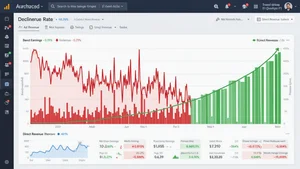
The math just doesn't work unless you're operating at massive scale. And even then, you're building your business on someone else's platform with rules that change constantly.
But here's what changed my entire approach. I started looking at creators who were making serious money. Not viral sensation money. Sustainable, pay your mortgage and plan for retirement money.
Almost none of them relied primarily on ad revenue.
Where the Real Money Actually Lives
The creators earning six and seven figures annually share a pattern. They treat ad revenue as a bonus, not a business.
Their real income comes from three core strategies I've watched work consistently over the past five years.
First, digital products. Courses. Templates. Guides. Resources that solve specific problems for specific people. I've seen creators launch products that earn more in a weekend than their ad revenue brings in all year.
The beauty of digital products is the economics. Create once, sell infinitely. No inventory. No shipping. No fulfillment headaches. Just pure value exchange where someone pays you directly for something that helps them.
Second, membership communities. This one took me a while to understand. Why would someone pay monthly to access a creator's content when so much is free?
Because they're not paying for content. They're paying for access, community, and transformation. The creators crushing it with memberships offer ongoing value that compounds over time. Think exclusive workshops, direct feedback, peer connections, resources that evolve.
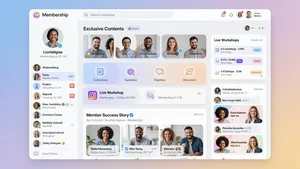
I know creators with 500 paying members at $20 per month who are earning more than creators with 500,000 subscribers relying on ads. The math is almost offensive when you compare them.
Third, brand partnerships and sponsorships. But not the spray and pray approach where you take every deal. Strategic partnerships with brands that actually align with your audience.
The difference between a $500 sponsored post and a $5,000 brand partnership often comes down to how well you understand your audience's needs and how effectively you communicate your value to brands.
The Strategy That Changed Everything For Me
I stopped thinking like a content creator and started thinking like a business owner. That single shift unlocked everything.
Content became the top of my funnel, not my entire business. Videos, posts, newsletters, they all serve one purpose: demonstrate value and build trust with my audience.
But the monetization happens through products and services that genuinely help people solve problems.
When I launched my first digital product, I was terrified. Who would pay for something when I give so much away for free? Turns out, lots of people. They weren't buying information. They were buying organized, actionable guidance that saved them time and confusion.
The AI content idea generator I use now helps me create content strategies that connect to my product offerings. Instead of random topics that might get views, I focus on content that attracts my ideal customers.
This is the part most creators miss. Your content and your monetization should reinforce each other. Every piece you create should either build awareness, demonstrate expertise, or nurture relationships with people already in your space.
The Part Where Most Creators Get Stuck
I've consulted with dozens of creators trying to diversify their income. Almost all of them hit the same wall.
They think they need to create something massive. A comprehensive course. A complete coaching program. An elaborate membership platform.
So they spend months planning. Perfecting. Waiting for everything to be ready. And they never launch.
The creators who actually make money do the opposite. They start small. Validate demand. Iterate based on feedback.
Your first digital product might be a simple PDF guide. Your first membership might be a basic Discord server with weekly Q&A sessions. Your first brand deal might be a single Instagram post for a small company.
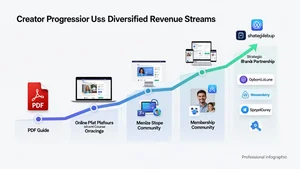
What matters is starting. Testing. Learning what your audience actually wants to pay for.
I've also noticed something about content burnout. Creators burning out are almost always on the ad revenue treadmill. They can't stop creating because their income disappears the moment they slow down.
Creators with diversified income streams can take breaks. Can experiment. Can create passion projects without worrying about optimizing every piece for maximum views.
That freedom is worth more than any paycheck.
Building Income That Actually Scales
Here's what I learned about scaling creator income beyond ads. Each revenue stream scales differently.
Ad revenue scales linearly at best. Double your views, roughly double your income. But your time investment also doubles. You're trapped on a treadmill where the only way to earn more is to produce more, forever.
Digital products scale exponentially. Create once, sell to ten people or ten thousand people. Your time investment stays relatively constant while income potential multiplies.
Memberships scale sustainably. Growth is usually slower but incredibly stable. Churn rate becomes your most important metric. Keep 90% of members month over month and you build a foundation that supports everything else.
Brand partnerships scale with your use. As your audience grows and engagement improves, you can charge more per partnership while doing fewer deals. Quality over quantity becomes profitable.
The smartest creators I know build all three. They're not dependent on any single income stream. If brand deals dry up for a quarter, their membership and product revenue keeps them stable. If they need a break from new content, their digital products keep selling.
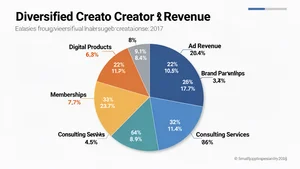
This diversification is not just smart business. It's creative freedom. When you're not desperate for every ad dollar, you can create work that matters to you instead of work that appeals to algorithms.
The Tools That Actually Make This Possible
You don't need fancy technology to start monetizing beyond ads. But the right tools eliminate friction that stops most creators from launching.
I use text to speech tools to create audio versions of written content, expanding how people can consume my work without doubling my production time. Small efficiency gains compound into hours saved weekly.
For visual content that supports products and memberships, AI image generation helps me create professional looking assets without hiring designers for every project. Not for everything, but for mockups, social graphics, and quick iterations.
The pattern I've noticed among successful creators is tool efficiency. They're not using every platform and software available. They've identified specific bottlenecks in their workflow and found targeted solutions.
Email platform for audience communication. Payment processor for products and memberships. Community platform for member engagement. Content tools that speed up production without sacrificing quality.
That's it. The rest is execution.
What I Wish I'd Known Three Years Ago
If I could go back and tell myself one thing about creator monetization, it would be this: your audience wants to support you beyond watching ads.
They're looking for ways to go deeper. To get more value. To be part of something meaningful.
But you have to give them the opportunity. You have to build the bridge between free content and paid offerings.
I spent two years creating content before I launched my first product. Those were two years of leaving money on the table. Not because my audience was cheap. Because I never asked. I never built anything for them to buy.
The moment I shifted that mindset, everything changed.
I started creating with intention. Every piece of content served a purpose in my larger business strategy. Some content attracted new people. Some content demonstrated my expertise. Some content nurtured relationships with existing customers.
And slowly, month by month, my income became more stable. More predictable. More sustainable.
The ad revenue is still there. I'll take it. But it's 15% of my total income now instead of 100%. And that shift means I control my creative destiny instead of letting platforms control it for me.
The Shift Happening Right Now
The creator economy is maturing. The early days where ad revenue felt like magic internet money are over.
Successful creators are building real businesses with diversified income, strategic planning, and long term thinking. They're treating their work like entrepreneurs, not just content machines.
This is not bad news. It's better news.
Because once you stop chasing views and start building value, you attract different people. More committed people. People who become customers, community members, and advocates instead of just passive viewers.
The future of creator monetization is not bigger ad checks. It's direct relationships with audiences who want what you're building.
Are you ready to make that shift?