
Developer's Guide to AI APIs 2026: MCP and Beyond | Cliptics

Three months ago I spent two days debugging why our AI integration kept timing out. The API docs said nothing helpful. Stack Overflow had three-year-old answers that didn't apply. I finally found the issue buried in a Discord server where the API team actually hangs out.
That experience taught me something important: the AI API landscape in 2026 is powerful but poorly documented. The good news? Once you understand the patterns, integrating any AI API becomes straightforward.
This guide is what I wish I'd found back then. Real integration patterns, actual cost optimization strategies, and the stuff documentation doesn't tell you.
The 2026 AI API Landscape
Five major providers dominate right now. OpenAI, Anthropic, Google, Microsoft Azure, and AWS Bedrock. Each has strengths and quirks you need to know.
OpenAI owns the largest market share. Their APIs are stable, well-tested, heavily rate-limited. GPT-4.6 and the newer o-series models deliver strong performance. The downside? Expensive at scale, and everyone's using them so you're not differentiated.
Anthropic focuses on safety and long context. Claude models excel at following instructions precisely and handling massive inputs. Their API is clean, errors are informative, rate limits are more generous than OpenAI's. I use them for anything requiring nuanced understanding or processing entire documents.
Google's Gemini API is fast and cheap. The free tier is surprisingly capable. Multi-modal support is best-in-class. Documentation quality varies wildly, some endpoints are thoroughly explained while others assume you know what you're doing.
Azure and Bedrock are enterprise plays. You pay premium pricing for compliance guarantees, SLAs, and integration with existing cloud infrastructure. If you're already on Azure or AWS, they make sense. Otherwise, stick with direct provider APIs.
The real shift in 2026 isn't which provider is best. It's MCP changing how we think about integrations entirely.
Understanding MCP Protocol
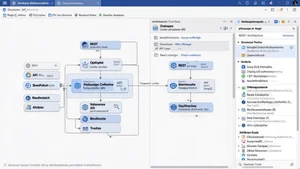
Model Context Protocol is Anthropic's answer to a problem every developer hits: how do you let AI models access external tools and data without building custom integrations every time?
Traditional approach: you write API code for each service, create custom prompts explaining how to use them, handle authentication yourself, parse responses, retry failures. Hundreds of lines of glue code.
MCP approach: you install an MCP server for that service, point your AI at it, the protocol handles discovery, authentication, and execution. Your code shrinks from hundreds of lines to maybe twenty.
Here's what makes it work. MCP servers expose three primitives: resources (static data the model can read), tools (functions the model can call), and prompts (templated instructions). Your app creates an MCP client, connects to servers, and the model can now access everything those servers expose.
Example: instead of building custom code to let AI read your Google Calendar, search emails, and update Notion, you install three MCP servers and they handle everything. Your code just manages the MCP client connection.
The protocol is still young, but the ecosystem is growing fast. Over 10,000 MCP server examples exist now in registries like Smithery and GitHub. Want to integrate Stripe? Someone built an MCP server. Need database access? Multiple MCP server options exist.
The catch: you're betting on a protocol that's not yet industry standard. But the productivity gains are real enough that I'm using it in production.
Integration Patterns That Actually Work
I've integrated dozens of AI APIs. Here are patterns that keep working regardless of provider.
Streaming responses always. Never wait for complete responses on long generations. Users perceive streaming as 10x faster even when total time is identical. Every major API supports SSE streaming now, implement it from day one.
Prompt caching for repeated context. If you're sending the same instructions or data in multiple requests, cache it. Anthropic's prompt caching cuts costs by 90% for my use cases. OpenAI added it recently. Google is working on it. Use it.
Fallback chains for reliability. Primary API down? Switch to backup automatically. I run Anthropic primary with OpenAI fallback. Costs slightly more but eliminates downtime.
Token counting before sending. Count tokens client-side before calling APIs. Prevents failed requests from oversized inputs. Every provider has different context limits, check before sending.

Structured outputs via schemas. Force the model to return JSON matching your exact schema. OpenAI's structured outputs, Anthropic's tool use, Google's function calling all enable this. Eliminates parsing errors.
Rate limit handling with exponential backoff. You will hit rate limits. Implement proper backoff from day one. Start with 1 second, double each retry, max out at 60 seconds. Log when it happens so you know when to upgrade tiers.
Request deduplication. Users spam buttons. Dedupe identical requests within 5 seconds. Saves money and reduces unnecessary load.
Cost Optimization Strategies
AI API costs scale fast if you're not careful. Here's how to keep them reasonable.
Model selection matters more than negotiation. Use the smallest model that works. GPT-4 for complex reasoning, GPT-3.5 for simple tasks, embeddings models for search. We cut costs 60% by routing intelligently.
Prompt compression reduces spend. Shorter prompts cost less. Remove filler words, use abbreviations in system prompts, compress examples. I shrunk our standard system prompt from 800 tokens to 350 with zero quality loss.
Batch processing when possible. Many providers offer batch APIs at 50% off. If you can wait hours for results, batch everything. We batch overnight processing and save thousands monthly.
Response token limits. Set max_tokens explicitly. Models will ramble if you let them. A 100-token answer costs 10x less than a 1000-token answer. Constrain outputs aggressively.
Monitor per-user costs. Some users cost 10x more than others. Log costs by user ID, set spending limits, throttle expensive users. Prevents single users from blowing your budget.
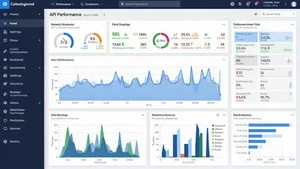
Free tier stacking. Google, Replicate, and smaller providers offer generous free tiers. Route low-priority requests there. We handle 30% of traffic on free tiers without quality issues.
Common Pitfalls to Avoid
Every developer makes these mistakes. Learn from mine instead of repeating them.
Trusting model outputs blindly. Models hallucinate. Always validate critical information. If it's generating SQL, test queries in sandbox first. If it's citing sources, verify they exist.
Ignoring context window limits. Easy to hit when processing long documents. Chunk intelligently, summarize progressively, or use RAG patterns. Don't just truncate and hope.
Poor error handling. API calls fail. Networks drop. Rate limits hit. Handle every error explicitly. Return useful messages to users. Log enough detail to debug later.
Hardcoding API keys. Use environment variables. Rotate keys regularly. Set different keys for dev/staging/prod. This should be obvious but I've seen production keys committed to GitHub repeatedly.
Skipping load testing. APIs behave differently under load. Rate limits become real problems. Costs spike. Test with realistic traffic before launching.
Not implementing timeouts. Set request timeouts on every call. 30 seconds for most use cases, 60 for very long generations. Without timeouts, hung connections will pile up and crash your app.
Where This Tech is Heading
The next year will bring three major shifts based on what I'm seeing in betas and announcements.
Model prices dropping 10x. DeepSeek proved you can train strong models cheaply. Other providers are responding. Expect significant price cuts through 2026, especially on older model versions.
MCP or similar protocols becoming standard. Too much value in unified integration. Either MCP wins or someone builds something similar. Either way, custom integration code dies.
Longer context windows everywhere. Million-token contexts are becoming standard. Changes what's possible. You can process entire codebases, full books, complete customer histories in single calls.
The fundamentals stay the same though. Understand the APIs, optimize costs, handle errors properly, validate outputs. Master those basics and you'll adapt fine as specifics change.
This is a good time to be building with AI APIs. They're powerful enough to ship real products, stable enough to bet businesses on, and improving faster than any platform I've worked with. Just understand what you're working with, and build accordingly.