
Edge AI: Why Your Phone No Longer Needs the Cloud | Cliptics
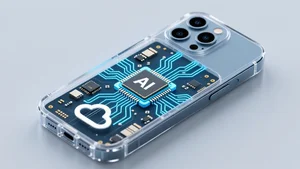
Something quietly shifted in the last year or so, and I think most people haven't fully noticed yet. Your phone got smart. Like, actually smart. Not in the "let me send your question to a server farm in Virginia and wait for the answer" kind of way. More like the "I can figure this out right here, right now, no Wi-Fi needed" kind of way.
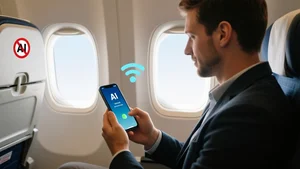
I started paying attention to this on a flight last month. Airplane mode, obviously. But I opened my camera and the AI scene detection still worked. I tried the live translation feature on a menu I'd photographed before boarding and it just... worked. No cloud. No connection. Just the little chip inside my phone quietly doing its thing.
The Chip Race Nobody Talks About
While everyone was focused on ChatGPT and cloud AI, the biggest chipmakers in the world went on an absolute tear building tiny AI processors for your pocket. And the numbers are kind of staggering.
Qualcomm's Snapdragon 8 Elite handles 75 trillion operations per second across its neural processing unit. Apple's latest Neural Engine pushes 35 trillion operations per second while barely touching the battery. Google built dedicated TPU blocks right into its Tensor chips. Even MediaTek's Dimensity series reaches 25 TOPS, bringing serious AI muscle to phones that don't cost a fortune.
These aren't marketing numbers on a spec sheet. This is real processing power that lets your phone run language models, generate images, and understand your voice without ever pinging a server.
Why This Actually Matters to You
I used to think the whole "process things on device" pitch was a nice to have. Cool for techies, maybe, but not something that would change my day. I was wrong about that.
Think about privacy for a second. When you ask your phone to transcribe a voice memo or analyze a photo, that data used to travel across the internet to some data center, get processed, and come back. Every voice clip. Every face in every photo. All of it going somewhere else before returning to you.
With on-device AI, none of that leaves your hands. Your face data stays on your phone. Your voice recordings get processed locally. Samsung's Galaxy AI keeps sensitive biometric processing entirely on the chip. That's not just a feature. That's a completely different relationship with your own data.
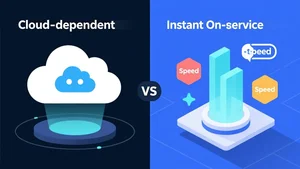
And speed. Cloud round trips add latency you might not consciously notice but definitely feel. That tiny pause between speaking and seeing text appear. On-device processing cuts that to almost nothing.
Where the Money Is Going
The edge AI market is projected to grow from about $30 billion in 2026 to nearly $386 billion by 2034. Smartphones account for roughly 47% of the on-device AI space. Samsung, Apple, and Google are competing on NPU benchmarks the way they used to compete on megapixels. Qualcomm's latest chips handle over 220 tokens per second for on-device text generation, which is fast enough for a real time conversation with AI that lives entirely on your phone.
The Honest Tradeoffs
I'd be lying if I said edge AI was perfect at everything. Cloud AI still wins when you need massive models with billions of parameters working together. The big language models on servers remain more capable than what fits on a phone chip today.
But the gap is closing faster than anyone predicted. Techniques like model quantization let developers shrink powerful models to sizes that run comfortably on mobile hardware. A year ago, running a language model locally felt like a novelty. Now it feels normal.
The smartest approach is hybrid. Process what you can on device. Send only the truly heavy stuff to the cloud. Your phone handles photo editing, voice recognition, and basic text generation locally, then reaches out only when it needs to. It's practical, and it means AI keeps working even when your connection drops.
What This Unlocks
I keep thinking about people in places with unreliable internet. A farmer using an AI plant disease detector in a rural area with spotty coverage. A student running an AI tutor app on a bus. A content creator using AI tools to edit photos on the go. These scenarios used to require connectivity. Now they don't.
That shift feels bigger than any single AI announcement I've seen this year. The smartest AI in the world doesn't help much if you can't reach it. Moving intelligence to the edge puts it where people actually are.
What Stays With Me
The thing I keep coming back to is how invisible all of this is becoming. You don't see the neural processing unit. You don't think about whether your phone is using local or cloud AI. You just notice that things feel faster, that your battery lasts longer, and that your photos look better without you doing much.
That's probably the best sign the technology is working. When you stop noticing it. When AI on your phone just feels like... your phone.
We're not quite there yet. But after that flight, after watching my phone do genuinely clever things with no signal whatsoever, I'm convinced we're closer than most people realize.