Free AI Tools Showdown 2026 Veo Claude and More | Cliptics
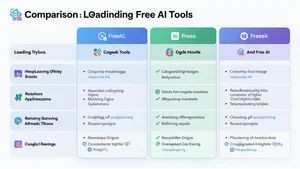
Free AI tools in 2026 are shockingly good. Not "decent for free" but legitimately competitive with paid options for many use cases. I tested every major free offering available. Some are marketing gimmicks with crippling limitations. Others deliver remarkable value.
The free tier landscape has improved because companies realized that converting users from free to paid beats gating everything behind paywalls. They're investing in genuinely useful free tiers that solve real problems. Here's what actually works.
Text and Language Models
Claude's free tier provides access to Claude 4 Haiku with generous usage limits. You get roughly 50 conversations per day, which handles most individual use. The quality matches paid options for straightforward tasks. Only complex analysis and very long documents require upgrading to Sonnet.
ChatGPT free tier gives GPT-4o Mini with similar daily limits. The model is fast and capable for everyday questions, writing assistance, and basic coding. For casual users, the free tier is plenty.
Google's Gemini offers their Pro model free through AI Studio. The multimodal capabilities—handling text, images, and video together—provide value you can't get from Claude or ChatGPT's free tiers. The context window of 128K tokens beats most paid options.
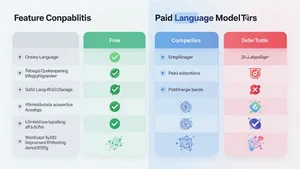
For developers, Hugging Face provides free access to dozens of open-source models through their inference API. The rate limits are tight, but for testing and experimentation, it's invaluable.
Image Generation
Google's ImageFX (powered by Imagen 3) is completely free with generous daily limits. The quality rivals Midjourney for many styles. I generated hundreds of images testing it—the results consistently impressed me.
Stability AI's Stable Diffusion models are open-source and can run locally. Zero ongoing cost if you have capable hardware (modern GPU with 8GB+ VRAM). The quality trails FLUX but beats many paid options from 2024.
Cliptics offers a free tier with limited daily generations using mid-tier models. Perfect for testing ideas or occasional use. When you need batch generation or premium models, the paid plans start at $15 monthly.
DALL-E through Bing Image Creator provides free access to OpenAI's image generation. The quality is excellent, though the interface is clunky compared to dedicated tools. For quick image generation without signing up for paid services, it works.
Video Generation
Veo 3.1 through Google AI Test Kitchen is the free tier champion. Completely free 4K video generation with quality that rivals $100/month subscriptions. The waitlist access model keeps costs manageable while providing incredible value.
Pika offers a basic free tier with limited monthly credits. You won't produce a whole video campaign, but for testing concepts or generating short clips, it's useful.
Runway's free tier provides very limited credits. About 1-2 short videos per month. It's essentially a trial, not a sustainable free tier. Still worth trying to see if the paid plan makes sense for your needs.
Audio and Voice
Eleven Labs' free tier includes 10,000 characters per month. That's roughly 8-10 minutes of generated speech. For occasional voiceovers or testing, it works. Regular use requires paying.
Google's text-to-speech API offers 1 million characters free monthly. The voices aren't as natural as Eleven Labs, but for applications where you need volume over premium quality, it's excellent value.
Adobe Podcast's AI features for audio cleanup are completely free. Upload recordings, remove background noise, enhance voice clarity. The results are impressive. This should be a paid feature but isn't.
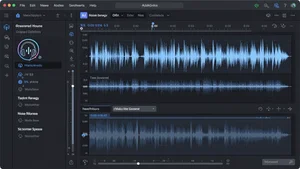
Suno and Udio both offer free tiers for music generation. Limited monthly credits, but enough to create a few songs. The quality is remarkable for generated music.
Design and Creative
Canva's free tier includes many AI features. Background remover, magic eraser, and basic generation tools. You can accomplish significant design work without paying.
Figma's free tier provides full design capabilities including recent AI features. For individual designers or small teams, it's completely viable.
Photopea offers browser-based Photoshop alternative with AI features. Completely free, ad-supported. The AI tools are basic but functional.
Productivity and Business
Notion AI has a limited free tier. About 20 AI responses. It's barely enough to evaluate the feature. Expect to upgrade if you find it useful.
Google Workspace includes Gemini features in some regions. Smart compose, summarization, and data analysis in Sheets. If you're already using Google Workspace, the AI features are essentially free additions.
Otter.ai's free tier provides 300 minutes of monthly transcription. That's roughly 5 hours of meetings. For light users, it's sufficient.
Code and Development
GitHub Copilot remains paid, but alternatives exist. Continue.dev offers an open-source alternative that works with multiple models. Tabnine has a capable free tier for basic autocomplete.
Replit's AI features have a limited free tier. Good for learning and small projects. Serious development requires the paid plan.
VSCode with various free AI extensions provides surprising capability. The ecosystem of free tools continues growing.
Research and Learning
Perplexity's free tier offers unlimited searches with limited Pro searches daily. For research and question-answering, it's incredibly valuable. The paid tier adds features but isn't necessary for many users.
Consensus and Elicit for academic research both have capable free tiers. Limited monthly queries but sufficient for casual research or students.
The Free Tier Strategy
Successful free tier usage requires combining tools strategically. Use Claude free for writing, Veo for video, ImageFX for images, and Adobe Podcast for audio. You've assembled a capable creative toolkit without subscriptions.
The limitations matter. Daily rate limits mean you can't build production systems on free tiers. But for individual creative work, side projects, and learning, free tools deliver tremendous value.
Companies upgrade their free tiers to compete. What was paid-only last year is free this year. This trend will continue. The bar for what justifies a subscription keeps rising.
When to Actually Pay
Upgrade when you hit rate limits regularly. If you're waiting for daily resets to continue work, the subscription pays for itself in time saved.
Pay for tools you use professionally where output quality directly impacts income. Free tiers are great for learning and side projects. Commercial work demands the reliability and features of paid plans.
Volume users should always pay. If you're generating hundreds of images monthly or transcribing hours of audio, the free tiers won't cut it. The paid plans provide better economics at scale.
Support tools you value. Free tiers exist because paying customers subsidize them. If a tool is central to your workflow, paying ensures it continues existing and improving.
The 2026 Reality
Free AI tools in 2026 are genuinely useful, not just marketing. You can accomplish real work, create professional content, and solve actual problems without paying. The quality gap between free and paid has narrowed significantly.
For individuals, freelancers, and small projects, free tiers provide everything needed. Businesses and professional applications still benefit from paid subscriptions for reliability, support, and advanced features.
The future is bright for free AI tools. Competition drives companies to offer better free tiers. Open-source alternatives improve constantly. The accessibility of powerful AI continues expanding. That's good for everyone except companies trying to charge premium prices for commodity features.