Why Your LinkedIn Profile Is Costing You Job Opportunities | Cliptics
LinkedIn has more than a billion registered users. On any given day, over 50 million people are using it to find jobs. The average recruiter spends 7 seconds on a profile before deciding whether to engage or scroll past. Your LinkedIn profile is doing a job interview without you in the room, and most profiles fail that interview in the first three seconds.
This isn't about effort or experience. Highly qualified professionals with impressive track records are being overlooked daily because their profiles are signaling the wrong things to the algorithms and the humans reviewing them. Here's what's costing you and what to fix it.
The Photo Problem Is Bigger Than You Think
LinkedIn's own data consistently shows that profiles with professional photos get 21 times more views and 9 times more connection requests than profiles without photos. But the quality of the photo matters almost as much as having one.
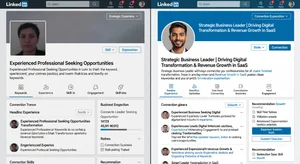
A blurry selfie, a group photo where you've cropped yourself out, a casual vacation photo, and a professional headshot are all "photos with a face." They're not equivalent. Recruiters and hiring managers form immediate impressions from profile photos before reading a single word of your profile. The photo signals: how seriously does this person take their professional presence?
Cliptics AI Headshot Generator transforms a standard selfie into a professional headshot-quality image. Natural lighting, clean background, professional presentation. The transformation is significant and it's the highest-use single change you can make to your LinkedIn profile.
For the photo, the technical recommendations: choose one where your face takes up 60% of the frame, you're making direct eye contact with the camera, and your expression is engaged but natural rather than posed. Upload this to the AI headshot generator and use the professional business output.
Your Headline Is Working Against You
The default LinkedIn headline is your current job title and company. This is what most profiles show. It's also the worst option available to you.
Your headline is indexed for LinkedIn search and appears in every context where your profile appears: search results, connection recommendations, InMail previews, post attributions. A job title headline tells a recruiter only that you currently have a job. It doesn't tell them why they should engage with you, what you're good at, or what you're looking for.
A results-focused headline combines what you do, who you serve, and what outcome you create: "Helping SaaS companies reduce churn through customer success systems | CS Leader | B2B" tells a recruiter immediately whether you're relevant to their search and what you bring.
Length matters: LinkedIn displays roughly 220 characters of headline in full desktop view, but shows only 70-120 in mobile and notification contexts. Your most important positioning should be in the first 70 characters.
The Summary Section Nobody Reads (Because It's Written Wrong)
The LinkedIn About section gets 2-3 seconds of attention on first impression. Profiles that write this as a formal professional biography lose that window before they've made their case.
The pattern that gets readers to scroll: open with a hook that names a problem your target audience recognizes, follow with a brief statement of your solution or approach, then provide context about your background that validates your claim to solve that problem.
"If you're building a fintech product and your user retention numbers look good on paper but your NPS tells a different story, that gap has a name: onboarding failure that doesn't show up until month two. I've helped 12 fintech teams find and fix that exact problem over the last six years."
That's a hook. It identifies a specific audience, names a specific problem, and claims specific experience. Compare it to "Dynamic customer success professional with 6+ years of experience in the fintech sector, passionate about driving client satisfaction and retention."
The second version is grammatically fine. It's also invisible because it says what every profile says in slightly different words.
The Activity Signal Recruiters Are Checking
LinkedIn's algorithm prioritizes profiles in search results based partly on profile completeness and partly on recent activity. A profile that hasn't had any engagement (posts, comments, reactions, connections) in six months is algorithmically deprioritized.
This doesn't mean you need to post constantly. It means you need to be visible regularly. Commenting thoughtfully on posts in your field, sharing articles with a sentence of your perspective, and occasionally publishing short posts about what you're working on or learning keeps your profile active in the algorithm and visible in your network's feed.
The minimum viable activity for algorithmic health: 2-3 substantive comments per week on posts from people in your target industry. This takes 10-15 minutes and creates ongoing visibility.
Skills and Endorsements: The Keyword Layer
LinkedIn's search algorithm matches recruiter searches against skills listed on profiles. Skills that match a recruiter's search terms boost your profile's ranking in their results. Skills that don't match do nothing.
Research the job postings that describe roles you want. Identify the skills listed most frequently. Make sure those exact skill names appear in your Skills section. LinkedIn is a search engine for talent, and your skill list is your keyword strategy.
The endorsement count below each skill also signals legitimacy. Skills with 99+ endorsements look established; skills with 3 endorsements look like additions. Prioritize getting endorsements on your most important skills: reach out to former colleagues and offer to trade endorsements on skills you can vouch for in each other.
The Profile Completeness Factor
LinkedIn's "All-Star" profile status (their internal completeness rating) requires: photo, headline, current position, education, at least three skills, location, and industry. Profiles that reach All-Star status appear in search results more frequently.
But completeness beyond the All-Star baseline also matters. A profile with a rich Experience section that describes not just job titles but specific accomplishments, quantified where possible, gives recruiters more text to match against their search criteria and more evidence to evaluate.
For each role in your Experience section: include at least three bullet points that describe what you achieved rather than what you were responsible for. "Led customer onboarding" is a responsibility. "Reduced time-to-value for new customers from 45 days to 22 days, improving first-year retention by 34%" is an achievement.
Putting It Together: The 2-Hour LinkedIn Overhaul
The complete profile optimization in sequence:
First: Upload a selfie to Cliptics AI Headshot Generator and update your profile photo. This takes 5 minutes and delivers the highest single-change impact.
Second: Rewrite your headline using the positioning framework. 20 minutes including drafting and refinement.
Third: Rewrite your About section with a hook opening. 30 minutes.
Fourth: Review your Experience section and add achievement-focused bullets to your three most recent roles. 45 minutes.
Fifth: Update your Skills section to match target job posting keywords. 15 minutes.
Total: approximately 2 hours for a complete profile transformation that will work for you continuously going forward.
The 7 seconds a recruiter gives your profile can either earn the next 30 seconds or end the interaction. Everything above is engineered to earn that next 30 seconds, which is enough to get them to the Apply button.

LinkedIn isn't broken. The platform surfaces profiles that signal professional seriousness and relevant expertise clearly. The profiles that aren't getting opportunities aren't invisible because the platform is unfair. They're invisible because they're not communicating clearly enough to the algorithm or to the human recruiter who has 7 seconds and 40 profiles to review.
Every change above makes the communication clearer. That's what job opportunity looks like in 2026.