
Micro-Influencers Beat Celebrities Now | Cliptics
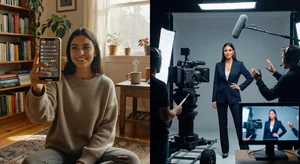
I remember the exact moment it clicked for me. I was scrolling through Instagram, and a friend with maybe 3,000 followers posted about a skincare product she'd been using. Nothing fancy. Just a bathroom mirror selfie, messy hair, genuine excitement about how her skin looked after three weeks.
I bought it within five minutes.
Two hours later, I saw a celebrity endorsement for a competing product. Glossy production. Perfect lighting. A caption that read like a legal team had approved every word. I kept scrolling without a second thought.
That experience, multiplied across millions of consumers every single day, is exactly why micro-influencers are reshaping the entire marketing landscape in 2026. And the numbers behind it are staggering.
The Trust Gap Nobody Expected
Here's what happened while the marketing industry wasn't paying attention. Consumer trust in celebrity endorsements dropped to its lowest point in decades. A 2025 study from the Influencer Marketing Hub found that only 18% of consumers trust recommendations from celebrities they follow. For micro-influencers, those with between 1,000 and 100,000 followers, that number sits at 61%.
That gap isn't small. It's a canyon.
And it makes sense when you think about it. When a celebrity promotes a product, the first thought most people have is: how much did they get paid? There's an automatic filter that kicks in. We know the game. We've seen enough sponsored posts to recognize the pattern.
But when someone with 8,000 followers talks about a product, the dynamic shifts. The assumption changes from "they're getting paid" to "they actually like this." Even if there's a partnership disclosure right there in the caption, the perception of authenticity remains stronger.
This isn't about followers being naive. It's about proximity. Micro-influencers feel like people we know. Their lives look achievable. Their recommendations feel personal. That perceived closeness creates trust that no amount of production value can manufacture.
The Engagement Math That Changed Everything
Let's talk numbers, because this is where it gets really interesting.
The average engagement rate for accounts with over 1 million followers hovers around 1.2%. Solid, but unremarkable. For micro-influencers in the 10,000 to 50,000 range, that rate jumps to 3.8%. For nano-influencers under 10,000 followers, it climbs even higher, often hitting 5% to 7%.
Think about what that means in practical terms. A brand pays a celebrity $500,000 for a single post that reaches 10 million people with a 1.2% engagement rate. That's 120,000 engaged interactions. Sounds impressive until you do the math: roughly $4.17 per engagement.
Now take that same $500,000 and spread it across 100 micro-influencers at $5,000 each. Each has 25,000 followers with a 4% engagement rate. That's 1,000 engagements per influencer, 100,000 total. The cost per engagement is $5.00, slightly higher, but the quality of those engagements is fundamentally different.
Those micro-influencer followers are commenting with genuine questions. Saving posts for later. Sharing in DMs with specific friends. Tagging people who need to see this. The celebrity post gets heart emojis and fire emojis. The micro-influencer post gets "where did you get this?" and "does it work for sensitive skin?"
One generates awareness. The other generates purchase intent. Brands figured this out, and they shifted their budgets accordingly.
The Algorithm Advantage Nobody Talks About
There's a hidden factor that amplifies everything I just described. Platform algorithms in 2026 heavily favor genuine engagement signals over raw follower counts.
Instagram's algorithm prioritizes content that generates saves, shares, and meaningful comments. TikTok's recommendation engine pushes videos based on completion rates and replays, not creator follower counts. Both platforms have become increasingly sophisticated at detecting authentic interaction versus hollow engagement.
Micro-influencer content naturally triggers these signals. Their audiences actually watch the full video. They read the entire caption. They comment with real words instead of emoji strings. The algorithm sees this and pushes the content further, creating a virtuous cycle where authentic content gets more reach precisely because it's authentic.
I've seen micro-influencer posts outperform celebrity posts in total reach despite having a fraction of the follower base. The algorithm doesn't care about your follower count. It cares about whether people actually engage with what you post.
The Niche Expertise Factor
Here's something that often gets overlooked. Micro-influencers tend to be deeply embedded in specific communities. A fitness micro-influencer with 15,000 followers isn't just someone who posts workout videos. They're someone who's been answering questions in that community for years. They know the concerns. They understand the language. They've built credibility through consistency, not virality.
When that person recommends a protein powder, it carries weight because they've spent three years talking about nutrition science. They've compared dozens of products publicly. Their audience has watched them evolve their opinions based on actual experience.
A celebrity who pivots to promoting the same protein powder doesn't have that context. Their audience knows fitness isn't their primary thing. The recommendation feels like a detour, not a destination.
Platforms like Upfluence and AspireIQ have built entire businesses around connecting brands with these niche experts. Grin has reported that campaigns using micro-influencers in specific verticals see conversion rates 3x to 5x higher than broad celebrity placements.
The Content Volume Play
There's a strategic angle that makes micro-influencer campaigns even more powerful. One celebrity creates one piece of content. A hundred micro-influencers create a hundred pieces of content.
That volume matters for several reasons. Each piece of content reaches a different audience segment. Each has a different angle, different language, different visual style. One might resonate with college students. Another might connect with new parents. A third might land perfectly with budget-conscious shoppers.
The diversity of content also gives brands something invaluable: data. They can see which angles perform best, which demographics respond strongest, which messaging drives actual conversions. That intelligence feeds into future campaigns, email marketing, product development, even packaging decisions.
One hundred authentic perspectives on a product generate more useful market intelligence than a single polished celebrity campaign ever could.
The Relationship Economy
Something fundamental shifted in how consumers relate to the people they follow online. The parasocial relationships that once defined celebrity culture are being replaced by something more reciprocal.
Micro-influencers reply to comments. They answer DMs. They remember regular followers by name. They adjust their content based on what their audience asks for. This creates a feedback loop that makes their recommendations increasingly relevant and targeted.
When a micro-influencer says "a lot of you asked about my morning routine," that's not a creative writing device. Their audience actually asked. And the audience knows that, because they were part of the conversation that led to the post.
This bidirectional relationship is impossible to replicate at celebrity scale. You can't personally respond to 50,000 comments. You can't adjust your content based on what 10 million people want, because they want different things.
The intimacy of a smaller audience isn't a limitation. It's the entire advantage.
What This Means Going Forward
The shift toward micro-influencers isn't a trend that's going to reverse. If anything, the forces driving it are accelerating.
Consumer skepticism toward traditional advertising continues to grow. Platform algorithms continue to reward authentic engagement. New creator tools make it easier for anyone to produce quality content. And the data keeps proving that smaller, more engaged audiences deliver better marketing outcomes than massive, passive ones.
The smartest brands are already restructuring their entire influencer strategy around this reality. Instead of allocating 80% of budgets to a handful of celebrity deals, they're distributing that same spend across dozens or even hundreds of micro-creators in targeted niches. They're building long-term ambassador programs instead of one-off sponsored posts. They're measuring success not by impressions but by actual conversions, customer acquisition cost, and lifetime value of customers acquired through influencer channels.
Some are going even further, giving micro-influencers complete creative freedom to talk about products in whatever way feels natural to their audience. No scripts. No mandatory talking points. No approval processes that strip out personality. Just authentic integration that audiences actually believe, because the creator believed it first.
The brands winning in 2026 aren't the ones spending the most. They're the ones building networks of authentic voices that genuinely connect with the people they're trying to reach. They're treating influencer marketing not as a broadcast channel but as a conversation engine.
And somewhere right now, someone with 4,000 followers is posting a genuine recommendation that will outperform a million-dollar celebrity campaign. Not because the algorithm favors them. Not because they got lucky. But because someone on the other end of that screen trusts them. And in marketing, trust is the only currency that actually converts.