
Multi-Voice Dialogue: Creating Character Conversations | Cliptics
I needed dialogue between three characters for an explainer video. Hiring voice actors for a 2 minute conversation would have cost $300.
I used AI voices instead. Total cost: zero. Time: 20 minutes including editing.
The trick was making the voices sound like different people actually talking to each other, not robots reading lines.
Choosing Distinct Voice Characters
Pick voices that sound obviously different. Male and female, different ages, different accents.
If you use two similar voices, listeners get confused about who's speaking even if you label it.
The multi voice text to speech tool on Cliptics lets you test different voice combinations quickly to find ones that sound distinct.
I use young female, older male, and neutral professional for most three character dialogues. Clear audio differentiation.
Writing Dialogue That Sounds Natural
AI voices read exactly what you write. If you write formal speech, they'll sound formal.
Write how people actually talk. Contractions, incomplete sentences, natural interruptions.
"Hey, did you see that?" beats "Hello, have you observed that situation?" for sounding human.
Each character should have slightly different speech patterns. One uses shorter sentences, one is more verbose, one asks lots of questions.
Pacing and Timing Between Speakers
This is where most multi-voice AI dialogue fails. No pauses between speakers makes it sound like one person.
Add half second gaps between character lines minimum. Let each voice finish before the next starts.
Overlap occasionally for realism. One character starts their line before the other completely finishes.
But don't overlap too much. It becomes hard to understand.
The Back and Forth Flow
Real conversations have rhythm. Question, answer, reaction, follow up question.
AI voices will deliver perfect grammar and pronunciation. You need to create the conversational flow through your script.
Short exchanges work better than long monologues. Break long explanations into back and forth discussion.
"Character A asks question, Character B gives partial answer, A asks for clarification, B explains further" feels more natural than B just explaining everything at once.
Emotion and Emphasis
Most AI voices can adjust tone. Use those settings to convey emotion even if subtly.
Excited character gets faster tempo and higher pitch. Serious character gets slower measured delivery.
Use punctuation to guide emphasis. Exclamation points, questions marks, ellipses for pauses. AI reads these cues.
ALL CAPS FOR EMPHASIS works in scripts but use sparingly. Too much sounds like yelling.
Creating Character Personalities
Give each voice a role. The expert, the curious learner, the skeptic.
This creates natural conflict and interest in dialogue. Pure agreement is boring.
The skeptic challenges points. The expert explains. The learner asks clarifying questions. Dynamic keeps listeners engaged.
Sound Design Around Voices
Add subtle background ambience differently for each character. Creates sense of space and separation.
Very slight reverb on one voice, dry on another. Subconscious cues that these are different people in different locations.
Don't go overboard. Subtle differences work better than obvious effects.
Editing for Realism
Cut perfect AI delivery to sound more human. Add tiny pauses mid-sentence where people naturally breathe or think.
Layer a room tone under dialogue. Complete silence between lines sounds artificial.
Adjust volume levels slightly. Real conversations have natural volume variation.
Common Mistakes to Avoid
Making all voices sound the same. Defeats the whole purpose.
No gaps between speakers. Sounds like one person reading all parts.
Perfect timing and delivery. Real conversation has hesitation and overlap.
Robotic script writing. "Greetings fellow human" level formal speech.
Too many characters. Three is manageable, five gets confusing, seven is chaos.
Use Cases That Work Well
Explainer videos where two characters discuss a topic. Teacher and student dynamic.
Podcast style content where you want discussion format but don't have co-hosts.
Training materials with scenario dialogue showing right and wrong approaches.
Story narration with character dialogue. Different voices bring characters to life.
When This Doesn't Work
Content where authenticity is paramount. Interviews, testimonials, personal stories need real humans.
Complex emotional scenes. AI voices can't deliver genuine grief, joy, anger convincingly.
Long form content. 20 minutes of AI conversation starts sounding robotic no matter how well crafted.
Anything where your audience expects human voice actors. Animation, audiobooks, professional productions.
My Production Process
Write the full dialogue script with clear character labels.
Generate each character's lines separately with appropriate AI voice.
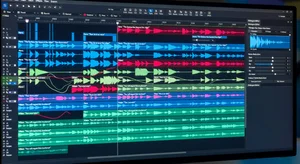
Import all audio into editing software.
Arrange with proper timing, gaps, and occasional overlaps.
Add subtle sound design for space and character distinction.
Do one pass of human editing to smooth anything that sounds too robotic.
Total time for 2 minute dialogue: about 30 minutes. Would be hours with real voice recording and coordination.
The Authenticity Question
Some audiences will recognize AI voices and judge your content accordingly.
Others won't notice or won't care if the content is valuable.
I'm transparent when it matters. Educational content gets AI voices without disclosure. Marketing or brand content I mention it's AI generated.
What Actually Works
Multi-voice AI dialogue works great for functional content where perfect human performance isn't required.
Explainer videos, training modules, concept demonstrations. Content where the information matters more than authentic human connection.
It doesn't replace voice actors for high production work. But it makes dialogue accessible for creators who couldn't afford actors otherwise.
The technology keeps improving. Current AI voices are dramatically better than two years ago. In another two years they'll be even harder to distinguish from humans.
For now, use multi-voice dialogue where it serves your content and your budget. Don't use it where authenticity is your selling point.
Done well, AI character dialogue creates engaging content that holds attention better than monotone single voice narration. Done poorly, it sounds like robots reading a script.
The difference is in the details. Voice selection, script writing, timing, editing. Get those right and most people won't realize they're listening to AI at all.