Open Source AI Projects to Watch in 2026 | Cliptics
Open source AI in 2026 is catching up to proprietary models faster than anyone predicted. DeepSeek V4 matches GPT-5.5 on coding tasks. FLUX 2 produces images rivaling Midjourney. Llama 4 from Meta delivers capabilities that required $100 monthly subscriptions just a year ago.
The open source movement isn't just about free alternatives anymore. It's driving innovation, enabling research, and democratizing access to cutting-edge AI. These are the projects worth watching.
Language Models
DeepSeek V4 from China's DeepSeek AI represents the biggest surprise of 2026. This open-weights model matches or exceeds proprietary alternatives on coding, math, and reasoning benchmarks. The 671B parameter version runs on two consumer GPUs with quantization.
What makes DeepSeek remarkable isn't just performance—it's efficiency. They achieved frontier model capabilities at a fraction of the training cost by using novel architecture innovations and efficient training techniques. The technical reports are goldmines for researchers.
Llama 4 from Meta continues the tradition of high-quality open releases. The 180B parameter model provides GPT-4 level capabilities for most tasks. Meta's commitment to open source AI has enabled countless applications and research that wouldn't exist otherwise.
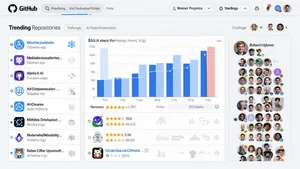
Mixtral-8x22B from Mistral AI uses mixture-of-experts architecture for efficiency. Only activating relevant experts for each request means faster inference at lower cost. The quality beats Llama 3 while requiring less compute.
Command R+ from Cohere (open-weights release) excels at RAG applications. If you're building applications that ground AI responses in your documents, Command R+ provides superior context handling and citation quality.
Image Generation
FLUX 2 (open dev version) from Black Forest Labs delivers photorealistic image generation rivaling any proprietary model. The architecture innovations—like hybrid attention mechanisms and flow matching—represent genuine advances.
The open release includes the model weights, training code, and technical papers. Researchers are already building on it, creating specialized versions for anime, architecture, product photography, and more.
Stable Diffusion 3 from Stability AI improved substantially over SD XL. The text rendering, composition, and prompt following match proprietary tools for many use cases. The open nature enables unlimited commercial use without licensing concerns.
Lumina-Next from Alpha-VLLM combines text-to-image with sophisticated compositional control. Open source tools for precise spatial control over generation—something proprietary tools charge premium prices for.
Video Generation
Open source video generation lags proprietary alternatives but progress is accelerating. CogVideoX from Tsinghua University produces reasonable short clips. Not production-ready for most use cases but improving rapidly.
AnimateDiff enables animation of static images using motion modules. The community has created dozens of specialized motion models for different animation styles. The ecosystem around it demonstrates open source's strength in enabling customization.
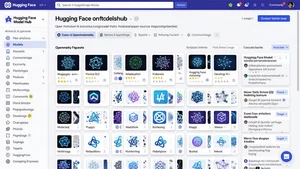
Stable Video Diffusion from Stability AI provides baseline video generation that developers are building on. Multiple projects use it as foundation for specialized video tools.
Audio and Speech
Parler-TTS from Hugging Face delivers quality text-to-speech with fine-grained control over speaking style, emotion, and voice characteristics. The zero-shot voice cloning works remarkably well.
Whisper v3 from OpenAI (yes, OpenAI does release open source) remains the gold standard for speech recognition. The latest version improved accuracy on accented speech and technical terminology.
MusicGen and AudioGen from Meta generate music and sound effects from text descriptions. The quality isn't quite commercial-grade but enables creative experimentation and rapid prototyping.
Multimodal Models
LLaVA 1.6 combines vision and language capabilities in an open model. For applications needing image understanding with text generation, it provides capable baseline without API costs.
Kosmos-2.5 from Microsoft Research handles images, text, and documents together. The document understanding capabilities—extracting information from forms, tables, and complex layouts—work surprisingly well.
BakLLaVA specializes in understanding charts, graphs, and data visualizations. For business intelligence applications that need to interpret visual data, it fills a niche.
Specialized Models
StarCoder 2 focuses on code generation and understanding. The 15B parameter version runs locally and provides capable coding assistance. Fine-tuned versions exist for specific programming languages.
BioGPT and MedPaLM open versions target medical and biological domains. For healthcare applications requiring specialized knowledge, these models provide strong baselines.
FinGPT specializes in financial analysis and forecasting. Open source enables financial institutions to customize for their specific needs without vendor lock-in.
Infrastructure and Tools
vLLM revolutionized open source LLM deployment. The efficient serving system makes running large models practical. Features like continuous batching and PagedAttention dramatically reduce memory requirements.
Hugging Face Transformers remains essential infrastructure. The unified API for thousands of models, integrated training tools, and massive model hub make it indispensable for AI development.
LangChain and LlamaIndex provide frameworks for building AI applications. RAG systems, agents, evaluation—the tooling ecosystem enables rapid development.
Ollama makes running models locally trivial. Download a model, run it with one command. The simplicity brings AI to developers who don't want to wrestle with dependencies and configuration.
Why Open Source Matters
Transparency enables trust. With open weights and code, researchers can audit models for bias, verify safety claims, and understand limitations. Proprietary models are black boxes.
Customization unlocks value. Fine-tune open models on your specific data. Modify architecture for your use case. Optimize for your hardware. Proprietary APIs don't allow this.
Privacy and control matter for many applications. Running models locally or on your infrastructure keeps data private. No API calls, no cloud dependencies, complete control.
Research advances faster with open models. Researchers build on each other's work. Innovations spread quickly. The pace of progress in open source AI has accelerated dramatically.
Cost economics favor open source for high-volume applications. After initial infrastructure investment, inference is essentially free. Scale to millions of requests without API bills.
The Challenges
Open source models require more expertise to deploy. No managed APIs, no customer support. You're responsible for infrastructure, optimization, and maintenance.
Compute requirements are substantial. Running frontier models needs serious hardware. Quantization and optimization help but don't eliminate the barrier.
Safety and alignment are harder with open weights. Anyone can modify or remove safety training. This creates risks that proprietary providers handle through API controls.
Legal and ethical questions remain unsettled. Training data provenance, copyright concerns, and liability for misuse—open source amplifies these issues.
The Future
The gap between open source and proprietary AI continues narrowing. What's cutting-edge proprietary today often has open source alternatives within months. The cycle time keeps decreasing.
Major companies are increasing open source investment. Meta, IBM, Stability AI, and others view it as strategically important. The resources flowing into open source AI are substantial.
Regulation might accelerate open source adoption. If compliance requires transparency and auditability, open source models have inherent advantages over black boxes.
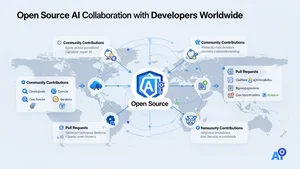
The community around open source AI is vibrant and growing. Thousands of researchers, developers, and enthusiasts collaborating on improvements. The collective intelligence rivals any single company.
Open source AI isn't replacing proprietary alternatives entirely. For many use cases, managed APIs remain simpler and cheaper. But the viable open source options have expanded dramatically. In 2026, choosing open source isn't a compromise—it's often the smart strategic decision.