Piercing Placement Simulator: Ear, Nose, Face Options | Cliptics
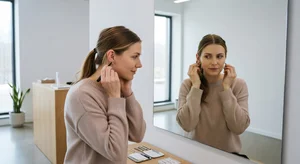
I got a helix piercing placed too high on my ear cartilage. Looked great in the moment. Wearing certain earrings became impossible because the angle was wrong.
Piercing placement is permanent. You can remove jewelry but the hole stays. Getting placement wrong means living with a poorly positioned piercing or letting it close and starting over.
The AI piercing filter lets you test different placements virtually before needle touches skin. See exactly how various positions look on your actual ear, nose, or face structure without commitment.
Why Placement Matters More Than You Think
Same piercing type in slightly different positions creates completely different looks. A nose stud placed higher or lower changes how it frames your face.
Ear anatomy varies significantly between people. What works on your friend's ear might not suit your ear shape. Helix placement perfect for thick cartilage doesn't work the same on thin cartilage.
Facial structure affects how piercings read. Eyebrow piercing follows your natural arch or fights against it depending on placement.
Testing placements virtually on your actual features shows what flatters versus what creates visual tension with your unique anatomy.
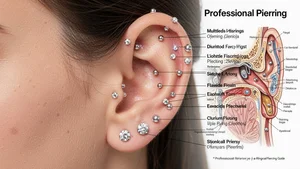
Ear Piercing Placement Options
Lobe piercings seem straightforward but placement still matters. Centered lobe versus lower lobe changes how earrings hang. Multiple lobe piercings need proper spacing to accommodate different jewelry sizes.
Helix piercings run along the upper cartilage rim. High helix, mid helix, low helix. Each position suits different ear shapes and jewelry styles.
Conch piercings sit in the inner cartilage bowl. Inner conch versus outer conch creates different jewelry possibilities. Placement affects whether rings or studs work better.
Tragus piercings on that small cartilage flap covering your ear canal. Needs precise placement to avoid hitting the ear canal while allowing jewelry movement.
Daith piercings through the inner cartilage fold. Anatomy varies so much that some people can't get daith piercings at all. Virtual preview shows if your ear structure accommodates it.
Industrial piercings connecting two cartilage points with a single barbell. Requires specific ear anatomy. Not everyone's ear shape works for industrial placement.
The AI tattoo try on works similarly for testing permanent body modifications before committing.
Nose Piercing Positioning
Nostril piercings can sit high near the bridge, centered on the nostril curve, or low near the base. Each position creates different aesthetic.
High nostril placement looks delicate. Emphasizes the bridge area. Works well with glasses but can interfere with sunglasses depending on exact position.
Centered nostril placement is most common. Follows the natural nostril curve. Versatile for different jewelry styles from subtle studs to statement hoops.
Low nostril near the base creates bolder look. More visible. Takes larger jewelry well but can look crowded with certain nose shapes.
Septum piercings through the soft tissue between nostrils. Placement height affects visibility and comfort. Too low touches upper lip. Too high sits awkwardly visible.
Bridge piercings horizontally across the nose bridge. Requires flat enough bridge surface. Very face shape dependent whether this looks balanced or odd.
Facial Piercing Considerations
Eyebrow piercings follow or fight your natural arch. Placed along the arch line looks harmonious. Placed perpendicular creates edgier look but can seem disconnected from your features.
Lip piercings come in many variations. Center labret, side labret, Monroe, Medusa. Each position changes mouth appearance differently. Some enhance lip shape. Others distract from it.
Cheek piercings create dimple effect. Placement needs to avoid major nerves and create symmetrical appearance. Very sensitive to exact positioning.
Tongue piercings less about visible placement more about functional placement. Centered versus off center affects speech and eating differently.
Surface piercings like anti-eyebrow or chest depend entirely on flat surface availability. Your specific bone structure determines if placement will work or reject.
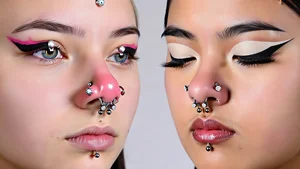
Symmetry and Balance
Multiple piercings need to create visual balance. Asymmetrical can look intentional or accidental depending on execution.
Matching ear piercings don't need to be identical. Different placement on each ear can enhance rather than detract if done thoughtfully.
Facial piercings benefit from considering your natural facial symmetry. If your features are slightly asymmetrical, symmetric piercing placement might actually look off. Slight adjustment can create better visual balance.
Testing placements virtually helps you see if symmetry serves your specific face or if strategic asymmetry works better.
Jewelry Style Impact on Placement
Different jewelry requires different placement considerations. Ring needs enough space to sit without pressing into surrounding tissue.
Studs can work in tighter spaces. But placement affects which way the stone or decoration faces.
Barbells for industrial or surface piercings require specific entry and exit points. Placement determines angle and appearance.
Curved barbells for eyebrow, belly, or certain ear piercings need placement that accommodates the curve without causing pressure points.
The AI virtual try on lets you test different jewelry styles in your chosen placement before buying jewelry.
Age and Anatomy Changes
Young cartilage is more flexible but also more prone to migration during healing. Placement might shift slightly as piercing heals.
Adult cartilage is more stable but less forgiving. Precise placement matters more because it won't adjust during healing.
Weight changes affect facial piercings. Significant weight gain or loss can change how facial piercings sit relative to your features.
Aging affects ear lobe elasticity. Lobe piercings placed when young might stretch or migrate downward over decades.
Professional Piercer Consultation
Virtual preview helps you communicate exactly what you want to your piercer. Screenshot the placement you like. Discuss if your anatomy supports it.
Good piercers will refuse placements that won't work with your anatomy. That's professionalism, not limitation. Trust their assessment.
Some placements you envision might need slight adjustment for your specific ear or face shape. Piercers can explain why and suggest alternatives.
Bringing visual references helps but understanding your piercer's recommendations based on your anatomy matters more than copying someone else's piercing exactly.
Healing and Placement Relationship
Piercings in high movement areas heal slower. Ear piercings that rub against pillows or headphones. Lip piercings that move with eating and talking.
Placement affects exposure to irritation. Nose piercings get bumped during face washing. Some placements more vulnerable than others.
Multiple piercings too close together can complicate healing. Each needs space to swell without pressing against neighbors.
Testing placements virtually lets you consider healing logistics before committing. Maybe that perfect aesthetic placement sits right where your glasses rest. Better to know before piercing.
Migration and Rejection Risks
Surface piercings have higher rejection risk. Placement on flatter surfaces with less tissue movement reduces but doesn't eliminate risk.
Cartilage piercings don't migrate like surface piercings but improper placement can cause bumps and healing complications.
Piercings placed at angles instead of perpendicular to the surface are more likely to cause issues.
Virtual testing can't predict rejection but helps avoid obviously problematic placements that increase risk unnecessarily.
Cultural and Professional Considerations
Facial piercings affect professional perception in many fields. Testing placements helps you gauge visibility and impact.
Some placements are more concealable. Nostril piercings can use flesh-toned retainers. Septum piercings flip up invisibly.
Ear piercings generally face less professional scrutiny than facial piercings. But multiple visible ear piercings still read differently in conservative versus creative fields.
Consider your current and future career plans when choosing placement. Earlobe easily hidden by hair. Bridge piercing always visible.
The AI headshot generator can show how your piercing choices photograph for professional profiles.
My Placement Testing Process
I upload clear photos showing my ear, nose, or face from multiple angles.
Test desired piercing type in different positions virtually. See how slight placement changes affect overall appearance.
Screenshot top options. Save the exact positions that look best.
Research which placements work best with my anatomy type. Thick versus thin cartilage, nose shape, facial structure.
Schedule consultation with reputable piercer. Show screenshots. Discuss anatomical feasibility.
Get piercer's recommendation on final placement adjusting for my specific anatomy rather than sticking rigidly to the virtual test position.
Piercing placement affects your appearance permanently. Testing virtually prevents the frustration of a piercing that looked great in theory but doesn't work with your actual features. See what suits your unique anatomy before the needle, not after.