Podcast Production 2026: Growth Strategies & AI Audio | Cliptics
I've been producing podcasts for about six years now. Started with one that got maybe forty downloads per episode, now I work with shows that pull thousands to tens of thousands regularly. The landscape has changed a lot, and honestly, most of the advice you see repeated online is either outdated or was never that useful to begin with.
So let me tell you what actually moves the needle for podcast growth in 2026, and how AI tools have shifted the production side in ways that matter.
The Hard Truth About Podcast Growth
First thing: there are way more podcasts now than when I started. Competition is fierce. But here's what most people miss. The competition isn't for all listeners, it's for your specific audience. If you're making a show about vintage motorcycles, you're not competing with true crime podcasts. You're competing with the other vintage motorcycle shows, and there probably aren't that many doing it well.
The shows that grow consistently do three things right. They have a clear point of view, they're reliably good, and they show up consistently. Sounds obvious, but you'd be surprised how many shows fail on one or more of those basics.
Having a point of view means you're not just covering topics, you're covering them from a specific angle that your audience can't get elsewhere. Being reliably good doesn't mean perfect production, it means listeners know what to expect and you deliver. Showing up consistently means you publish on a schedule people can count on.
What Actually Works for Growth
Guest swapping is still one of the best strategies. You go on shows that reach your target audience, they go on yours. Both audiences hear about the other show from someone they already trust. This works way better than ads, and it's free.
The catch is you need to be strategic. A show with a million listeners but the wrong audience won't help you. A show with five thousand listeners who are exactly your target audience is gold. I've seen guest spots on smaller, well-targeted shows bring in more subscribers than appearances on much bigger generalist shows.
Cross-promotion on social media barely works anymore unless you already have a big following or your content is exceptionally shareable. Don't ignore it, but don't expect it to drive meaningful growth unless you're really good at making clips that pop.
Email lists, on the other hand, still work. If you can get listeners onto an email list, you can let them know about new episodes, special content, whatever. Email open rates for podcasts tend to be surprisingly good because people who opt in are genuinely interested.
YouTube is the wildcard. Publishing your podcast as video, even if it's just a static image with audio, can reach people who don't use traditional podcast apps. Some shows have grown massively from YouTube discovery. Others see minimal impact. It depends on your content and how well you optimize for YouTube's algorithm.
Production Quality That Matters
Here's something I learned the hard way. Listeners will tolerate mediocre audio quality if the content is great, but they won't stick around for great audio quality if the content is boring. Focus on content first, production second.
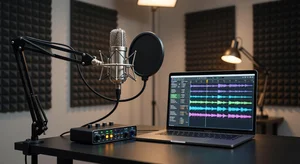
That said, baseline audio quality matters. You need a decent microphone, a quiet recording space, and basic editing to remove major issues. You don't need a $2,000 mic and a professional studio. A $100 USB mic in a room with some soft furniture is fine for most shows.
AI audio tools have made a real difference here. Background noise reduction that used to require expensive software or plugins now works pretty well in free or cheap AI tools. You can clean up recordings that would have been unusable a few years ago.
Voice enhancement is another area where AI helps. If your recording sounds thin or lacks presence, AI processing can thicken it up and make it sound more professional without needing to know what you're doing technically.
For transcription, AI is game-changing. Transcribing episodes used to be expensive if you paid someone or time-consuming if you did it yourself. Now tools like audio transcription can handle it automatically with decent accuracy. You still need to review and correct, but it's way faster than manual transcription.
Transcripts are useful for accessibility, for SEO (putting them on your website helps with search), and for creating show notes or social posts. If you're not transcribing your episodes, you're leaving value on the table.
AI in Editing and Production
This is where things get interesting. AI can't edit your podcast for you, not well anyway, but it can speed up specific parts of the process.
Silence removal and filler word reduction tools work pretty well now. They're not perfect, sometimes they cut in weird places, but they save hours of manual editing. You still need to review the result, but the heavy lifting is done.
AI-generated show notes and summaries are hit or miss. They can give you a decent starting point, but they often miss context or emphasize the wrong things. I use them as a first draft, then rewrite based on what I actually want to highlight.
Some AI tools claim to master audio automatically. Results vary widely. For simple podcasts with one or two voices, they can work okay. For more complex shows with multiple segments, music, sound effects, the AI tends to make questionable decisions. I still prefer manual mixing for anything that matters, but AI can be useful for quickly processing less critical content.
If you need voiceovers or want to create promotional content, AI text to speech has gotten surprisingly good. Won't replace a professional voice actor for high-end work, but for intros, outros, or promotional clips, it's a solid option that saves time and money.
Distribution and Hosting
Use a real podcast host, not just uploading to your website. Hosts like Libsyn, Transistor, Buzzsprout, or others handle RSS feeds properly, submit to all the directories, and give you analytics. Trying to do this yourself is a headache you don't need.
Make sure your show is on all the major platforms. Apple Podcasts and Spotify are the big two, but don't ignore Amazon Music, Google Podcasts, and the others. More places your show exists, more ways people can find it.
RSS feeds are still the backbone of podcasting, which is both great and annoying. Great because you control your content and can move hosts if needed. Annoying because RSS is old tech with quirks. Trust your podcast host to handle this for you.
Monetization Reality Check
Most podcasts never make significant money. That's just the truth. The ones that do typically get there through sponsorships, which usually require consistent listenership in the thousands minimum, or through premium content and memberships.
Ads work if you have the audience size. Dynamic ad insertion lets you monetize back catalog episodes, which is smart. But expect low CPMs unless your audience is really valuable to advertisers.
Memberships or Patreon-style support work better for niche shows with engaged audiences. A thousand true fans paying $5 a month is better than thirty thousand casual listeners for most creators.
Product sales, courses, consulting, these can all work if they fit your show's topic and audience. Sometimes the podcast is the marketing for the actual business, not the business itself.
What I'd Do Starting Fresh Today
If I was launching a new podcast in 2026, here's my playbook. Pick a niche where I have genuine expertise or perspective. Invest in a decent USB microphone and basic audio interface. Record in the quietest room available with some soft surfaces to reduce echo.
Edit with Audacity or Reaper, both free or cheap. Use AI tools for noise reduction and transcription to save time. Host with a mid-tier podcast hosting service.
Focus the first six months purely on making the show as good as possible and publishing consistently. No major promotion beyond telling friends and family and guest swapping with a few other small shows.
After six months, if the show is working and I'm still enjoying it, start being more intentional about growth. Identify five to ten shows with similar audiences and pitch guest spots. Start posting short clips strategically on social platforms. Build an email list.
The key is giving the show time to find its voice and prove it's something I can sustain before investing heavily in growth tactics. Too many podcasts burn out because people push growth before they've figured out the fundamentals.
Common Mistakes to Avoid
Overthinking equipment. Good enough is good enough. Focus on content.
Inconsistent publishing. If you say weekly, it needs to be weekly. Inconsistency kills momentum faster than anything.
Ignoring listener feedback. Your audience will tell you what works and what doesn't if you pay attention.
Copying successful shows too closely. Learn from them, but find your own angle. Audiences can smell a knockoff.
Expecting overnight success. Podcast growth is usually slow and steady, not viral explosions. Patience matters.
The Bottom Line
Podcasting in 2026 is more competitive but also more accessible than ever. The tools are better, the distribution is easier, and the audience is there. What separates shows that grow from shows that stagnate is usually consistency, quality content, and smart promotion.
AI tools help with the production and admin work, which means you can spend more time on the creative side and less time on the tedious parts. That's a genuine improvement.
If you're thinking about starting a podcast, do it. If you're already podcasting and not seeing growth, look honestly at whether you're doing the basics right before chasing growth hacks. Usually the answer is there in the fundamentals.
And remember, podcasting should be enjoyable. If you're not having fun making it, listeners will hear that, and it'll show in the quality. Find a format and cadence that works for you long term, not just what you think will grow fastest. Sustainable beats flashy every time.