
The Psychology of Profile Photos: How 7 Seconds Determines | Cliptics

In 1966, psychologists Brendan Rule and colleagues established that human faces trigger rapid categorical judgments: trustworthy or untrustworthy, dominant or submissive, approachable or threatening. This processing happens in under 100 milliseconds, before conscious evaluation begins.
The profile photo on your LinkedIn, Zoom, email signature, or company website is triggering those same neurological processes at scale. Every professional connection, recruiter, potential client, or business partner who encounters your digital presence is making a sub-second judgment that sets the frame for everything that follows.
Seven seconds is actually generous. The visual processing that matters happens in fractions of that.
The Specific Judgments Being Made
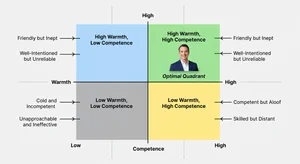
Research from Princeton's psychology department identified that face-based judgments along two dimensions dominate first impression formation: warmth and competence. These aren't vague impressions. They're specific assessments that determine whether someone will trust you, want to engage with you, and feel positively toward you.
Warmth signals include: genuine smile or engaged neutral expression, open body orientation (shoulders slightly angled toward camera), approachable eye contact direction, and facial expression lines consistent with habitual positive emotion (the kind that accumulate over time, not forced-smile artifacts).
Competence signals include: direct, confident gaze, formal or business-appropriate attire visible in frame, clean and uncluttered background, and composition that positions the face at eye level rather than looking up or down at the camera.
The critical finding: warmth signals matter more than competence signals for most professional outcomes. High competence with low warmth reads as threatening or cold. High warmth with moderate competence reads as trustworthy and collaborative. The combination of both is the goal, but the common error is over-optimizing for competence at the expense of warmth.
What Bad Profile Photos Actually Signal
The specific failures that most professional profile photos make, and the impressions they create:
No photo at all: perceived as either privacy-averse, not actively engaged with the platform, or hiding something. The absence of a photo creates a negative prior that the first interaction has to overcome.
Casual social photos in professional contexts: a vacation photo, a party photo, a group shot where you've cropped out the other people. These signal that you haven't thought about your professional presentation, which generalizes to assessments about your attention to professional detail overall.
Outdated photos: a photo from 10+ years ago creates a specific cognitive dissonance problem. When the person meets you in person or on video and you look substantially different from your profile photo, the mismatch registers as deception, even if unintentional. Outdated photos also signal that you're not actively maintaining your professional presence.
Low resolution or poorly lit photos: technical quality signals personal investment. A blurry photo says "I know this matters but not enough to fix it." Professional contexts read this as a statement about your standards.
Inappropriate expression or styling: smiling in professional contexts that culturally expect neutral expressions, or vice versa. Over-serious expressions in contexts that prize approachability. The expression needs to match the professional norms of your specific industry and target relationship.
The Elements That Consistently Improve First Impressions
Eye contact with the camera: people look at faces and then immediately check eyes. Direct eye contact with the camera replicates the social signal of eye contact in person. Looking away creates a evasiveness impression, even when the photo was taken during a candid moment.
Genuine smile or engaged expression: the Duchenne smile (genuine smile that involves eye muscle engagement) is distinguishable from a posed smile and registers differently in neural processing. A posed smile without eye engagement reads as false. An engaged neutral expression reads as interested and present. A genuine smile with eye engagement reads as warm and likable.
The expression that works best varies by professional context: legal and finance fields often benefit from a confident neutral expression. Sales, marketing, creative, and client services benefit from warm, genuine smiling. Technical and research roles land somewhere in between.
Face-to-frame ratio: the most common error in unprofessional profile photos is a face that's too small in the frame. Your face should occupy 60-80% of the frame. Photos where the subject is small in a large environmental background communicate distance and intimacy avoidance, not environmental context.
Lighting quality and direction: even front-facing natural light is the most forgiving lighting for professional contexts. Side lighting creates dramatic shadows that increase perceived dominance but decrease warmth. Backlight creates silhouette effects that obscure facial features. The goal is clear, even light that makes all facial features readable.
Clean, unobtrusive background: complex backgrounds compete with the face for visual attention. A neutral background (white, gray, muted solid color, soft-focus professional environment) keeps the viewer's attention on your face and expression rather than parsing what's behind you.
The AI Headshot Solution for People Who Hate Photos
A significant portion of professionals who know their profile photo is hurting them don't update it because they genuinely dislike being photographed, don't have access to a professional photographer, or have had bad experiences with professional headshots that still didn't look like them.
Cliptics AI Headshot Generator addresses this through a different model: start with a photo you're comfortable with (a selfie, a casual photo where your expression is genuine) and let AI enhance it to professional headshot quality. The enhancement handles lighting, background, framing, and professional polish while preserving the expression and features that make you look like you.
The result is a photo that has the technical qualities of a professional headshot (clean background, correct framing, proper lighting) built from a moment where your expression was genuinely natural. This often produces better psychological response than traditionally shot headshots where the expression is forced by the formal photography context.
For the generation: choose a source photo with your best natural expression, even lighting on your face, and your face visible without being obscured. The AI does the rest.
The Practical Audit for Your Current Profile Photo
Before updating, audit what your current photo is actually communicating by applying the research criteria:
Does your face occupy 60-80% of the frame? If not, the frame-ratio fix is your highest-priority change.
Is your expression conveying warmth? Check whether you're smiling genuinely or neutrally with engaged eyes. If your expression reads as closed or strained, that's the next priority.
Is the lighting even and professional? If you can see strong shadows on one side of your face or the photo is visibly dark, lighting quality is limiting everything else.
Is the background distracting? If your background has visual noise competing with your face, simplifying it is a clear improvement.
Does the photo represent how you currently look? If not, the authenticity problem of outdated photos overrides all other considerations.
Why Profile Photo Investment Has the Highest ROI in Personal Branding
The profile photo is the one visual element that appears in every professional context simultaneously: LinkedIn, email signatures, Zoom calls, Slack, GitHub, internal directories, Calendly links, speaking proposals. A single quality photo propagates across every professional touchpoint you have.
Compare this to a piece of content (which appears once, to the fraction of your network that sees it) or a portfolio piece (which requires active navigation to find). The profile photo is passive and universal.
The ROI math: one hour and no cost (for an AI-generated professional headshot) versus the accumulated impression cost of a poor profile photo across every professional interaction for the next 12-18 months. The upgrade case is clear.
The psychology is well established. The first impression is already being formed. The only question is whether your profile photo is working for you or against you in that 7-second evaluation window.

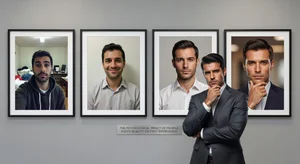
Make the photo work for you. The seven seconds can't be extended. They can be prepared for.