
The Science of Viral Titles: What Makes People Click in | Cliptics
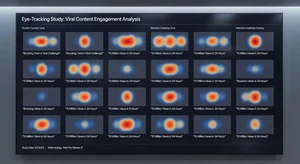
I've been obsessed with this question for months: why do some titles get millions of clicks while others with similar content get ignored?
It's not random. There's actual science behind it. Psychology. Patterns. Things that trigger our brains to stop scrolling and click.
So I went down a rabbit hole. Analyzed hundreds of viral videos and posts. Read research papers on cognitive biases. Tested different title formulas on my own content. And what I found was fascinating.
Turns out, viral titles aren't about being clever or creative. They're about understanding how human brains process information and using that to your advantage. Let me show you what I learned.
The Split Second Decision
Here's what's happening when someone sees your title. They've got about 1.5 seconds before their thumb keeps scrolling.
In that moment, their brain is doing rapid fire calculations. Is this relevant to me? Is this worth my time? Do I trust this? What's in it for me?
You're not competing with other titles. You're competing with their desire to keep scrolling mindlessly. That's way harder.
The titles that win aren't necessarily the best written. They're the ones that trigger the right response in that split second. Curiosity. Recognition. Fear of missing out. Promise of value.
That's why clickbait technically works. It triggers those responses hard. But it burns trust when the content doesn't deliver, so it's not sustainable unless you don't care about your audience long term.
The real game is triggering those responses honestly. Making a promise your content actually keeps.
Specificity Beats Vague Every Time
I tested this extensively. Same video. Two different titles.
Vague version: "How to Get More Views on YouTube" Specific version: "I Tested 12 Thumbnail Styles and This One Got 340% More Views"
Guess which one performed better? The specific one crushed it. Like, not even close.
Why? Because vague titles make vague promises. Your brain doesn't know what to expect, so it defaults to assuming it's probably generic advice you've seen before.
Specific titles paint a picture. They tell you exactly what you're getting. Your brain can decide instantly if that's valuable or not.
Numbers help. "7 Ways" is better than "Ways to." "340% More" is better than "Way More." Your brain processes numbers as concrete proof that there's actual substance here.
But you can't just throw random numbers in. They have to be real. People can smell fake specificity from a mile away.
The Curiosity Gap Is Real
There's this concept called the curiosity gap. It's the space between what you know and what you want to know.
Good titles open a gap without being annoying about it.
Bad curiosity gap: "You Won't Believe What Happened Next" Good curiosity gap: "We Tried Every Viral TikTok Hack and Only 3 Actually Worked"
See the difference? The bad one tells you nothing. It's pure manipulation. The good one gives you context but leaves a specific question unanswered. Which three worked? Why did the others fail?
That unanswered question creates tension. Your brain wants to close the loop. So you click.
But here's the key: the gap can't be too big or too small. Too small and there's no reason to click because you already know everything. Too big and it feels like clickbait and you don't trust it.
Finding that sweet spot takes practice. I still get it wrong sometimes. But when you nail it, you can feel it in the engagement numbers.
Pattern Interrupts Work
Your brain is constantly looking for patterns to ignore. Anything familiar gets filtered out as background noise.
That's why most titles don't get clicked. They follow the same tired patterns everyone else uses.
"10 Tips for Better Photos" "How to Lose Weight Fast" "Best Coffee Makers 2026"
Your brain sees these and thinks "yeah yeah, more of the same" and keeps scrolling.
Pattern interrupts break that filter. They present information in unexpected ways that make your brain pause.
Instead of "10 Tips for Better Photos" try "I Took 1,000 Photos Following Internet Advice and Most of It Was Wrong."
Same topic. Completely different frame. Your brain can't ignore it because it doesn't fit the expected pattern.
This is where AI title generators can be genuinely helpful. Not because AI is creative, but because it suggests combinations you wouldn't naturally think of. Patterns you haven't overused yet.
I use them to get ideas, then tweak them to sound more human. Works way better than staring at a blank screen trying to be clever.
The Promise Must Be Clear
Every title is making a promise. Even if you don't realize it.
"Chocolate Cake Recipe" promises you'll learn to make chocolate cake. "Why Your Chocolate Cakes Always Fail" promises you'll understand your mistakes. "The Only Chocolate Cake Recipe You'll Ever Need" promises this is the definitive version.
Viral titles make specific, compelling promises that matter to the target audience.
The key word there is target audience. A title that works for bakers won't work for people who've never baked. A title that works for beginners will bore experts.
You need to know who you're talking to and what promises matter to them.
I made this mistake for months. Writing titles I thought were clever but didn't actually promise anything my audience cared about. My click through rate was terrible.
Then I started asking: what does my audience want to know? What problem are they trying to solve? What outcome are they looking for?
Once I matched my titles to those actual desires, everything changed. Same content. Different titles. Way more clicks.
Emotional Triggers Matter More Than You Think
Logic doesn't make people click. Emotion does.
That's not opinion. That's neuroscience. The emotional parts of your brain process information way faster than the logical parts. By the time you've consciously decided if something is interesting, your emotions have already made the call.
So viral titles tap into emotions. Not in a manipulative way. Just in a honest way.
Fear: "5 Common Mistakes That Are Killing Your Engagement" Hope: "How I Went From 200 to 20,000 Followers in 90 Days" Curiosity: "The One Setting Everyone Gets Wrong (Including Me)" Relief: "You're Not Lazy, You're Just Using the Wrong System"

Pick the emotion that fits your content and audience. Then make sure your title triggers it authentically.
The stuff that doesn't work? Neutral titles with no emotional hook. "An Analysis of Social Media Trends." Cool, but why should I care?
Testing Is Everything
Here's what I wish someone had told me earlier: you can't know what works until you test it.
I've been shocked so many times by what performs well versus what I thought would perform well.
Titles I loved? Sometimes flop completely. Titles I thought were weak? Occasionally crush it.
Your intuition is useful for generating ideas, but data tells you what actually works with your specific audience.
I test different title variations using blog title generators and Facebook post titles to get options, then check which ones drive better click through rates.
Track your numbers. See what patterns emerge. Double down on what works for your audience specifically.
Because what works for tech creators might not work for lifestyle creators. What works for educational content might not work for entertainment.
Your audience is unique. Your title strategy needs to match that.
The Formula I Use Now
After all this testing and research, here's my go to approach.
Start with the outcome or transformation my content delivers. Be specific about it.
Add a curiosity gap or pattern interrupt. Something that makes you pause.
Include an emotional trigger that matches my target audience's desires or fears.
Make it scan quickly. If it takes more than a couple seconds to understand, it's too complex.
Example: "I Spent $500 on Instagram Ads and Learned These 4 Things" (specific outcome + curiosity gap + implies lesson learned to avoid my mistakes)
Not every title needs all elements. But the ones that hit multiple elements tend to perform best.
What I'm Still Learning
Honestly? I'm still figuring this out. Every platform is different. Every audience is different. What worked last month might not work next month as people's attention patterns shift.
But that's also what makes this interesting. It's not a solved problem. There's always room to experiment and find better approaches.
The basics stay the same though. Be specific. Create curiosity honestly. Tap into emotion. Make clear promises you can keep.
Do that consistently and your titles will perform way better than the generic stuff everyone else is doing.
Not because you're manipulating people. But because you're actually respecting their time and attention enough to tell them exactly why they should care.
That's the real science of viral titles. It's not tricks. It's just good communication.