
Short-Form Video Dominated 2025. Why Long-Form Is Making a | Cliptics
I'm going to say something that would have gotten me laughed out of any creator conference twelve months ago. Short-form video has peaked.
Not died. Not disappeared. Peaked. And if you've been paying attention to the numbers instead of the hype, you already feel it too. Something shifted. The 60-second clips that dominated every platform in 2025 are still everywhere, sure. But the energy has moved. The money has moved. And the smartest creators I know are quietly pivoting back to long-form content in ways that would have seemed insane a year ago.
Here's the thing nobody wants to admit: we all got drunk on short-form. Platforms, creators, audiences. Everyone. TikTok rewired how we consumed content, Instagram Reels copied the homework, YouTube Shorts entered the chat, and suddenly every piece of advice for creators boiled down to one word. Shorter. Make it shorter. Hook them in the first second. Get to the point. Trim the fat. Faster faster faster.
And it worked. For a while.
The Numbers That Changed My Mind
I started noticing the cracks around October 2025. A creator friend of mine had built her entire brand on 30-second cooking clips. Millions of views. Brand deals. The whole package. Then her revenue started sliding. Not her views. Her revenue. The CPMs on short-form were collapsing across platforms, and the algorithmic boost that once felt like a cheat code started feeling more like a treadmill.
She wasn't alone. YouTube's internal data showed that watch time on videos over 10 minutes grew by 38 percent in the second half of 2025. Netflix reported that their average viewing session length increased for the first time in three years. Spotify's video podcast consumption doubled. Everywhere you looked, people were spending more time with longer content, not less.
The explanation is simpler than you'd think. Audiences got bored. Not of content. Of format. When every platform serves you an infinite scroll of 15-to-60-second clips, the novelty wears off. The dopamine hit from swiping gets predictable. And predictable is the death of engagement.
What replaced it wasn't some game changing new format. It was the old format, repackaged. Long-form video came back because it offers something short-form structurally cannot: depth. Context. The feeling that you actually learned something or connected with someone instead of just consuming another disposable clip.
Why Creators Are Switching Back
Let's talk money first because that's what actually drives decisions. The economics of short-form have always been brutal. High volume, low value per piece. You need to produce constantly just to stay visible. One viral hit means nothing if you can't follow it up tomorrow. And the advertising rates? A fraction of what long-form commands.
YouTube still pays significantly more for a 12-minute video with mid-rolls than it does for a Short with comparable views. That gap has actually widened in 2026 as advertisers figured out that brand recall from a 15-second interruption in someone's scroll session is basically zero.
But it's not just about money. Creators are burning out. The short-form production cycle is relentless. Even though individual pieces take less time, the volume required to maintain algorithmic visibility is exhausting. I talked to a dozen full-time creators preparing this piece, and every single one mentioned the same thing: they felt like content factories, not storytellers.
Long-form gives them room to breathe. Room to develop ideas. Room to build the kind of audience relationship that actually sustains a career. A viewer who watches your 20-minute video is fundamentally different from someone who saw your Reel while waiting for coffee. They chose to spend time with you. That choice creates loyalty short-form almost never achieves.
The Platform Signals You Shouldn't Ignore
Here's where this gets really interesting. The platforms themselves are telling you where things are going, if you know how to read the signals.
YouTube has been the most obvious. They spent 2024 and early 2025 aggressively pushing Shorts, even redesigning their entire mobile experience around the format. But by late 2025, they quietly started rebalancing. The algorithm began favoring longer watch sessions again. Creators who posted both formats noticed their long-form videos getting recommended more frequently, sometimes using their Shorts as discovery funnels rather than destinations.
TikTok extended their maximum video length to 30 minutes. Think about that. The platform that literally invented the modern short-form video format is actively encouraging longer content. They wouldn't do that unless their data showed users wanted it. Instagram followed suit, pushing longer Reels and reviving IGTV-style features under different branding.
Even Spotify is betting on long-form. Their investment in video podcasts isn't about competing with YouTube for cat videos. It's about capturing the audience that wants to sit with something for 45 minutes, an hour, two hours. That audience is growing, and it spends money.
The pattern is unmistakable. Every major platform is hedging away from pure short-form toward a mixed-length strategy, with long-form getting renewed investment and algorithmic love.
The Hybrid Strategy That Actually Works
Now here's my contrarian take within the contrarian take: the answer isn't to abandon short-form entirely. That would be just as dumb as abandoning long-form was in 2024.
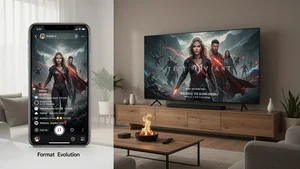
The creators who are winning right now in early 2026 are running a hybrid model that uses each format for what it does best. Short-form for discovery and audience building. Long-form for depth, revenue, and retention. The short clip gets someone's attention. The long video earns their loyalty. The short clip is the trailer. The long video is the movie.
This isn't new thinking. It's actually how traditional media always worked. Movie trailers are 90 seconds. Movies are two hours. Nobody ever suggested replacing movies with trailers because trailers get more views per minute. But somehow we convinced ourselves that the content equivalent of a trailer was a superior format for everything. It wasn't.
The tactical execution looks like this. You create a substantial long-form piece, maybe 15 to 25 minutes, that genuinely goes deep on a topic your audience cares about. Then you extract three to five short-form clips from it, each designed to stand alone but also serve as an entry point to the full piece. The shorts feed the algorithm. The long-form builds your brand.
What This Means For Your Strategy Right Now
If you've been exclusively creating short-form content, don't panic. Your skills translate. The ability to hook someone in two seconds, to communicate visually, to edit tight, all of that is valuable in long-form too. You just need to add the skills you've been neglecting: narrative structure, pacing, depth of research, the ability to hold attention through ideas rather than just editing tricks.
Start with one long-form piece per week alongside your existing short-form output. Give it three months. Watch what happens to your revenue, your audience retention numbers, and most importantly, how your audience talks about your content. The comments on long-form videos are different. More thoughtful. More engaged. More likely to convert into whatever you're actually building.
The creators who recognize this shift early will have a massive advantage. Every trend cycle has a window where early movers get disproportionate rewards. The short-form explosion of 2023-2024 rewarded early adopters enormously. The long-form comeback of 2026 will do the same.
The Bigger Picture
Here's what I think is really happening underneath all the platform data and creator economics. We're watching audiences mature. The initial novelty of infinite short-form content has worn off, and people are remembering that they actually enjoy spending time with ideas. That they want to understand things, not just be aware of them. That the best content experiences aren't snacks, they're meals.
This doesn't mean short-form is dying. It means the market is correcting. The pendulum swung too far toward brevity, and now it's swinging back toward balance. Long-form isn't replacing short-form any more than short-form replaced long-form. We're settling into a media landscape where both formats coexist, each serving its purpose.
But the opportunity right now, in this specific moment of 2026, is in long-form. That's where the underpriced attention lives. That's where the algorithms are shifting rewards. That's where audiences are moving their time and loyalty.
The creators who see it will build something lasting. The ones who don't will keep sprinting on the short-form treadmill, wondering why the views stopped converting into anything meaningful.
Your call.