
Sitemap Extractor for SEO Audits: How to Audit Any | Cliptics

The most underused source of competitive intelligence in content marketing isn't keyword tools or traffic estimators. It's the sitemap.
Every serious website publishes a sitemap for search engines. That sitemap is a complete, organized inventory of every URL they've decided is worth ranking. It tells you what topics they've prioritized, how they've structured their content, how often they publish, and where they've invested their editorial resources. All of it, publicly available, in 10 minutes.
Here's how to extract and analyze it properly.
What a Sitemap Actually Tells You
A sitemap is an XML file that lists URLs and, depending on how the site configured it, additional metadata: last modified date, update frequency, and priority relative to other pages.
For content strategy purposes, the most valuable data points are the URL structure itself and the last-modified dates. The URL structure reveals topic clusters and content architecture. The dates reveal publishing velocity and which sections of the site are actively maintained versus abandoned.
A competitor who publishes 40 new blog posts per month is playing a different game than one who publishes 4. The sitemap shows you which one you're up against before you've read a single word they've written.
Running the Audit with Cliptics Sitemap Extractor
Go to Cliptics Sitemap Extractor and enter the competitor domain. The tool fetches their sitemap.xml (and sitemap index files if they use them), extracts all URLs, and returns them in a structured format you can sort and filter.
For large sites, the extraction takes 30-60 seconds. The output includes the full URL list and any metadata the site included in the sitemap.
Start by filtering for blog and content URLs. Most sites use a consistent path pattern for editorial content: /blog/, /resources/, /learn/, /guides/, or /articles/. Filter the extracted list to these paths and you have the complete content inventory.
Export to CSV and open in Google Sheets. This is where the actual analysis happens.
Analyzing the Content Architecture
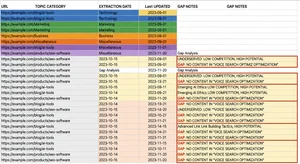
In Google Sheets, create a column for topic extraction using a formula that pulls the first meaningful segment from the URL path. This lets you group URLs by content category.
Count the posts in each category. A competitor with 150 URLs under /blog/social-media/ and 12 under /blog/email-marketing/ has made a clear priority decision. Either they found that social media content performs better for their audience, or they haven't gotten to email marketing yet. Both scenarios represent strategic information.
Next, sort by last-modified date if available. URLs that haven't been touched in 18 months represent potential content that's drifting in rankings. URLs updated frequently represent content they're actively investing in maintaining. This tells you where they're competing seriously and where they're not.
Look for URL patterns that suggest specific content formats: /vs/ paths indicate comparison content. /review/ paths indicate product reviews. /how-to/ paths indicate tutorial content. /best/ paths indicate list-based roundups. The distribution of these formats tells you what their audience responds to.
Finding the Gaps You Can Actually Win
The gap analysis is where the sitemap audit converts to actionable strategy.
Pull your own site's URL list (run the extractor on your own domain) and do a side-by-side topic comparison. Topics your competitor has covered extensively that you haven't touched are candidates for your content roadmap, but with an important filter: the competitor's coverage shows there's demand, but doesn't mean you can outrank them there.
The more valuable gaps are topics they've published only one or two pieces on, especially if those pieces are old. Single posts on topics with real search demand usually indicate a content category the competitor entered but didn't fully commit to. These are places where a focused content cluster can outrank them within 90-120 days.
Also look for topics where their URL structure suggests outdated content: /2022/ and /2023/ date-stamped URLs in categories that move fast indicate opportunities to publish definitively current versions of content they let age.
The Publishing Cadence Insight
Sort the sitemap by last-modified date chronologically and look at publication frequency over time. This tells you whether a competitor is accelerating, slowing, or consistent.
A competitor who published 8 posts per week in 2024 and now publishes 2 per week is either in a resource crunch, shifting strategy, or losing confidence in content as a channel. Any of these create a window.
A competitor who is visibly accelerating their publishing pace is signaling that content is working for them. Understanding what they're producing more of is useful both as validation and as a map of where competition is intensifying.
Putting It Into a 10-Minute Workflow
The actual 10-minute version of this audit:
Run the sitemap extractor (2 minutes). Filter to blog URLs and export (1 minute). Sort by date to identify most recent content (2 minutes). Identify their top 3-5 content topics by volume (2 minutes). Flag 3-5 topic areas they've undercovered (3 minutes).
That output gives you a prioritized shortlist of content opportunities derived directly from your competitor's own publishing decisions. It's not speculative. It's based on what they've actually done and not done.
This doesn't replace keyword research. It supplements it with distribution and architectural intelligence that keyword tools don't surface. Running both in parallel gives you the most complete picture of where to invest your content resources.
When to Repeat the Audit
A one-time audit gives you a snapshot. Monthly or quarterly audits give you a trend line.
Repeat the extraction every 60-90 days on your 3-5 most important competitors and log the total URL count. A site that grows from 340 to 520 blog posts in 90 days has made a major editorial investment. That's the kind of competitive signal that should affect your planning before you see it in rankings.
The sitemap audit won't tell you why your competitor is doing what they're doing. But it tells you exactly what they're doing, and that's more actionable than most strategic intelligence sources available without a paid tool subscription.