
Text-to-Speech for Podcasts: Creating Multiple Episodes | Cliptics
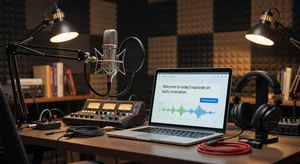
A friend told me about her podcast idea last year, and I watched the same pattern I've seen a dozen times.
She had great content planned. Expertise worth sharing. A clear audience who needed what she knew. But six months later, she hadn't published a single episode. Not because she didn't want to, but because recording herself speaking for 30 to 40 minutes felt overwhelming.
The microphone anxiety. The need for a quiet space. Re-recording sections that didn't sound right. Editing out the ums and awkward pauses. The whole production process became a barrier between her knowledge and her audience.
That's when I introduced her to text-to-speech podcast creation. She was skeptical at first, concerned it would sound robotic or fake. But modern AI voices have crossed a threshold where they're genuinely listenable for long-form content. Her first episode went live three weeks later.
Why Text-to-Speech Actually Works Now
The AI voices from five years ago were unusable for podcasting. That robotic, uncanny valley quality made them distracting rather than helpful. You could tolerate them for 30 second navigation instructions, not 30 minute podcast episodes.
Something fundamental changed in the last two years. The neural networks powering modern text-to-speech learned prosody, the natural rhythm and intonation of human speech. They pause at appropriate moments. Inflection rises for questions. Emphasis lands on the right words.
I've had people listen to AI-voiced podcast episodes without knowing they were synthetic and not immediately recognize them as artificial. That's the threshold that matters. Not perfect replication of human voice, but good enough that listeners engage with the content rather than being distracted by the delivery.
The practical implications are significant. You can produce podcast content without recording equipment, without a quiet recording space, without mic technique or vocal training. If you can write clearly, you can create podcast audio.
This isn't about replacing traditional podcasting. Some shows absolutely need the authentic human voice and the spontaneous energy of conversation. But for educational content, news summaries, storytelling, and informational podcasts, text-to-speech opens the medium to people who have valuable content but struggle with the recording process.
The Content That Works Best
Not all podcast formats translate equally well to text-to-speech. I've learned which types work and which don't through experimentation and feedback.
Educational content is ideal. How-to tutorials, explainers, deep dives into specific topics. The focus is on information delivery, where clear articulation matters more than personality. Listeners are there to learn, and a consistent, clear voice serves that purpose well.
News and industry updates work beautifully. Daily or weekly roundups of developments in a field. Market analysis. Research summaries. Content that's valuable for the information itself rather than the personality delivering it.
Storytelling and narrative content can be compelling with the right voice selection. Fiction podcasts, historical narratives, documentary-style content. The key is choosing a voice with appropriate tone and pacing for the story type.
Interview formats are trickier but possible with multi-voice tools. You can create dialogue between two or three distinct voices. This requires more production skill but creates engaging conversation-style content.
What doesn't work as well is highly emotional content where authentic human feeling is central. Motivational content. Deeply personal stories. Comedy that relies on timing and delivery. These formats really benefit from genuine human voice.
Voice Selection Makes or Breaks It
The voice you choose dramatically impacts whether your podcast succeeds. This is the decision that deserves the most attention.
I typically use the AI text-to-speech tool to preview different voice options before committing. Listen to 2 to 3 minutes of your actual content in each voice. Don't judge based on a 10 second sample, you need to hear how it feels over time.
Match voice characteristics to content type. Professional, authoritative voices work for business and educational content. Warm, conversational voices suit lifestyle and personal development topics. Energetic voices fit technology and innovation subjects.
Consider your audience demographics. Age, cultural background, preferences. Some voices skew younger, others more mature. Some have regional characteristics that might resonate or alienate depending on your listener base.
Consistency matters more than you might think. Once you select a voice, stick with it across episodes. Listeners develop familiarity. Switching voices disrupts that relationship and makes your show feel less cohesive.
Pace and tone can often be adjusted. Most text-to-speech platforms let you control speaking speed and emphasis. Don't just accept the default settings. Experiment to find what makes your content most listenable.
The Production Process
Creating a text-to-speech podcast episode involves several steps that become routine with practice.
Start by writing your script completely. Don't try to generate audio from rough notes. Write exactly what you want said, in the order you want it said. This is your podcast script, not an outline.
Edit for the ear, not the eye. Written content and spoken content are different. Sentences that read well on a page sometimes sound awkward when spoken. Read your script aloud yourself before generating audio. If you stumble over phrasing, listeners will feel that awkwardness even in the AI voice.
Break complex sentences into shorter ones. Eliminate unnecessary jargon. Use conversational language. Add natural transitions between ideas. Your script should sound like someone speaking, not like someone reading an essay.
Generate audio in sections rather than all at once. This makes editing easier and lets you adjust if certain sections don't sound right. I typically work in 3 to 5 minute segments.
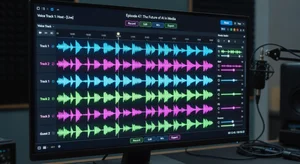
Review the generated audio critically. Listen for awkward phrasing, mispronunciations, or pacing issues. Most platforms let you regenerate specific sections with adjusted text or settings.
Add production elements that make it feel like a proper podcast. Music intro and outro. Transitions between segments. Maybe background music at low volume during content sections. These elements elevate it from "text read by AI" to "professionally produced podcast."
Multi-Voice Dialogue Changes Everything
Single-voice podcasts work fine, but adding multiple voices creates much more engaging content.
The multi-voice text-to-speech capability lets you create conversation-style podcasts without multiple people. You write dialogue between two or more speakers, assign each a distinct voice, and the tool generates the conversation.
This opens up formats that would otherwise require coordinating schedules with co-hosts or guests. Interview-style shows where you're the host and AI voices play different expert perspectives. Debate formats exploring multiple sides of an issue. Storytelling with character dialogue.
The key to making multi-voice content work is clear role differentiation. Each voice should have distinct characteristics. Different genders, ages, or tonal qualities help listeners follow who's speaking without confusion.
Write natural dialogue, not stiff back-and-forth. People interrupt, use contractions, have different speaking rhythms. Your script should capture conversational dynamics even though the voices are generated.
The multi-speaker text-to-speech tool makes this production process straightforward. You mark which segments belong to which speaker, select appropriate voices, and generate the full conversation.
Quality Control and Common Issues
Even with good text-to-speech, certain problems show up regularly. Knowing what to watch for saves time in production.
Mispronunciations are the most common issue. AI voices sometimes interpret unusual words, proper nouns, or technical terms incorrectly. Listen carefully and use phonetic spelling when needed to get correct pronunciation.
Awkward pacing happens when sentence structure is too complex. The AI doesn't know where to pause naturally. Breaking long sentences into shorter ones usually fixes this.
Monotone delivery occurs when content is too uniform in structure. Vary sentence length and structure to create natural rhythm. Mix statements with questions. Use exclamations occasionally for emphasis.
Numbers and dates sometimes sound robotic. "2026" might be read as "two zero two six" instead of "twenty twenty six." Write numbers out in words when it affects how they should sound.
Acronyms need special attention. Some should be spelled out, others said as words. Make it explicit in your script how they should be pronounced.
The Economics Make Sense
Traditional podcast production has real costs. Decent microphone, audio interface, possibly acoustic treatment for your space. Then your time recording and editing. If you hire an editor, that's additional expense per episode.
Text-to-speech eliminates most of these costs. No equipment needed beyond a computer. No recording space required. Production time focuses on writing and light audio editing rather than recording and heavy audio cleanup.
For someone creating weekly podcast content, this can mean the difference between viable and not viable. If each traditional episode takes 4 to 6 hours of recording and editing, that's unsustainable for most people with other responsibilities. If text-to-speech episodes take 2 to 3 hours of writing and production, that's manageable.
This isn't about being cheap. It's about making consistent podcast creation realistic for people with valuable content but limited time or recording capability.
Where This Approach Falls Short
I want to be clear about limitations because going into this with correct expectations matters.
Authenticity and personal connection are diminished. Listeners connect differently to a human voice sharing personal experiences versus an AI voice reading a script. If your brand is built on personal connection, traditional podcasting might serve you better.
Spontaneity and improvisation are impossible. Everything is scripted. The off-the-cuff insights and tangents that make some podcasts charming don't happen in text-to-speech production.
Guest interviews with real people create weird dynamics if your host voice is AI. Mixing human guests with AI hosts feels jarring. If guest interviews are central to your format, this approach has serious limitations.
Emotional range is limited. Current AI voices can convey some emotion through prosody, but they can't match the authentic emotional expression of a human speaker experiencing real feelings.
These aren't necessarily dealbreakers. They're considerations in deciding if text-to-speech fits your specific podcast concept and goals.
Audience Reception and Disclosure
Whether to disclose that your podcast uses AI voices is an important ethical question with practical implications.
I lean toward transparency. Mention in your podcast description that episodes use AI voice technology. Some listeners will care, others won't. But being upfront builds trust and sets appropriate expectations.
Interestingly, I've found that when content is genuinely valuable, many listeners don't care about the production method. They're there for the information or entertainment. The voice is just the delivery mechanism.
There's a segment of listeners who specifically prefer AI voices for certain content types. No vocal fry, no ums and ahs, consistent pacing, clear articulation. These qualities make some educational content easier to consume.
Monitor feedback and be willing to adapt. If your audience consistently mentions the AI voice as a negative factor, you might need to reconsider the approach or improve production quality.
The Workflow I've Settled On
After producing dozens of text-to-speech podcast episodes, this is my current process.
Sunday evening is research and outlining. I gather sources and information for the week's episode, creating a structured outline of what I want to cover.
Monday is dedicated writing time. I write the complete script, editing specifically for spoken delivery. This takes 2 to 3 hours for a 20 to 30 minute episode.
Tuesday morning is audio generation. I use the AI text-to-speech tool to create audio segments, reviewing each for quality and regenerating sections that don't work.
Tuesday afternoon is production and editing. I assemble segments, add music and transitions, adjust levels, and export the final episode. This takes 1 to 2 hours.
Wednesday is publishing and promotion. Upload to podcast hosting, write episode notes, share on social media.
The total time investment is 5 to 7 hours per episode, compared to 8 to 12 hours for traditional recording and editing. That difference is sustainable versus not sustainable for me.
What Makes This Work Long Term
The podcasters I know who successfully use text-to-speech share certain approaches.
They focus on content quality above all else. The AI voice is a tool for delivering great content, not a replacement for having something valuable to say. If your content isn't strong, voice technology won't save it.
They maintain consistent production values. Episode to episode consistency in audio quality, episode length, and production elements builds listener trust.
They play to the format's strengths. Educational content, information sharing, storytelling. They don't try to force it into formats where authentic human voice is essential.
They continually improve production quality. As they learn what works, they refine scripts, voice selection, and editing techniques.
They're transparent with their audience about production methods while keeping the focus on content value.
Where This Technology Goes Next
Voice synthesis is improving rapidly. The natural prosody and emotional range that current top-tier voices demonstrate will become standard. More voices will become available with distinct characteristics and specializations.
Cloning your own voice for text-to-speech will become more accessible and affordable. Record yourself for a while, train a model, then generate episodes in your own voice from text. This combines the efficiency of text-to-speech with the authenticity of your actual voice.
Real-time adjustment and direction will likely emerge. Instead of regenerating segments, you'll be able to adjust emphasis, pacing, and emotion in the generated audio directly.
Integration with podcast production platforms will streamline the workflow further. Write, generate, edit, and publish all within a single tool rather than jumping between applications.
What I Think About All This
The barrier to podcasting used to be technical and logistical. Recording quality, editing skills, equipment costs. Text-to-speech removes those barriers for certain types of content.
What remains is the barrier that always mattered most: having something worth saying and saying it well. That hasn't changed and won't change.
If you have expertise to share, stories to tell, or information that would benefit an audience, text-to-speech makes it possible to reach that audience through podcasting without the traditional production barriers.
It's not for everyone or every podcast format. But for the right content and the right creator, it's a genuinely useful tool that makes consistent podcast production realistic.
And that matters. Because there's too much valuable knowledge trapped in people who could teach but can't or won't podcast traditionally. Anything that helps that knowledge reach the people who need it is worth exploring.