
Text-to-Video for Marketing: Ad Creation Guide for Digital | Cliptics

Last quarter, my team needed 30 different video ad variations for A/B testing across platforms. Traditional production would have cost $15,000 and taken three weeks. Instead, we generated them in two days for under $500 using text-to-video AI. The winning variation outperformed our previous best ad by 23%.
That experience changed how I think about video marketing. Not because AI replaced our video team—it didn't. But because it unlocked experimentation at a scale that was previously impossible. When testing costs drop by 95%, you can afford to try ideas you'd never have greenlit otherwise.
After generating hundreds of marketing videos with AI over the past year, I've identified patterns that separate effective campaigns from wasted budget. Here's what actually works.
Why Video Ads Need Different Approach
The first mistake marketers make is treating text-to-video AI like a cheap video production service. It's not. It's a different medium with different strengths and limitations. Trying to recreate traditional ads rarely works well. Leaning into what AI does uniquely often produces better results.
Traditional video ads rely on performances, real products, brand consistency built through years of visual identity work. AI-generated video can't fully replicate this. Human faces often look slightly off. Products might not match exact specifications. Brand colors and styles require careful prompting to maintain.
But AI video excels at conceptual visualization, impossible scenarios, rapid variation testing, and scenarios too expensive to film. A traditional 15-second ad might show your product in use. An AI-generated ad can show your product in fantastical environments, demonstrate abstract concepts visually, or create attention-grabbing scenarios that would require Hollywood budgets to film.
The key is knowing which approach serves your goals. Product demos with real people? Film traditionally. Conceptual brand storytelling or high-volume testing? AI generation becomes viable.
Campaign Types That Work Best
Through experimentation, I've identified specific campaign types where text-to-video AI delivers strong ROI:
Concept testing and research. Before committing production budget to an expensive video campaign, generate AI versions to test messaging, visual approaches, and audience response. The AI versions won't be polished enough for final use, but they'll reveal which directions resonate.
I ran this approach for a client considering three different creative directions. Generated rough AI versions of each. Tested them with small audience segments. One clearly outperformed. That data justified the production budget for traditional filming of the winning concept.
High-volume variation testing. Different audience segments respond to different messaging. Creating 20+ video variations traditionally is prohibitively expensive. With AI generation, it's affordable. I routinely create versions with different backgrounds, color schemes, pacing, and visual metaphors, then let performance data identify winners.
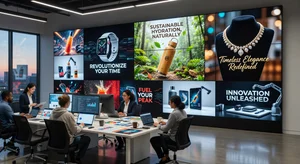
Abstract concept visualization. Some products or services are conceptually complex. "Cloud infrastructure." "Workflow automation." "Financial planning." Traditional video shows people talking about these concepts. AI-generated video can visualize them directly. Animated representations of data flows. Visual metaphors for complex processes. Abstract representations of technical concepts.
Seasonal and reactive content. When you need video content fast for trending topics, current events, or seasonal campaigns, AI generation's speed is valuable. Generate holiday-themed ads in hours. Create response videos to trending topics while they're still relevant. Produce timely content without the lead time traditional production requires.
Prompt Engineering for Marketing
Writing effective prompts for marketing video requires different techniques than general creative prompting. Marketing has specific goals: attention, clarity, persuasion, action.
I structure marketing prompts with these elements:
Visual hook (first 2 seconds): "Close-up of vibrant product splashing into water" or "Dramatic zoom into abstract geometric patterns." The opening needs immediate visual interest to stop scrolling.
Core message visualization: "Transition to wide shot showing product in elegant modern kitchen" or "Abstract visualization of data points connecting in network pattern." This is where the actual marketing message appears visually.
Emotional tone and pacing: "Upbeat and energetic with quick cuts" or "Calm and sophisticated with slow camera movements." Style words that guide the overall feel.
Technical specifications: "16:9 format, high contrast, saturated colors" or "Vertical 9:16 mobile format, soft pastel color palette." Platform-specific requirements built into the prompt.
The most effective marketing prompts balance specificity with flexibility. Too vague and you get generic results. Too specific and the AI struggles to interpret, producing confused outputs.
Platform-Specific Optimization
Different advertising platforms require different video approaches. AI generation makes creating platform-optimized variations efficient:
Instagram and TikTok: Vertical 9:16 format. Fast pacing. Visual hooks in first second. Bold text overlays. Saturated colors that pop on mobile screens. I prompt for "vertical mobile video, dynamic movement, vibrant colors, eye-catching opening."
YouTube: Horizontal 16:9. Longer attention span tolerates slower builds. More complex narratives work. Sound design matters more. Prompts emphasize "cinematic horizontal video, building narrative, professional production quality."
LinkedIn: Professional aesthetic. Clear value propositions. Less about entertainment, more about credibility and results. Prompts focus on "professional business setting, clear messaging, authoritative presentation."
Facebook: Short attention span but varied content consumption contexts. Some viewers watch with sound, many don't. Visual storytelling that works without audio is essential. Prompts include "clear visual storytelling, readable text, works without sound."
I generate variants optimized for each platform rather than repurposing single videos. The performance difference justifies the minor additional effort.
Combining AI with Traditional Elements
Purely AI-generated marketing video has limitations. The most effective campaigns combine AI-generated visuals with traditionally produced elements:
AI-generated backgrounds + real product shots. Film your product professionally with proper lighting and color accuracy. Generate compelling backgrounds and environments with AI. Composite them together. This maintains product accuracy while using AI for contextual variety.
AI-generated conceptual sequences + spokesperson footage. Film a spokesperson delivering your pitch. Generate visual sequences that illustrate key points. Edit them together. This combines human credibility with AI's ability to visualize abstract concepts.
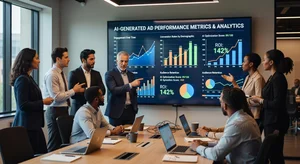
AI-generated rough cuts + professional finishing. Generate the core video with AI. Then apply professional color grading, sound design, text overlays, and motion graphics. The polish elevates AI-generated content significantly.
The hybrid approach addresses AI generation's weaknesses (inconsistency, occasional visual artifacts, brand guideline adherence) while using its strengths (speed, variation, conceptual visualization).
Testing and Iteration Strategy
Text-to-video AI enables testing approaches previously limited to large-budget campaigns:
Multi-variate testing at scale. Generate versions with different:
- Visual hooks (product reveal vs. abstract concept vs. lifestyle scene)
- Color palettes (brand primary colors vs. high contrast vs. monochrome)
- Pacing (fast cuts vs. smooth transitions)
- Messaging focus (features vs. benefits vs. emotional appeal)
Run small-budget tests across variations. Let data identify winners. Scale budget to top performers.
Audience segment customization. Create versions tailored to different demographics. Younger audiences get faster pacing and trendier aesthetics. Professional audiences get cleaner, more authoritative presentation. Niche interest groups get specific imagery relevant to their context.
Sequential testing and learning. I use a test-learn-refine cycle:
- Generate initial batch (8-10 variations)
- Run small-budget test ($500-1000 per variation)
- Analyze performance data
- Identify successful elements
- Generate refined batch incorporating learnings
- Scale winners with larger budgets
This approach treats AI generation as a discovery tool, not just production shortcut.
Budget Allocation Strategy
How should marketers allocate budgets between AI generation and traditional production?
My current approach: 70% budget to proven performers (often traditionally produced cornerstone content), 20% to AI-generated testing and experimentation, 10% to hybrid approaches combining both.
The 20% experimental budget using AI generation has consistently identified winning concepts that then justify larger traditional production budgets. The testing pays for itself by preventing expensive production of mediocre ideas.
For smaller businesses with limited video budgets, the ratio shifts: 50% AI generation, 30% hybrid approaches, 20% traditional production of only the highest-priority content. This maximizes volume and testing capacity while maintaining quality for critical assets.
Performance Metrics Worth Tracking
Standard video ad metrics apply (watch time, completion rate, CTR, conversion rate), but AI-generated content benefits from additional tracking:
Generation cost vs. performance ROI. Track which types of generated content deliver best returns relative to generation costs. Some prompt styles consistently outperform. Others rarely work. Build a library of high-performing approaches.
Iteration count to usable result. Some concepts require 3-5 generation attempts to get usable output. Others work first try. Understanding this helps with timeline and budget planning.
Variation performance spread. When testing 10 variations, how much does the winner outperform the average? Large spreads justify more testing. Small spreads suggest you've hit diminishing returns on that concept.
Audience segment response differences. AI-generated content sometimes performs differently across segments than traditional video. Track these patterns to inform future generation decisions.
Common Pitfalls to Avoid
After a year of extensive AI video marketing, here are mistakes I've learned to avoid:
Over-reliance on AI for brand-critical content. Your hero campaign that defines brand identity shouldn't be AI-generated. Use it for testing and volume, not for defining brand moments that require perfect execution.
Ignoring brand guidelines. AI generation makes it easy to produce visuals that don't match your brand. Establish clear prompting guidelines that maintain brand consistency even when generating rapidly.
Mistaking novelty for effectiveness. AI-generated video is still novel enough that some audiences respond to it because it's interesting, not because it's persuasive. This novelty effect fades. Design campaigns for sustained effectiveness, not just initial curiosity.
Underestimating editing value. Raw AI generations rarely represent optimal final assets. Budget time and resources for editing, refinement, and polish.
Tools and Workflow Integration
For marketing teams, workflow efficiency matters as much as generation quality. I've built workflows around specific tools:
Text-to-video generators for initial creation. AI image generators for static assets. Text-to-speech tools for voiceovers. Video watermark removers for post-processing.
The key is integration with existing marketing tools. Generated videos need to flow into your asset management system, analytics platforms, and publishing workflows. Clunky handoffs kill efficiency gains.
Future of Marketing Video Creation
AI video generation will keep improving. Longer videos. Better consistency. More precise control. The technology trajectory is clear.
What's less clear is how this shifts marketing strategy. When video production costs approach zero and speed approaches instant, what becomes the limiting factor? Not production capacity. It becomes creative strategy, testing sophistication, and insight extraction from performance data.
The marketers thriving in this environment won't be the ones using the fanciest AI tools. They'll be the ones asking better strategic questions, designing smarter tests, and extracting meaningful insights from abundant data.
Text-to-video AI is a tool for better marketing thinking, not a replacement for it. Master the thinking, and the tools amplify your effectiveness enormously. Skip the thinking, and you just produce bad marketing faster.