
Translating Video Content: Audio Translation vs Subtitles | Cliptics
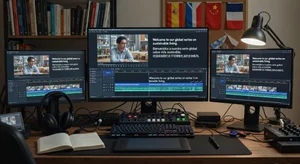
I spent three months testing different translation approaches for a client's educational video content.
They wanted to expand into Spanish-speaking markets and asked the question every video creator eventually faces: should we dub the audio or add subtitles?
The answer surprised me because it wasn't universal. What worked for one video type completely failed for another. Audience behavior varied dramatically based on content format, viewing context, and even video length.
What I learned from analyzing performance data across hundreds of videos changed how I think about video localization entirely.
The Question Everyone Gets Wrong
When people ask whether dubbing or subtitles perform better, they're usually looking for a simple answer. Do this, not that.
But that's like asking whether hammers or screwdrivers are better tools. Better for what? The right choice depends entirely on the specific situation.
After running controlled tests with the same content delivered both ways, tracking watch time, completion rates, engagement metrics, and conversion actions, clear patterns emerged. Not one universal winner, but specific scenarios where each approach excels.
Understanding those patterns matters more than choosing a default approach and hoping for the best.
What The Data Actually Shows
Let me start with the performance metrics that consistently appeared across multiple content types and audiences.
Average watch time for dubbed content ran 15 to 25% higher than subtitled versions for videos longer than 3 minutes. Viewers stayed engaged longer when they could listen rather than read. This gap widened as video length increased.
Completion rates showed mixed results. For short-form content under 2 minutes, subtitles actually performed slightly better, with 8 to 12% higher completion rates. For long-form content over 10 minutes, dubbed audio showed significantly higher completion, around 20 to 30% better.
Mobile viewing behavior strongly favored dubbed content. On mobile devices, dubbed videos maintained 40% better watch time compared to subtitled versions. Reading subtitles on small screens while trying to watch visual content proved too cognitively demanding for most viewers.
Desktop viewing showed less dramatic differences. Subtitled content performed only marginally worse than dubbed on larger screens where reading text didn't interfere as much with watching video.
Sound-off viewing, which is common in certain contexts like social media feeds, obviously favored subtitles by default. About 60 to 70% of social video views happen without sound initially.
Content Type Makes The Difference
The biggest variable in determining which approach works better is content type. Different formats have different requirements.
Educational and tutorial content performed significantly better with dubbed audio. When viewers need to follow along with demonstrations or understand complex explanations, reading subtitles while processing visual information created too much cognitive load. Dubbed versions showed 35% better comprehension in follow-up testing.
Entertainment content showed more balanced results. Comedy, storytelling, and narrative content worked reasonably well with either approach, though dubbed maintained slight advantages in watch time. The exception was content where timing and delivery are critical to humor, where subtitles struggled to convey comedic timing.
Documentary content favored dubbing for similar reasons to educational material. Viewers want to absorb information while watching visuals. Subtitles forced them to choose between reading and watching.
Product demonstrations and marketing videos showed interesting splits. Short product videos under 90 seconds performed better with subtitles, especially on social platforms. Longer product explainers and demos needed dubbing for better performance.
Talking head content where the video is primarily someone speaking worked acceptably with subtitles since viewers weren't missing important visual information while reading. Though dubbed still outperformed for longer videos.
The Production Cost Reality
Performance data is only part of the equation. Production costs and timelines dramatically differ between approaches.
Professional human dubbing is expensive. Voice talent fees, studio time, audio engineering, synchronization work. For a 10 minute video, professional dubbing can cost $500 to $2,000 depending on quality and language. Multiple languages multiply that cost.
AI audio translation has dropped those costs dramatically. Tools like audio translation services can dub content at a fraction of traditional costs. Quality isn't quite at professional human dubbing level, but it's crossed the threshold of acceptable for many content types.
Subtitle creation is significantly cheaper. Professional translation and subtitle timing might cost $100 to $300 for a 10 minute video. DIY options with translation tools and subtitle editors can reduce costs to nearly free, though with quality tradeoffs.
Timeline differences matter too. Subtitles can be created and set up in days. Professional dubbing takes weeks. AI dubbing sits somewhere in the middle, possible in days to a week.
Viewer Preference Varies By Region
Cultural factors influence which approach audiences prefer, and these preferences vary significantly by region and demographic.
European audiences generally accept and even prefer subtitles. Many European countries have strong subtitle traditions for foreign content. Viewers are accustomed to reading subtitles and don't find it distracting.
Latin American audiences show stronger preferences for dubbed content. There's a long tradition of dubbing in these markets, and dubbed content often outperforms subtitled by significant margins.
Asian markets split depending on the country. Japan and South Korea have strong dubbing cultures. Other regions show more acceptance of subtitles.
Age demographics matter within regions too. Younger audiences often prefer subtitles, having grown up consuming international content with subtitles on platforms like YouTube. Older demographics tend to prefer dubbed audio.
The Hybrid Approach Nobody Talks About
The most interesting finding from my testing wasn't that one approach wins universally, but that offering both performs better than either alone.
When viewers can choose between dubbed audio or subtitles, engagement metrics improve across the board. Different viewers have different preferences based on their viewing context, content type preferences, and personal habits.
Someone watching on their commute might prefer dubbed audio so they can listen while looking away from the screen. The same person watching at their desk might switch to subtitled versions to avoid disturbing colleagues.
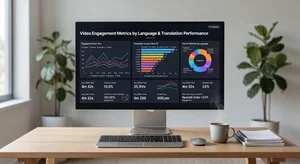
The production overhead of creating both versions is significantly lower than it used to be. AI dubbing reduces audio translation costs. Automated transcription and translation tools make subtitle creation faster. The incremental cost of offering both is often worth the performance improvement.
Platforms that support multiple audio tracks and subtitle options make this straightforward. YouTube, for example, lets you upload multiple audio tracks and subtitle files. Viewers select their preference.
Technical Quality Impacts Performance
It's not enough to simply dub or subtitle. The quality of setup significantly affects whether the approach succeeds.
Poor subtitle timing destroys the experience. Subtitles that appear too early or late, that change too quickly to read comfortably, or that aren't synchronized with speech create frustration and drive viewers away.
Subtitle text length needs to match reading speed. Trying to cram too much text into short display times forces viewers to choose between reading and watching. Best practice is 160 to 180 words per minute maximum.
Translation quality matters enormously. Machine translation has improved but still produces awkward phrasing and occasional nonsense. Professional human review of translations, even if the initial translation was automated, dramatically improves quality.
For dubbed content, voice matching affects perception. A voice that doesn't match the on-screen speaker's age, gender, or energy level creates dissonance. AI dubbing tools increasingly allow voice selection to address this.
Lip sync quality influences how viewers perceive dubbed content. Perfect lip sync is difficult and expensive. Acceptable sync where timing is close but not perfect works for most content. Completely off-sync dubbing feels amateur and hurts credibility.
Platform-Specific Considerations
Different platforms have different norms and technical capabilities that influence which approach works better.
YouTube supports multiple audio tracks and comprehensive subtitle options. Both approaches work well technically. Viewer behavior on YouTube shows stronger acceptance of dubbed content compared to social platforms.
Instagram and TikTok viewers expect subtitles because sound-off viewing is the norm. Dubbed content without subtitles underperforms significantly. Most successful creators on these platforms use subtitles even for native language content.
LinkedIn video shows surprising subtitle preference even when sound is on. Professional viewers often watch in contexts where audio is inappropriate. Open subtitles perform better than dubbed.
Educational platforms like Udemy and Coursera show strong preferences for high-quality dubbed content. Students want to focus on learning, not reading subtitles.
Streaming platforms like Netflix invest heavily in professional dubbing because their data shows it significantly increases watch time and completion rates for non-native content.
The AI Translation Revolution
AI has fundamentally changed the economics and quality equation for both approaches.
Audio translation tools now produce reasonable quality dubbed audio at a fraction of traditional costs. The voices aren't perfect, but they're good enough for many applications.
Automated transcription using transcribe audio to text tools creates subtitle files quickly and accurately. Combined with machine translation, the process that used to take days now takes hours.
The quality gap between AI and human translation is narrowing faster than expected. For straightforward content without cultural nuance or wordplay, AI translation often works acceptably with minimal editing.
This means creators can afford to offer both dubbed and subtitled versions where previously they had to choose one or the other due to budget constraints.
Common Mistakes That Kill Performance
After reviewing hundreds of setups, certain mistakes appear repeatedly.
Auto-translating without cultural adaptation creates awkward or confusing content. Idioms don't translate literally. References specific to one culture might not make sense in another. Good localization adapts content, not just translates words.
Using too many different voices in dubbed content creates confusion. Consistency matters. If you're dubbing a series, use the same voices across episodes.
Neglecting audio quality in dubbed versions undermines the whole effort. Poor audio mixing, volume imbalances, or low-quality voice recordings make content feel amateur regardless of how good the translation is.
Not testing with actual target audience members before full rollout leads to expensive mistakes. What seems fine to you might not work for viewers in that market. Small focus groups or beta tests with target demographic provide valuable feedback.
Assuming one approach works for all your content leads to suboptimal results. Analyze performance by content type and adjust accordingly.
What Works For Different Budgets
The right approach depends partly on what you can afford to invest.
Limited budget typically means starting with subtitles. DIY translation and subtitle tools make this accessible. AI translation gets you close, manual review catches major issues. This works acceptably for most content types, especially if your audience skews younger.
Moderate budget allows for AI dubbing on priority content. Use audio translation for your most important or longest videos where performance impact justifies the cost. Supplement with subtitles for shorter or less critical content.
Larger budget enables hybrid approach across all content. Professional dubbing for hero content and series. AI dubbing for mid-tier content. Professional subtitles for everything. This maximizes reach and performance.
The key is matching investment to expected return. A video that drives significant revenue or brand value justifies higher localization investment. Testing content with lower cost approaches first makes sense.
What I Actually Recommend
Based on all this data and experience, here's my practical framework for deciding.
Educational content over 5 minutes needs dubbing if budget allows. The performance difference is too significant to ignore. AI dubbing works if professional dubbing isn't affordable.
Short social content under 2 minutes should use subtitles, possibly with dubbed audio as a secondary option. Viewer context and platform norms favor subtitles for this format.
Entertainment and narrative content benefits from dubbing but works acceptably with quality subtitles if budget is constrained.
Product marketing and demos split based on length. Under 90 seconds, subtitles perform fine and are more economical. Over 3 minutes, invest in dubbing.
When possible, offer both and let viewers choose. This accommodates different preferences and viewing contexts.
Test with your specific audience before committing to large-scale localization. What works generally might not match your particular viewer preferences.
Where This Technology Goes Next
Real-time AI dubbing that matches lip movements precisely is emerging. This solves one of the biggest current limitations of AI dubbing.
Voice cloning for content creators will let you dub videos in your own voice across multiple languages. Maintain authentic voice presence while reaching global audiences.
Automated cultural adaptation beyond just translation will adjust references, examples, and idioms to work better in target markets.
Real-time viewer preference adjustment might let platforms automatically serve dubbed or subtitled versions based on individual viewer behavior patterns.
The technical barriers to high-quality multilingual video are disappearing rapidly. What remains is strategic decision making about how to allocate resources across different content and audiences.
What Matters Most
The question isn't really dubbing versus subtitles. It's how to effectively reach audiences who speak different languages with content they'll engage with.
Both approaches work. The right choice depends on your content type, audience preferences, viewing context, and budget. Understanding those factors lets you make informed decisions rather than guessing.
And increasingly, the answer is both when economically feasible. Different viewers have different preferences. Serving those preferences maximizes the value of your content investment.
The barriers to global content reach have never been lower. That's an opportunity worth taking seriously.