Turn Photo into Clay Sculpture Free | AI Filter 2026 | Cliptics
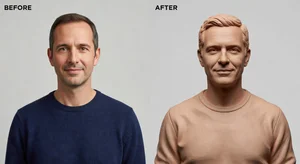
Last week I was scrolling Instagram and saw this photo that stopped me mid-scroll. It looked like someone had sculpted a person out of clay. Not an actual sculpture. A photo transformed to look like one. The textures, the matte finish, the way light hit the surface. It was weirdly captivating.
Turns out there's a whole thing happening with clay sculpture filters, and you can do it online for free without downloading anything or signing up for accounts. I spent an afternoon playing with this, and yeah, it's pretty cool.
What Makes The Clay Sculpture Effect Work
The clay aesthetic has this specific look that's hard to describe but you know it when you see it. Matte surface. Simplified features. Soft shadows that emphasize form rather than detail. It's like someone took a photo and reimagined it as a physical object.
What I find interesting is how this effect highlights shapes and composition in ways regular photos don't. Details get simplified. Colors become more uniform. The result feels both more abstract and somehow more essential. It's photography meeting sculpture meeting digital art.
And it works with way more than just portraits. Landscapes get this miniature diorama quality. Objects look like they're part of a stop motion animation. Even buildings take on this handcrafted toy town appearance. The effect is versatile in unexpected ways.
How To Actually Do This Without Photoshop
Here's the good news. You don't need Photoshop skills or expensive software to create clay sculpture effects. Cliptics has a free online tool that does this with a few clicks, and it actually works well.
You upload your photo. Click the clay sculpture filter. Wait maybe ten seconds. Download the result. That's genuinely the whole process. No complex adjustments. No learning curve. It's designed for people who just want the effect without fiddling with settings.
What makes it work is the AI understands what "clay" should look like. The subtle texture. The matte finish. The way light interacts with the surface. You're not manually applying filters and hoping for the best. The AI handles the transformation based on what actually makes photos look clay-like.
And because it's browser based, you can do this from your phone while waiting for coffee. Desktop. Tablet. Whatever. No app install. No account creation unless you want to save presets or access premium features. For basic clay sculpture effects, the free version does what you need.
What Actually Works Best With This Effect
I tested this with probably thirty different photos to see what translated well and what didn't. Turns out composition matters a lot.
Portraits with clear lighting and simple backgrounds work beautifully. The effect emphasizes facial structure and creates this artistic representation that feels both realistic and stylized. Busy backgrounds tend to get muddy though. Too much visual information competing for attention doesn't translate as cleanly to the clay aesthetic.
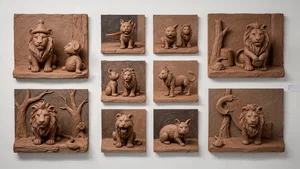
Objects with interesting shapes are perfect for this. A vintage camera becomes this cool retro sculpture. A coffee cup looks like something from an artisan's workshop. Anything with form and texture that you want to emphasize benefits from the clay treatment.
Landscapes work differently. They get this dreamlike miniature quality, like you're looking at a handbuilt model. It's not realistic, but it's compelling in its own way. Wide open spaces with clear subjects work better than cluttered scenes with too many elements.
Why This Effect Actually Matters
On the surface, clay sculpture filters seem like just another Instagram trend. But there's something deeper happening here that I think is worth noticing.
We're seeing digital tools that let anyone create artistic interpretations of their photos without needing traditional art skills. You don't have to know how to sculpt. You don't have to understand light and shadow in physical materials. The AI bridges that gap between vision and execution.
That democratization of artistic expression is powerful. More people can experiment with visual styles that were previously locked behind technical barriers. A photographer can explore sculptural aesthetics. A designer can generate reference material. A hobbyist can make art that feels unique and personal.
And from a practical standpoint, these effects create content that stands out. Social media is drowning in photos. The clay sculpture aesthetic catches attention because it's different. It's visually interesting in feeds full of standard photography. That matters if you're trying to build an audience or showcase work.
The Limitations You Should Know About
Let me be real about where this doesn't work as well, because understanding limitations is as important as knowing strengths.
Photos with very fine details tend to lose those details in the transformation. Hair texture. Fabric patterns. Intricate backgrounds. The clay effect simplifies by nature, so if preserving specific details matters, you might be disappointed with results.
Color accuracy isn't the priority here. The effect often shifts colors toward more muted, earthy tones that fit the clay aesthetic. If you need exact color matching for branding or specific visual requirements, this probably isn't the right tool.
And it's not a replacement for actual sculpture or 3D modeling. The result is a 2D image with a clay-like appearance. It doesn't give you a 3D model you can rotate or view from different angles. It's a visual effect, not a modeling tool.
What I'm Doing With This Now
I've started using the clay sculpture effect for specific purposes where it actually adds value rather than just being a novelty.
Profile pictures get interesting with this treatment. Instead of a standard photo, you've got this artistic representation that feels more distinctive. It's recognizable as you but stylized in a way that creates visual identity.
Social media content benefits when you want posts to pop in crowded feeds. A regular product photo might get scrolled past. That same product rendered as a clay sculpture catches eyes and makes people pause. The unfamiliarity creates engagement.
I'm also experimenting with using these for mood boards and concept presentations. When you're trying to communicate an aesthetic or feeling, the clay sculpture effect can help establish that artistic direction in ways standard photos don't.
Where This Goes From Here
Clay sculpture filters are part of a bigger trend toward AI powered artistic effects that anyone can use. We're moving away from "you need to be a professional artist" toward "the tools enable artistic expression for everyone."
What I'm curious about is how this changes our relationship with photography and art. When transformation from photo to artistic style is instant and free, does that devalue the skill? Or does it free people up to focus on creative vision rather than technical execution? Probably both, depending on who you ask.
But for now, if you want to turn your photos into clay sculptures, you can. The tools exist. They're free. They work. Whether you use this for social media, art projects, or just messing around, it's accessible in ways it wasn't even a year ago.
And honestly? I think that's pretty cool. The barriers keep dropping. The possibilities keep expanding. We're in this weird exciting moment where digital tools are redefining what counts as accessible creativity, and clay sculpture filters are just one small piece of that larger shift.