
UGC Marketing Strategy 2026: Using User-Generated Content | Cliptics

A few years ago, a small outdoor gear company made a decision that seemed risky at the time. Instead of investing in a new round of professional photography for their spring campaign, they emailed their existing customers and asked them to share photos from their adventures. Not staged shots. Not carefully lit product placements. Just real moments: a summit photo with a pack visible in the frame, a river crossing where their boots were getting soaked, a campsite at dusk with their sleeping bag draped over a log.
The response exceeded anything they expected. Within two weeks they had over eight hundred submissions. They used forty of them in their campaign. The conversion rate on pages featuring those customer photos outperformed their professional photography by more than forty percent. The customers whose photos were featured became vocal advocates, sharing their own campaign appearances and bringing their networks to the brand.
That story is not exceptional anymore. It is the pattern that smart marketing teams across categories have been replicating and refining ever since, learning from each iteration what makes user-generated content campaigns work versus what makes them fall flat.
Why Customer Content Converts Differently
There is a reason that authenticity has become one of the most overused words in marketing, and that reason is real even when the word is not. Human beings are extraordinarily good at detecting the difference between genuine enthusiasm and performed enthusiasm, even in still images, even in brief video clips. We have evolved over thousands of years of social interaction to read authenticity signals in faces, body language, and context. Professional photography and production are very good at many things. They are not good at mimicking the particular quality of a real person genuinely enjoying something.
User-generated content carries authenticity signals that professional content cannot reproduce. The slightly imperfect framing. The real background that is someone's actual apartment rather than a carefully designed set. The genuine expression of a person who is photographing something because they want to remember the moment, not because they have been paid to look happy about a product. Audiences recognize these signals, often unconsciously, and respond to them differently.
The trust dimension compounds this. When a potential customer sees someone who looks like them using a product in a context that looks like their life, the psychological distance between aspiration and purchase collapses in a way that polished brand content rarely achieves. Social proof is not just a marketing concept. It reflects something genuine about how humans make decisions under uncertainty.
Building a UGC System That Actually Works
The brands that have had consistent success with user-generated content in 2026 have stopped treating UGC campaigns as one-off creative initiatives and started treating them as systems with defined inputs, processes, and feedback loops.
The most important design decision is what you are asking for and why. The most common UGC campaign failure mode is asking customers to produce content that serves the brand's needs rather than the customer's natural behavior. If your customers do not naturally photograph your product in their daily lives, creating an elaborate hashtag campaign and hoping they will start is unlikely to produce volume or authenticity.
The brands with the strongest UGC programs start from observation rather than aspiration. They look at what customers are already sharing organically, which usually exists in modest quantities even without encouragement, and design their systems to amplify that natural behavior rather than trying to engineer a different one.
A running shoe brand whose customers were already sharing race completion photos did not need to create a new behavior. They needed to capture and celebrate the behavior that was already happening, make participants feel seen and appreciated, and create enough visibility for the behavior that other customers wanted to join it. The campaign brief practically wrote itself from the observation.
When UGC programs do need to prompt behavior that is less established, the prompts that work best create genuine value for the customer in the act of participating. A meaningful feature on the brand's channels. Access to a community of similar people. Recognition that feels real rather than algorithmic. The customers who produce the most compelling UGC are usually doing it because participation means something to them, not primarily because they hope to receive a coupon.
The Rights and Relationships Question
Every brand that has run UGC campaigns at scale has had to grapple with rights, and the ones that have gotten it wrong have often gotten it publicly and painfully wrong.
The baseline legal requirement is clear: you need explicit permission to use someone's content commercially, and a vague hashtag agreement buried in campaign terms rarely constitutes that clearly enough to withstand scrutiny. The brands with the cleanest UGC programs have moved toward direct rights requests, either through platforms that automate the request process or through individual outreach that feels personal rather than transactional.
The rights conversation also creates a relationship opportunity that the transactional approach misses. Reaching out personally to ask for permission to use someone's content, explaining how you plan to use it, and genuinely expressing appreciation for what they created, that interaction itself generates goodwill and often turns ordinary customers into active advocates. The brands that treat UGC rights as purely a legal clearance process miss the relationship-building potential embedded in the same process.
Creator partnerships have become more important in the UGC space as the distinction between organic customer content and paid creator content has blurred. Micro-influencers and nano-influencers, people with relatively small but highly engaged audiences in specific niches, produce content that has the authentic quality of genuine UGC because their relationship with their audience is genuinely personal. Brands that have built genuine partnerships with a network of smaller creators, rather than occasional relationships with large ones, often get better content and better conversion from their partnerships.
The key distinction in these partnerships is whether the creator actually uses and believes in the product, or whether they are performing enthusiasm for a check. Audiences have gotten quite good at distinguishing between these cases, and the authenticity signals of genuine enthusiasm versus performed enthusiasm are legible even in relatively polished creator content.
What the AI Tools Have Changed
The production side of UGC has shifted in 2026 in ways that affect both brands and creators. AI tools have made it easier for ordinary people to produce higher-quality content, which has raised the production floor without necessarily changing the authenticity ceiling.
For brands curating and deploying UGC, AI tools have dramatically improved the workflow from raw submissions to usable assets. Automatic background removal, format conversion for different platform specifications, basic color correction, and resolution enhancement are all now available through browser-based tools without specialized software. Platforms like Cliptics handle much of this production work in a straightforward browser environment, which means the production gap between brand-produced and customer-produced content has narrowed.
The implication is that UGC programs can now scale more efficiently, because the production work of getting raw customer submissions into deployable assets is less labor-intensive than it used to be. This changes the economics of UGC programs favorably, particularly for smaller marketing teams that could not previously dedicate significant production resources to UGC management.
The Measurement Story
UGC programs have historically been difficult to attribute rigorously, which has made them easier to underfund. Marketing budgets tend to follow what can be measured, and the influence of customer content on purchase decisions happens through paths that are not cleanly captured by last-click attribution or standard conversion tracking.
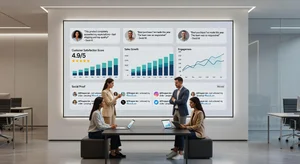
The brands investing seriously in UGC measurement have moved toward studies that compare conversion rates on pages with and without UGC, customer lifetime value for UGC participants versus non-participants, and sentiment tracking that captures the qualitative impact of community content. These measurement approaches are more effortful than standard attribution but produce a more accurate picture of what UGC programs actually contribute.
The most important long-term finding, which is consistent across every rigorous study of UGC impact that I have seen, is that customers who participate in UGC programs have meaningfully higher retention and lifetime value than those who do not. This is probably causal in both directions: brands that invest genuinely in their customer communities attract more committed customers, and participation in community programs increases commitment. Understanding that relationship clearly changes how you think about UGC investment.
Building a UGC program in 2026 is not primarily a content production decision. It is a community investment decision. The content is the artifact. The community is the asset. The brands that understand that distinction build programs that compound over time rather than burning bright for a campaign cycle and then fading out.
The outdoor gear company is still running their customer photo program, three years later. The photos have gotten better because the community has gotten more invested. The conversion impact has continued to outperform professional content. And somewhere in their database is a record of every customer who submitted a photo and what happened to their relationship with the brand afterward.
That data tells a story about what customer content actually is, which is not marketing collateral but evidence of a relationship that is real and ongoing. Smart brands in 2026 have figured out how to honor that.