
Video Quality: AI-Generated vs Filmed Content | Cliptics
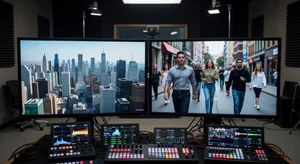
There's this ongoing debate in videography circles that I find fascinating. Can AI generated video actually match the quality of traditionally filmed content?
I've spent months looking at this from every angle I can think of. Not just as a technical comparison, but as someone who cares about what makes video work. What makes it feel real. What makes people stop scrolling.
The answer isn't as simple as one being better than the other.
What Quality Even Means
Here's where it gets interesting. When we talk about video quality, we're actually talking about multiple things at once.
Technical quality is the easy part to measure. Resolution, frame rate, bit depth, compression artifacts. Free text to video generators have gotten impressively good at hitting technical specs. You can generate 1080p or even 4K footage that checks all the boxes on paper.
But then there's perceptual quality. How it feels to watch. Whether the motion looks natural. Whether lighting makes sense. Whether moments feel authentic or constructed.
That's where things get complicated.
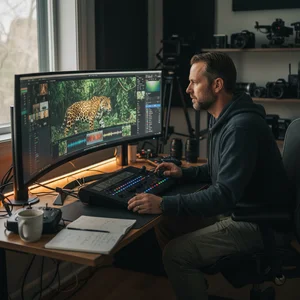
Traditional filming has physics on its side. Light bounces off real objects. Shadows fall where they should. Movement follows the laws of motion because it's happening in the real world. Your brain recognizes all of this at a subconscious level.
AI generated video is getting better at simulating these physics. But simulation is the key word. It's learned patterns from millions of videos and is trying to recreate what it thinks should happen. Sometimes it nails it. Sometimes there's this subtle wrongness that's hard to articulate but impossible to ignore.
The Motion Problem
Movement is where I notice the biggest difference.
Filmed content captures motion with all its messy imperfection. Camera shake, even on a tripod. Micro movements in supposedly static shots. The organic way subjects move through space.
AI video can generate smooth, precise motion. Too smooth sometimes. Too precise. It can look almost hyperreal, like everything's gliding instead of moving. That uncanny valley feeling creeps in.
But here's what surprised me. For certain types of content, that AI smoothness actually works better. Explainer videos. Conceptual visualizations. Abstract sequences where realism isn't the goal.
The question isn't which is higher quality in absolute terms. It's which quality characteristics matter for what you're trying to create.
Detail and Texture
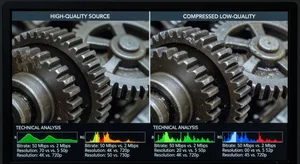
Zoom in on filmed footage and you'll see texture. Grain structure. The subtle irregularity of real surfaces. Even with clean digital cameras, there's a depth to the image that comes from capturing light reflecting off physical objects.
AI generated video renders detail differently. It can create impressively complex scenes, but the texture often feels synthesized. Like looking at a very good painting versus a photograph. Both can be beautiful, but they're fundamentally different.
This matters more for some projects than others. Product videos where texture conveys quality? You probably want filmed. Abstract background visuals? AI might actually give you more interesting textures than reality would.
Lighting Consistency
This is where AI trips up more often than not.
Real lighting is consistent because physics. If the sun is coming from the left, shadows fall to the right across the entire scene. If a lamp is in the corner, its influence fades predictably across space.
AI video sometimes gets confused about light sources. Shadows might not quite match. Highlights might appear where they don't make physical sense. It's getting better, but it's not there yet.
Interestingly, AI image generators handle lighting more successfully in still images. The temporal consistency problem in video makes it harder. Each frame needs to maintain the same lighting logic, and that's where the AI occasionally falters.
Color and Grading
Here's an area where AI actually shines sometimes.
You can generate footage with specific color palettes baked in. Want everything with that moody teal and orange look? The AI can generate it directly instead of you grading it in post.
But there's a tradeoff. With filmed content, you have latitude in color grading. You can push the image in different directions because you started with a high dynamic range capture. AI generated footage is more baked. What you get is what you get.
The Workflow Difference
Quality isn't just about the final output. It's about the process that gets you there.
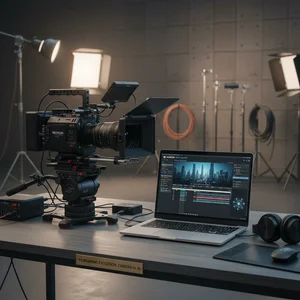
Filming means coordinating schedules, locations, equipment, lighting. You're solving physical problems. When it works, you get footage that feels grounded in reality because it is.
AI video generation means iteration on prompts. You're solving creative problems. Describing what you want, seeing what you get, refining the description. It's a different kind of work.
Neither is easier, just different. Filming is physically demanding. AI generation is mentally demanding in a different way.
When Each Approach Wins
I've stopped thinking about this as AI versus traditional. It's about matching the tool to the need.
Filmed content wins when physical authenticity matters. Interviews, testimonials, product demonstrations, anything where the viewer needs to believe they're seeing something real.
AI generated content wins when imagination matters more than reality. Impossible scenarios, abstract concepts, rapid iteration on visual ideas.
There's also this middle ground emerging. Filming base footage and using AI to enhance or extend it. Starting with AI generation and layering in filmed elements. The hybrid approaches are where some of the most interesting work is happening.
What This Means Practically
If you're deciding between filming and generating for a project, ask yourself what qualities actually matter for that specific piece.
Does it need to feel documentary real? Film it.
Does it need to convey abstract ideas visually? Generate it.
Do you need exact control over every element? Film it.
Do you need to quickly test multiple visual approaches? Generate it.
Neither tool is universally better. Both have strengths and weaknesses. Understanding what each does well lets you choose deliberately instead of defaulting to whatever you're more comfortable with.
Where This is Going
The quality gap is closing. AI video improves noticeably every few months. What looked wrong last year looks mostly right today. Extrapolate that forward and it gets interesting.
But I don't think AI will replace filming entirely. They're solving different problems. Creating different types of content. Serving different purposes.
The future probably looks like videographers who understand both tools and know when to use each. Who can film when that's what's needed and generate when that makes more sense.
That's not a future of replacement. It's a future of expanded possibility. More tools. More options. More ways to bring ideas to life.
The real question isn't which produces higher quality. It's what you're trying to create and which approach gets you there most effectively.