Virtual Makeup Try-On Market Hits $1.3B in 2026: 70% | Cliptics
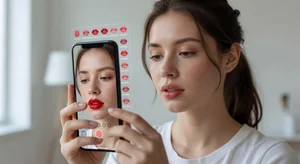
Sarah had been staring at the same lipstick shade for twenty minutes.
Not in a store. Not holding a tube in her hand. She was sitting in her bedroom at 11 PM, watching her own face on her phone screen transform as she swiped through dozens of shades. Each one adapted to her actual skin tone, lighting, and facial features in real time. When she finally found the perfect berry shade, she bought it. No hesitation. No anxiety about whether it would look the same in person.
That moment, multiplied by millions of people across the world, is why the virtual makeup try-on market just hit $1.3 billion in 2026. And it's not slowing down.
I've been tracking this industry for years, watching it evolve from clunky filters to sophisticated AI systems that genuinely change how people shop for beauty products. What fascinated me wasn't just the technology. It was the human behavior shift. The way people stopped treating online makeup shopping like a gamble and started treating it like something they could trust.
So I dug into the numbers, talked to consumers and brand managers, and tried to understand what's really happening here. What I found goes way deeper than just cool technology.
The Number That Changed Everything
Seventy percent. That's how much higher purchase confidence is when people use virtual try-on versus traditional online shopping.
Think about what that means. For decades, buying makeup online was essentially Russian roulette. You looked at swatches on someone else's arm. You read descriptions like "universally flattering rose." You crossed your fingers and hoped. Return rates were brutal. Customer frustration was constant.
Virtual try-on flipped that entire equation. When you can see how a product actually looks on your face before buying, the uncertainty evaporates. Not completely, but enough that people go from "maybe I'll risk it" to "I know this will work."
That confidence shift is the entire reason this market exists. Technology alone doesn't create a $1.3 billion industry. Solving a genuine human problem does.
How We Got Here
The early versions were rough. I remember trying virtual makeup apps back in 2018 and laughing at how bad they were. The lipstick would slide off my mouth when I turned my head. Foundation shades looked like flat masks. Eye shadow colors bore zero resemblance to reality.
But AI changed everything. Machine learning models got better at understanding facial geometry. Computer vision improved at tracking movements in real time. Color matching algorithms learned to account for skin undertones, lighting conditions, and even how products layer on top of each other.
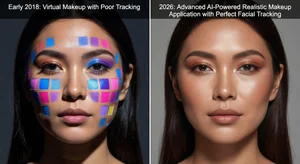
By 2024, the technology crossed a threshold. It stopped being a novelty and became genuinely useful. Brands noticed. Consumers noticed. Investment poured in.
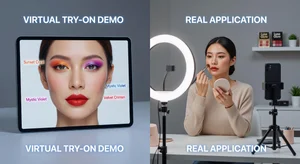
Now, in 2026, the quality is remarkable. The virtual try-on experience rivals what you'd get testing products in a physical store, minus the awkwardness of wiping off twelve different foundation shades with rough paper towels.
The Brand Manager Perspective
I spoke with Rachel, who manages digital strategy for a mid-sized cosmetics brand. She told me something I found striking.
"We were hesitant at first," she said. "Adding virtual try-on felt expensive and complicated. But our return rates were killing us. People would order five lipsticks, keep one, return four. The logistics alone were a nightmare."
Her company set up virtual try-on in late 2024. Within three months, their return rate dropped by 42%. Online conversion rates increased by 28%. Customer satisfaction scores went up across every metric they tracked.
"The ROI was undeniable," Rachel explained. "But what surprised me most was how it changed customer behavior. People started buying products they wouldn't have risked before. Bold colors. Experimental looks. Our average order value actually increased because the fear of making a mistake went away."
That pattern repeated across brands. Virtual try-on didn't just reduce returns. It expanded what people felt comfortable buying. The technology removed psychological barriers that had limited online beauty shopping for years.
The Consumer Stories That Matter
Marcus never wore makeup until he was 28. As a trans man early in his transition, walking into a makeup store felt intimidating. Asking for help felt vulnerable. The entire experience was loaded with anxiety.
Virtual try-on changed that for him. He could experiment in private. Learn what worked for his face. Build confidence before ever setting foot in a store. By the time he did shop in person, he knew exactly what he wanted.
"It gave me permission to explore," he told me. "Without judgment. Without pressure. I could figure out my own style on my own terms."
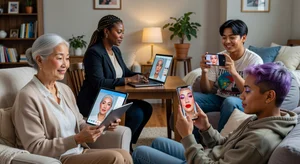
Then there's Jennifer, who lives in a rural area two hours from the nearest makeup store. For her, online shopping was always the only option, but it felt like gambling.
"I wasted so much money on products that looked nothing like the pictures," she said. "Now I can actually see what I'm buying. It's not perfect, but it's close enough that I trust it."
These aren't edge cases. They're representative of millions of people who were underserved by traditional retail models. Virtual try-on didn't just make shopping more convenient. It made it accessible to people who had been locked out of certain experiences entirely.
The Technology Behind the Magic
What actually happens when you tap that "try on" button?
First, facial recognition maps your face in three dimensions. Not just flat features, but depth, angles, contours. This creates a base model the system uses for product application.
Next, computer vision tracks your movements in real time. When you turn your head, raise your eyebrows, smile, the system adjusts the virtual makeup to move naturally with your face. This is exponentially harder than it sounds. Hair gets in the way. Lighting changes. Shadows shift. The AI has to compensate for all of it continuously.
Then there's color matching. This is where the technology gets really sophisticated. The system analyzes your skin tone, identifies undertones, and adjusts product colors to show how they'd actually appear on you. Not on a model. Not on a generic skin tone chart. On your specific face.
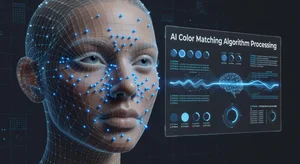
Advanced systems even simulate texture. How matte versus glossy lipsticks look different. How cream blush blends versus powder. These details matter because they're what create the trust that drives purchases.
For brands building these systems, the technical challenges are substantial. But the alternative, losing customers to competitors who offer better try-on experiences, is worse.
The Market Numbers You Need to Know
$1.3 billion in 2026 is impressive, but here's what makes it more interesting: that number is projected to reach $2.8 billion by 2030. This isn't a bubble. It's sustained growth driven by genuine value creation.
The adoption curve tells the story. In 2020, only 12% of online beauty shoppers had used virtual try-on. By 2024, that number hit 48%. In 2026, we're at 67% and climbing. The technology went from niche to mainstream in less than six years.
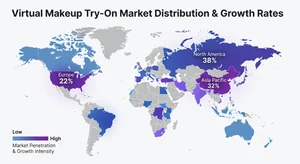
Geographic distribution matters too. North America leads adoption at 38% of market value, followed by Asia Pacific at 32% and Europe at 22%. But growth rates in emerging markets are accelerating faster. India and Southeast Asia are seeing particularly rapid uptake as smartphone penetration increases and beauty e-commerce expands.
The demographic breakdown challenges assumptions. While the technology skews younger, with 58% of users under 35, the fastest growing segment is women over 50. This group was initially skeptical but became enthusiastic adopters once they tried it. Turns out everyone appreciates being able to test products at home without pressure.
What This Means for Beauty Brands
If you're managing a beauty brand in 2026 without virtual try-on, you're operating with a significant competitive disadvantage. That sounds harsh, but the data backs it up.
Brands offering virtual try-on see 35% higher online engagement rates. Their social media shares are 2.4 times higher. Customer lifetime value increases by an average of 23%. These aren't marginal improvements. They're game-changing differences.
But setup isn't simple. The technology requires investment, both financial and operational. You need high quality product imagery. Accurate color data. Integration with your e-commerce platform. Ongoing optimization as the AI learns from user behavior.
Smaller brands face particular challenges. Enterprise solutions from companies like ModiFace or Perfect Corp can cost six figures annually. That's prohibitive for indie brands operating on thin margins.

The solution for many has been platform-based approaches. Social commerce platforms like Instagram and TikTok now offer built-in try-on features. E-commerce platforms like Shopify have plugins that make setup more accessible. These democratized options are expanding who can compete in this space.
For brand managers evaluating options, the key questions aren't just about cost. They're about customer experience, data ownership, and long-term flexibility. Choosing the right partner and platform shapes your competitive position for years to come.
The Privacy Question Nobody's Asking Enough
Here's something that keeps me up at night: where does all that facial data go?
Every time you use virtual try-on, you're feeding an AI system detailed information about your face. Measurements. Skin tone. Facial structure. Often linked to your purchase history and browsing behavior.
Most consumers don't think about this. They're focused on finding the right lipstick shade, not on data privacy implications. But this information is valuable and potentially sensitive.
I started asking brands about their data practices. The answers varied widely. Some delete facial data immediately after the try-on session. Others store it temporarily for performance optimization. A few keep it indefinitely for "service improvement."

The concerning part is how few consumers know which category their favorite brands fall into. Privacy policies are dense and vague. Consent is often buried in terms and conditions nobody reads.
Regulation is coming. The EU's AI Act includes provisions around biometric data. Similar legislation is emerging in other markets. Brands that get ahead of this, that build privacy-respecting systems now, will have a significant advantage when regulations tighten.
For consumers, the practical advice is simple: use try-on from brands and platforms you trust. Read the privacy policy, even if it's boring. Understand what data is being collected and how it's used. Your face is yours. Treat it accordingly.
The Unexpected Benefits
Virtual try-on solved the problem it was designed for: helping people buy makeup online with confidence. But it created unexpected value in other areas.
Makeup education, for one. Learning to apply makeup is traditionally hands-on, requiring product purchases and practice. Virtual try-on lets people experiment with techniques digitally. Want to learn how to contour? Try twenty different methods virtually before buying a single product.
Beauty influencers noticed this immediately. Tutorial content shifted. Instead of "here's how to apply this product," tutorials became "here's how to test if this technique works for your face shape." The technology changed not just shopping but learning.
There's also the sustainability angle. Fewer returns mean less shipping, less packaging waste, less product going to landfills. The beauty industry has a massive environmental footprint. Virtual try-on reduces one piece of that puzzle by making purchases more intentional.
And then there's creative expression. People are using try-on technology not just to shop but to play. To experiment with looks they'd never wear in public. To explore identity through cosmetics in low-stakes ways. That wasn't an intended use case, but it's become culturally significant, especially for younger users.
What Comes Next
The technology isn't finished evolving. The next frontier is haptic feedback. Imagine feeling texture differences between products virtually. Companies are working on it, though commercial viability is years away.
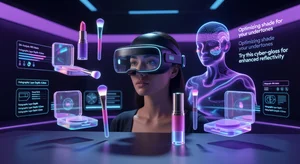
More immediately, expect integration with virtual and augmented reality platforms. As VR headsets become more common, try-on experiences will get more immersive. You'll be able to test makeup in simulated environments, see how it looks under different lighting conditions, even get AI recommendations based on where you're going.
AI personalization will deepen too. Current systems show you how products look. Future systems will learn your preferences, skin changes, lifestyle patterns. They'll suggest products proactively based on upcoming events in your calendar or seasonal shifts in your skin tone.
The market will consolidate. Right now there are dozens of companies offering virtual try-on technology. In five years, that number will shrink as larger players acquire smaller ones and standards emerge. This is normal for maturing industries, but it'll reshape the competitive landscape significantly.
The Real Story
Sarah, who we met at the beginning, hasn't bought makeup in a physical store in over a year. Not because stores are bad, but because virtual try-on solved her specific problem: not knowing if products would work for her before buying.
That's the real story of this $1.3 billion market. Not the impressive technology. Not the market projections. The story is about removing friction from a process that was unnecessarily difficult.
People want to look how they want to look. Makeup helps some people do that. For decades, accessing the right makeup required time, money, proximity to stores, confidence to navigate retail spaces, and willingness to make expensive mistakes.
Virtual try-on reduces those barriers. Not perfectly. Not for everyone. But meaningfully enough that 67% of online beauty shoppers now use it, and that number keeps growing.
The technology will keep improving. The market will keep expanding. New use cases will emerge that we haven't imagined yet.
But at the core, this is about giving people tools to express themselves with less anxiety and more confidence. That's not just a market opportunity. That's genuinely valuable human progress.
And that's why I think this technology matters more than the billion-dollar valuation suggests.