
Watermark Removal Legal Considerations: What Content | Cliptics
The first time I removed a watermark, I didn't think twice about it. It was my own photo from a stock preview site, and I just wanted to see what it would look like in my project. Harmless, right?
Then a friend who's a media lawyer mentioned something that made me stop cold. "You know that's technically copyright infringement, even if it's just for personal testing?" That conversation spiraled into hours of research that completely changed how I think about watermarks, ownership, and digital content rights.
Here's what every content creator actually needs to know about watermark removal and the law.
The Copyright Reality Nobody Explains
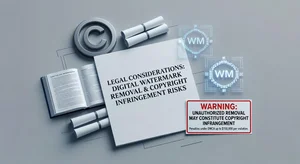
Watermarks exist for one primary reason: to assert ownership and protect intellectual property. When you remove one, you're not just editing an image. You're removing legal evidence of who owns that content.
Copyright law treats watermark removal seriously. In the United States, the Digital Millennium Copyright Act specifically addresses this. Section 1202 makes it illegal to remove or alter copyright management information, which includes watermarks, without authorization. The penalties aren't trivial either. Statutory damages can range from $2,500 to $25,000 per violation.
Other countries have similar protections. The EU's Copyright Directive, Canada's Copyright Act, and laws in Australia and the UK all include provisions against removing copyright information. This isn't some obscure legal loophole. It's mainstream intellectual property law.
What caught me off guard was learning that intent matters. If you remove a watermark to pass off someone else's work as your own, that's clearly illegal. But even removing it "just to see what it looks like" without permission crosses a legal line. The law doesn't care if you were planning to buy it later or only used it privately.
When Watermark Removal Is Actually Legal
Not all watermark removal breaks the law. There are legitimate scenarios where it's completely acceptable.
If you own the content, you can remove your own watermarks. Photographers who watermark client proofs can obviously remove them when delivering final images. Graphic designers who add watermarks to mockups can remove them in the finished product. That's straightforward ownership.
Licensed use with proper authorization is also legal. If you purchase a stock image or hire a photographer and your agreement includes removing watermarks, you're in the clear. The key is having explicit permission, preferably in writing.
Some creative commons licenses allow watermark removal, but read carefully. CC-BY licenses require attribution, which often means keeping watermarks intact. CC0 public domain dedication gives you more freedom, but even then, verifying the original creator had the right to release the work matters.
Fair use is where things get complicated. This legal doctrine allows limited use of copyrighted material without permission for purposes like criticism, commentary, research, or education. But fair use doesn't automatically permit watermark removal. Courts look at four factors: the purpose of use, the nature of the copyrighted work, how much you're using, and the market impact.
Using a watermarked image in an academic presentation analyzing photography techniques might qualify as fair use. Removing the watermark to make your presentation "look cleaner" probably doesn't. The watermark removal itself can undermine a fair use defense because it suggests intent to hide the source.
The Gray Areas Content Creators Face
Real world situations rarely fit neatly into legal categories. Content creators constantly navigate ambiguous scenarios.
Let's say you're a YouTuber creating a video essay about advertising history. You want to show vintage ads, but the digital archives all have watermarks from the institutions that scanned them. Can you remove those watermarks? The ads themselves might be old enough to be public domain, but the watermarks represent the archive's work in preservation and digitization.
Or consider this: you're a graphic designer hired to recreate a client's old marketing materials. The client lost the original files and only has watermarked previews they never purchased. They insist you recreate the design by removing the watermark from the preview. They're the client who commissioned the original work, but they never completed the purchase. Who's liable if you help them?
Social media adds another layer. Meme culture frequently involves taking images, adding text, and sharing them. Sometimes those source images have watermarks that get cropped out or covered. Is that removal intentional or just part of the creative process? The law doesn't always distinguish clearly.
What I've learned from talking to content creators in different fields is that the safest approach involves three questions: Do I have permission? Would removing this watermark harm the creator? Am I being transparent about the source? If you can't answer yes, yes, and yes, you're probably in risky territory.
Practical Alternatives That Keep You Safe
The good news is that legitimate needs for clean images almost always have legal solutions.
For stock photography, just buy the license. Most stock sites offer reasonably priced options, and many have subscription models that make individual images incredibly affordable. Unsplash, Pexels, and Pixabay provide free high quality images without watermarks, truly released for commercial use.
If you're working with a photographer or designer, negotiate watermark removal in your contract upfront. Professional creators understand clients need clean finals. Build it into the agreement from the start rather than requesting it after the fact.
For your own work, tools like Cliptics AI Watermark Remover are designed specifically for creators removing watermarks from content they own. Whether you're cleaning up your own proofs or preparing finals for clients, having the right tool for legitimate purposes makes the process smooth.
When you absolutely need to use someone else's watermarked image, keep the watermark and provide attribution. This applies to educational use, commentary, analysis, or any scenario where fair use might apply. The watermark actually strengthens your case by showing you're not trying to hide the source.
What Happens When You Cross the Line
Legal consequences for improper watermark removal aren't theoretical. They happen regularly, and they can be severe.
Copyright holders can sue for statutory damages without proving actual harm. That $2,500 to $25,000 per violation adds up fast if you've removed watermarks from multiple images. Some cases have resulted in six figure settlements.
Beyond financial penalties, there's reputational damage. Getting called out for using stolen content can destroy a creator's credibility. Social media amplifies these situations. One viral thread about someone using watermarked content without permission can undo years of reputation building.
Platforms take this seriously too. YouTube's Content ID system can flag videos using watermarked images. Instagram and Facebook can remove posts. Repeat violations can lead to account suspension or permanent bans.
For businesses, the stakes climb higher. Corporate copyright infringement can trigger larger lawsuits, and insurance often doesn't cover intentional violations. A small business that built its marketing around stolen watermarked images faces existential risk if the rights holder pursues action.
The pattern I've noticed is that most legal trouble comes from ignorance rather than malice. Creators assume "everyone does it" or "no one will notice" or "it's just one image." Copyright holders increasingly use automated tools to scan for their work online. They will find it. And when they do, ignorance isn't a valid defense.
Building a Legally Sound Workflow
After digging into all this, I completely changed how I approach images and content in my work. Here's the system that keeps me out of legal trouble.
First, I default to content I have clear rights to use. That means photos I've taken, designs I've created, or properly licensed materials. I keep records of every license purchase and download confirmation emails as proof.
When I need specific images I don't own, I reach out directly to creators. A surprising number of photographers and artists will grant permission for specific uses, especially if you're not competing with them commercially. I make these requests in writing and save the responses.
For stock needs, I stick to legitimate sources: paid stock sites for commercial projects, truly free sites like Unsplash for less critical uses. I read the actual license terms, not just the summary. Some "free" images have restrictions on commercial use, number of copies, or specific industries.
I teach my team and collaborators these principles too. Everyone who touches content for projects I manage understands the legal framework. It's not just about protecting me. It's about respecting other creators and operating ethically.
When I do use tools like video watermark removers or image editors, it's exclusively for content I own or have explicit permission to modify. The tool isn't the issue. The intent and authorization behind using it determine legality.
The Bigger Picture for Content Creators
What strikes me most about watermark removal law is that it reflects a fundamental tension in digital content creation. The internet makes copying and editing trivially easy. Copyright law, developed for physical media, struggles to keep up.
Watermarks represent an attempt to protect creators in an environment where theft is frictionless. Removing them undermines that protection. But the law also recognizes that not all uses are theft. Fair use exists. Public domain exists. Licensed use exists.
As a creator, understanding these boundaries isn't just about avoiding lawsuits. It's about participating in a creative space built on mutual respect. When I use someone's work properly, I'm acknowledging their effort. When they use mine properly, that respect flows back.
The tools for removing watermarks will keep getting better. AI makes it easier than ever to clean up images smoothly. But legal doesn't equal possible. Just because you can remove a watermark doesn't mean you should.
My rule has become simple: when in doubt, ask. Reach out to the creator. Purchase the license. Use different content. The few minutes it takes to clarify rights beats the stress of wondering if you've crossed a legal line, and it beats the nightmare of actually facing consequences for getting it wrong.
The creators who thrive long term aren't the ones who game the system or hope they won't get caught. They're the ones who build practices they can defend publicly, who treat other creators' rights the way they want their own rights treated, and who recognize that sustainable creativity requires respecting the legal frameworks that protect us all.