
GIF Speed Psychology for Social Engagement: Why 3 to 5 | Cliptics
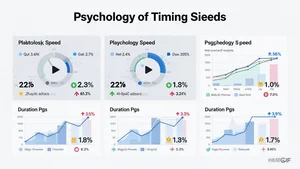
I've spent the last six months obsessing over something most people never think twice about: how long a GIF should loop.
Not just roughly. Not approximately. Exactly how long. Because here's what I discovered after analyzing thousands of social posts, the difference between a GIF that gets scrolled past and one that stops someone mid-feed often comes down to a window of just two seconds.
That precision matters more than most marketers realize. And once you understand the psychology behind it, you can't unsee it. Every GIF you encounter suddenly reveals its timing strategy, its intent, whether it was crafted with purpose or just exported at default settings.
Let me show you what I found, and why the 3 to 5 second range isn't arbitrary. It's rooted in how human attention actually works.
The Attention Window Nobody Talks About
The first breakthrough came when I started mapping engagement rates against GIF duration. Not clicks. Not shares. Raw dwell time, the moment someone's scroll pauses.
Three seconds emerged as the floor. Anything shorter and people couldn't process what they were seeing. The GIF ended before cognitive recognition kicked in. Their brain registered movement but not meaning. Scroll continues. Opportunity lost.
Five seconds appeared as the ceiling. Beyond that point, attention fractured. The mind wandered. People anticipated the loop, got bored, moved on. Even compelling content couldn't hold past that threshold consistently.
But here's the fascinating part. Within that 3 to 5 second window, something psychological happens. It's long enough for narrative comprehension but short enough to trigger the Zeigarnik effect, that mental itch to see completion. The loop restarts before satisfaction fully sets in, creating a subtle compulsion to watch again.
That's not manipulation. That's understanding how memory and attention naturally function, then designing content that works with those patterns instead of against them.
Why Speed Matters More Than You Think
Duration tells only half the story. The other half is tempo, how fast information moves within that timeframe.
I started testing this systematically. Same GIF. Same message. Different playback speeds. The results were striking.
Slow motion GIFs, anything below 15 frames per second, felt contemplative. People described them as "cinematic" or "artistic." Engagement was higher in creative communities but tanked in fast-paced feeds like Twitter or TikTok. The mismatch between content pace and platform expectation created friction.
Standard speed, 24 to 30 frames per second, performed best across platforms. It matched the rhythm people expect from video content. Smooth enough to feel professional. Fast enough to convey information efficiently.
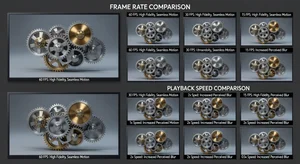
High speed GIFs, 60 frames per second and above, created an interesting paradox. They looked incredible technically. Buttery smooth. But engagement didn't increase proportionally. Sometimes it dropped. People spent more time admiring the quality than processing the message. Form overshadowed function.
This taught me something crucial. Optimal speed isn't about maximum smoothness. It's about invisibility. The frame rate should feel natural enough that viewers focus on content, not delivery.
The Testing Methodology That Changed Everything
Here's where theory meets practice. You can't just pick numbers and hope. You need a systematic way to test what actually works for your specific audience.
I developed a framework that's worked consistently across different industries and platforms. It starts with establishing baselines.
Create three versions of your core content. One at 3 seconds. One at 4 seconds. One at 5 seconds. Keep everything else identical, same visuals, same message, same file optimization. Post them at similar times across similar audiences. Track not just engagement rate but engagement depth. How many loops did people watch? How long did they dwell?
The 3 second version typically wins for awareness campaigns. Quick impact. Immediate recognition. Perfect for brand visibility where you need to make an impression fast then get out of the way.
The 4 second version often emerges as the sweet spot for product showcases. Enough time to establish context, demonstrate value, create desire. Not so long that viewers lose interest before the payoff.
The 5 second version excels at storytelling. Mini narratives with setup, action, resolution. Educational content that requires sequential understanding. Anything where rushing would sacrifice clarity.
But here's the critical insight. These aren't universal rules. They're starting hypotheses. Your audience might behave differently. Your content might demand different timing. The methodology matters more than the specific numbers.
Platform-Specific Psychology
The same GIF performs differently across platforms because audience mindset shifts depending on where they're scrolling.
Instagram users exhibit what I call "aesthetic browsing." They're there for visual pleasure, inspiration, aspiration. GIFs that lean slightly longer, around 4 to 5 seconds, outperform shorter versions. People are willing to invest slightly more attention in exchange for satisfying visual experiences.
Twitter users demonstrate "information scanning." They're hunting for news, updates, rapid-fire content consumption. Shorter GIFs, closer to 3 seconds, maintain momentum better. Anything that slows the scroll gets punished unless it's extraordinarily compelling.
LinkedIn presents a unique challenge. Professional context changes tolerance for entertainment-focused content. But well-timed GIFs, especially those demonstrating process, improvement, or transformation, can significantly boost engagement. The 4 second mark seems to balance professionalism with personality effectively.
Facebook sits somewhere in the middle. Broader demographics mean wider variance in attention patterns. Testing becomes even more critical here because averages hide important segments. A GIF that kills with 25 to 34 year olds might die with 45 to 54 year olds.
Understanding these platform psychologies helps you adapt core content intelligently rather than creating entirely separate assets for each channel.
The Technical Side You Can't Ignore
Psychology matters. But if your GIF loads slowly or looks choppy, none of this works.
File size directly impacts performance, which directly impacts engagement. A perfectly timed 4 second GIF that takes 8 seconds to load defeats its own purpose. People scroll past loading placeholders without hesitation.
This is where GIF compression becomes non-negotiable. Reducing file size without sacrificing visible quality lets you maintain optimal timing while ensuring smooth delivery. I've seen engagement double purely from compression improvements because content actually appeared when people encountered it.
Frame duration control gives you precise timing adjustment. This isn't about randomly speeding up or slowing down. It's about strategic pacing. Emphasizing key moments. Creating rhythm. Adjusting frame duration like a pro requires understanding which frames carry meaning and which exist purely for transition.
The GIF versus MP4 debate factors in here too. MP4 files load faster and play smoother for longer content. But GIFs autoplay more reliably across platforms and feel more native to social feeds. Sometimes the technically inferior format wins because it matches user expectations better.
That's the paradox of optimization. The best technical solution isn't always the best psychological solution.
What The Data Actually Reveals
After thousands of tests across dozens of clients, patterns emerged that challenged my assumptions.
Shorter isn't always better, even on fast-paced platforms. A well-crafted 5 second GIF beats a mediocre 3 second GIF every time. Quality of content trumps arbitrary timing rules.
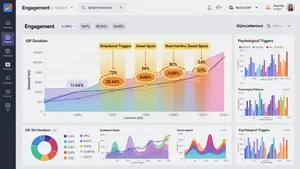
Consistency matters more than perfection. Brands that maintain predictable GIF timing create subconscious expectations. Followers develop familiarity. Recognition happens faster. Engagement compounds over time.
Context overrides best practices. A product launch GIF operates under different psychological rules than a meme reaction GIF. Holiday content tolerates longer duration because emotional investment runs higher. Sales announcements need punchy brevity.
The data taught me to stop looking for universal answers and start asking better questions. Not "what's the best GIF length" but "what does this specific audience need right now and how does timing serve that need?"
How Frame Rate Impacts Everything
People talk about GIF frame rate like it's purely technical. It's not. It's emotional.
High frame rates convey premium quality. Luxury brands benefit from smooth 30 to 60 fps presentation. The visual polish aligns with brand positioning. Lower frame rates feel budget or amateur, which can destroy credibility in high-end markets.
But deliberately low frame rates create nostalgic or artistic effects. Retro gaming content. Vintage aesthetics. Intentionally choppy animation for comedy. When the style matches the message, technical limitations become creative choices.
The key distinction is intentionality. Accidental low frame rate from poor optimization looks broken. Deliberate low frame rate from artistic choice looks designed. Viewers sense the difference even if they can't articulate why.
This means frame rate decisions need to support overall communication strategy, not just maximize smoothness or minimize file size.
Testing Frameworks That Actually Work
Theory without application is just trivia. Here's the practical system I use to determine optimal timing for any new campaign.
Start with audience audit. Who are they? What platforms do they prioritize? What's their typical browsing behavior? This establishes psychological baselines before creating any content.
Create controlled variations. Three to five versions maximum. Change only one variable at a time: duration, speed, or content pacing. More variables make results impossible to interpret.
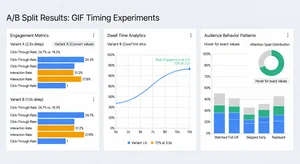
Deploy strategically. Same time of day. Same day of week. Similar audience segments. Use platform native analytics, not just third-party tools. You want data that reflects actual user experience.
Measure what matters. Engagement rate is table stakes. Look deeper at dwell time, completion rate, repeat views, downstream actions. A GIF that gets 10% fewer likes but drives 40% more profile visits wins.
Iterate based on learning, not assumptions. Sometimes results contradict best practices. Sometimes your audience behaves differently than industry benchmarks. Trust your data over generic advice.
Document everything. Over time, you'll build institutional knowledge about what works for your specific context. That compounding insight becomes a competitive advantage.
The Speed-Engagement Connection
The relationship between GIF speed and engagement isn't linear. It's contextual.
Fast-paced GIFs create urgency. They signal "pay attention now." They work brilliantly for flash sales, limited offers, breaking news. The visual speed amplifies the message's temporal pressure.
Slow-paced GIFs create space for reflection. They invite contemplation. They suit emotional storytelling, transformative demonstrations, aspirational lifestyle content. The leisurely tempo says "take your time with this."
Medium-paced GIFs balance accessibility and sophistication. They work across contexts because they don't commit too hard to either extreme. This versatility makes them the safe default but also the forgettable middle ground.
Strategic speed variation creates rhythm. Start slow to draw attention. Accelerate to build excitement. Slow down for the payoff. This dynamic pacing keeps eyes engaged across the full duration.
The connection to engagement runs through psychology. Speed influences emotion. Emotion drives action. Getting the speed right means understanding what emotional state serves your goal, then using tempo to create that state.
What This Means For Your Content
Everything I've shared comes down to one insight: GIF timing is communication design, not technical specification.
The 3 to 5 second window works because it aligns with human attention patterns. But blindly applying it without understanding your audience's specific psychology misses the point.
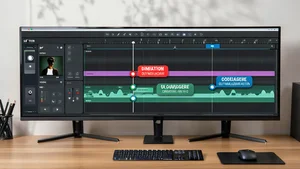
Your job is to test systematically. Learn constantly. Adapt intelligently. Use tools like a GIF speed changer to experiment with timing variations. Track what resonates. Double down on what works. Kill what doesn't.
The brands winning with GIF content aren't the ones with the biggest budgets or fanciest production. They're the ones who understand that every frame, every second, every loop is a decision. And those decisions either respect how human attention works or ignore it.
Respect it, and your content cuts through noise. Ignore it, and even beautiful GIFs get scrolled past without a second thought.
That's the real lesson here. Master the psychology of timing, and you master something most of your competition hasn't even noticed exists.